World
A decade after Brexit, Britain faces slower growth and lost status
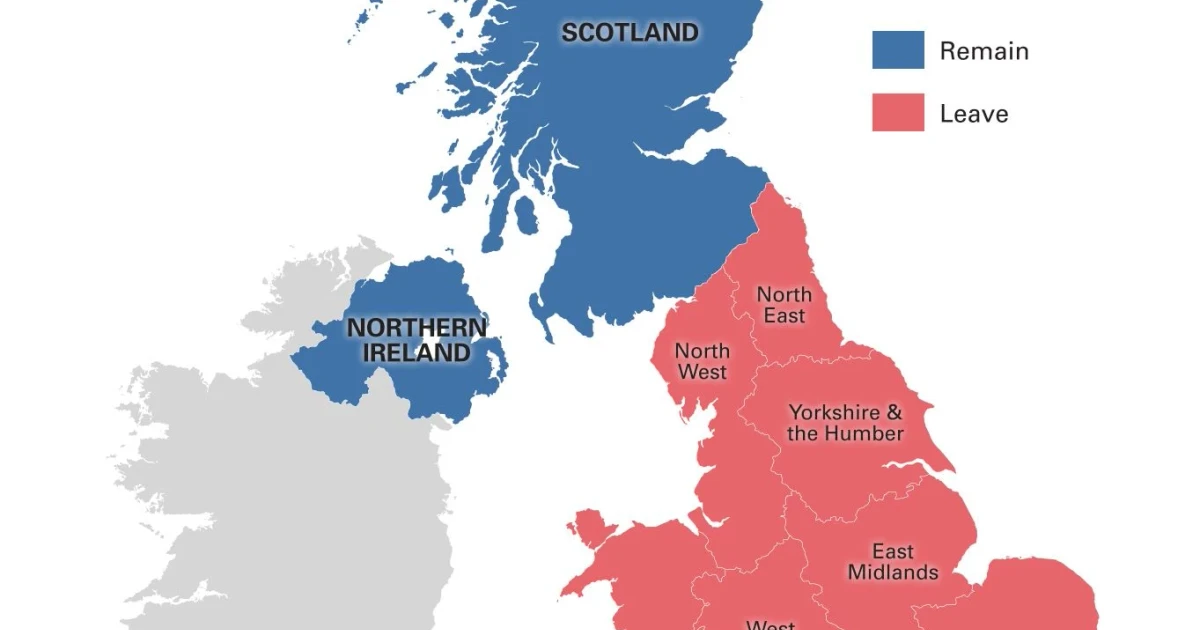
Brexit was sold as a route back to national leverage. A decade later, the ledger is harsher: the UK’s own budget watchdog says the post-Brexit trading relationship is assumed to cut long-run productivity by 4% and leave trade volumes about 15% lower than they would have been inside the European Union.
The referendum on June 23, 2016, delivered the break, and the Trade and Cooperation Agreement that took effect on January 1, 2021, set the terms of the new relationship. Since then, the economic verdict has hardened. Research from the National Bureau of Economic Research estimates that by the end of 2025 Brexit had reduced UK GDP by 6% to 8%, with investment down 12% to 13%, employment down 3% to 4% and productivity down 3% to 4%. Those numbers point to a slower-growing economy, weaker capital formation and less room for the country to absorb shocks.
The Bank of England has drawn the same broad conclusion. In June 2026, governor Andrew Bailey said growth had been lower since Brexit and that the Bank’s warnings about economic damage had been vindicated. That matters because the debate was never only about trade rules or customs checks. It was about whether leaving the bloc would free Britain to move faster, attract investment more easily and command more influence abroad. The evidence now points the other way.

That strategic downgrade is visible in the language of government itself. Boris Johnson’s 2021 Integrated Review cast policy as “Global Britain in a Competitive Age,” while the 2023 Integrated Review Refresh said it was updating security, defence, development and foreign-policy priorities in light of a more contested world. But analysts at UK in a Changing Europe argue that Brexit has produced “status insecurity” in Britain’s international posture, and that the “Global Britain” project has been harder to define than its advocates promised.
The result is a country trying to reconcile a sovereignty-first politics with diminished leverage. Trade is more frictional, the economic damage is measurable, and the diplomatic project has become more uncertain. A decade on, Brexit has not restored Britain’s standing so much as forced a reckoning with the costs of trying to act exceptional while carrying less weight.
Sources
- [1]nytimes.com
- [2]obr.uk
- [3]nber.org
- [4]bankofengland.co.uk
- [5]gov.uk
- [6]ukandeu.ac.uk
- [7]blogs.lse.ac.uk