World
A Land for All pitches two states, one homeland for Israelis and Palestinians
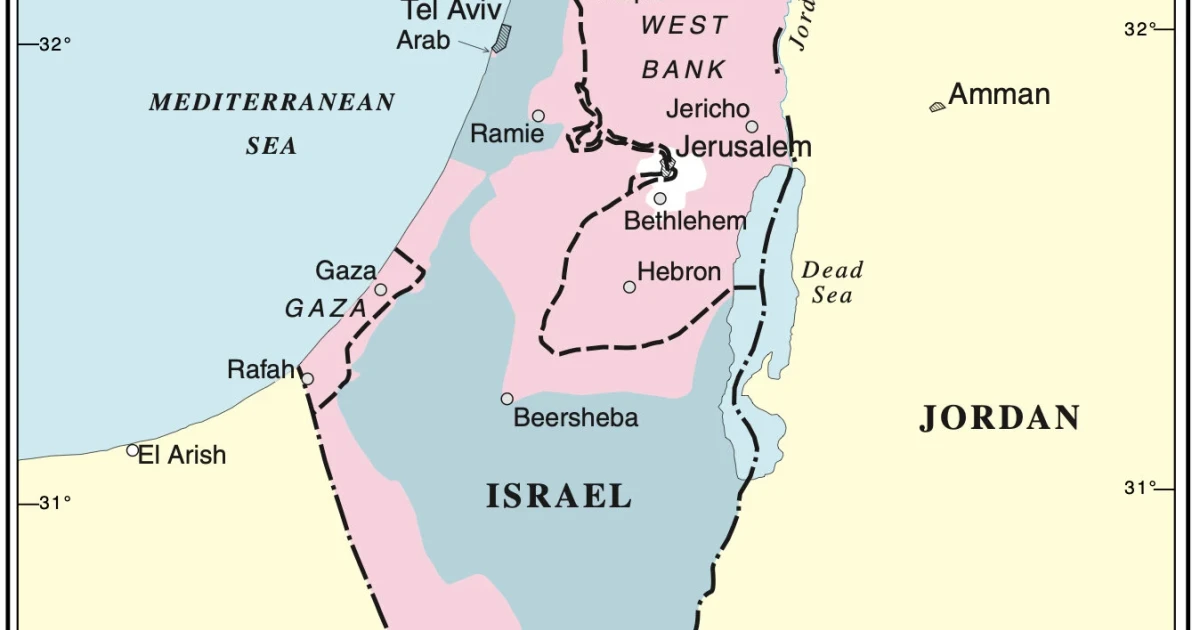
A Land for All starts from a blunt premise: the old formulas no longer match the map, the population mix, or the politics of Israel and Palestine. The movement says the only workable answer is “Two States, One Homeland,” a confederation of two sovereign states, Israel and Palestine, linked by shared rules where the territory is too intertwined to split cleanly.
What the proposal actually changes
Founded in 2012 as a joint Israeli-Palestinian movement, A Land for All rejects the idea that peace depends on permanent separation. Its program envisions the two states being based on the pre-1967 Green Line, but joined by shared institutions for water, the economy, human rights, customs, and labor movement.
That design is meant to answer a practical problem, not an abstract one. Israeli Jews and Arab-Palestinians live, work, travel, and build lives across a small geographic area, and the movement argues that no border can erase the connection Palestinians feel to Jaffa, Haifa, and Lod any more than it can erase Jewish ties to Hebron, Nablus, or Bethlehem. In that sense, the model is trying to regulate coexistence where separation has already failed as a description of reality.
Security without forcing a total split
The hardest test for any peace formula is security. A Land for All says its answer is not one state or a patchwork of enclaves, but two independent states operating inside a joint framework that lets both peoples live together and apart.
That is where sovereignty becomes more complicated than a simple border line. The movement’s program keeps Israel and Palestine distinct, while building common arrangements where security, movement, and daily life would otherwise collide. In practice, the plan is an attempt to reduce the security risks created by endless domination and endless fragmentation at the same time.
Freedom of movement, residence, and the settlement problem
Traditional two-state proposals often assume that a border can settle the question of where people may live. A Land for All argues that assumption no longer holds. Its official program calls for gradual freedom of movement and residence across the land, and for each country to agree on a number of citizens of the other country who can live in its territory with permanent resident status.
That is a direct response to the reality of settlements and mixed mobility. Rather than demanding that all cross-border presence disappear, the model tries to normalize it under agreed rules, which makes the question of settlements less about evacuation alone and more about managed residence, rights, and political boundaries. It is a significant departure from plans that treat movement as an exception rather than a fact to be governed.
Refugees, citizenship, and competing national claims
Few issues expose the limits of older formulas more clearly than refugees and return. A Land for All’s framework says Palestinian refugees could receive Palestinian citizenship, while Israel could grant citizenship to diaspora Jews.
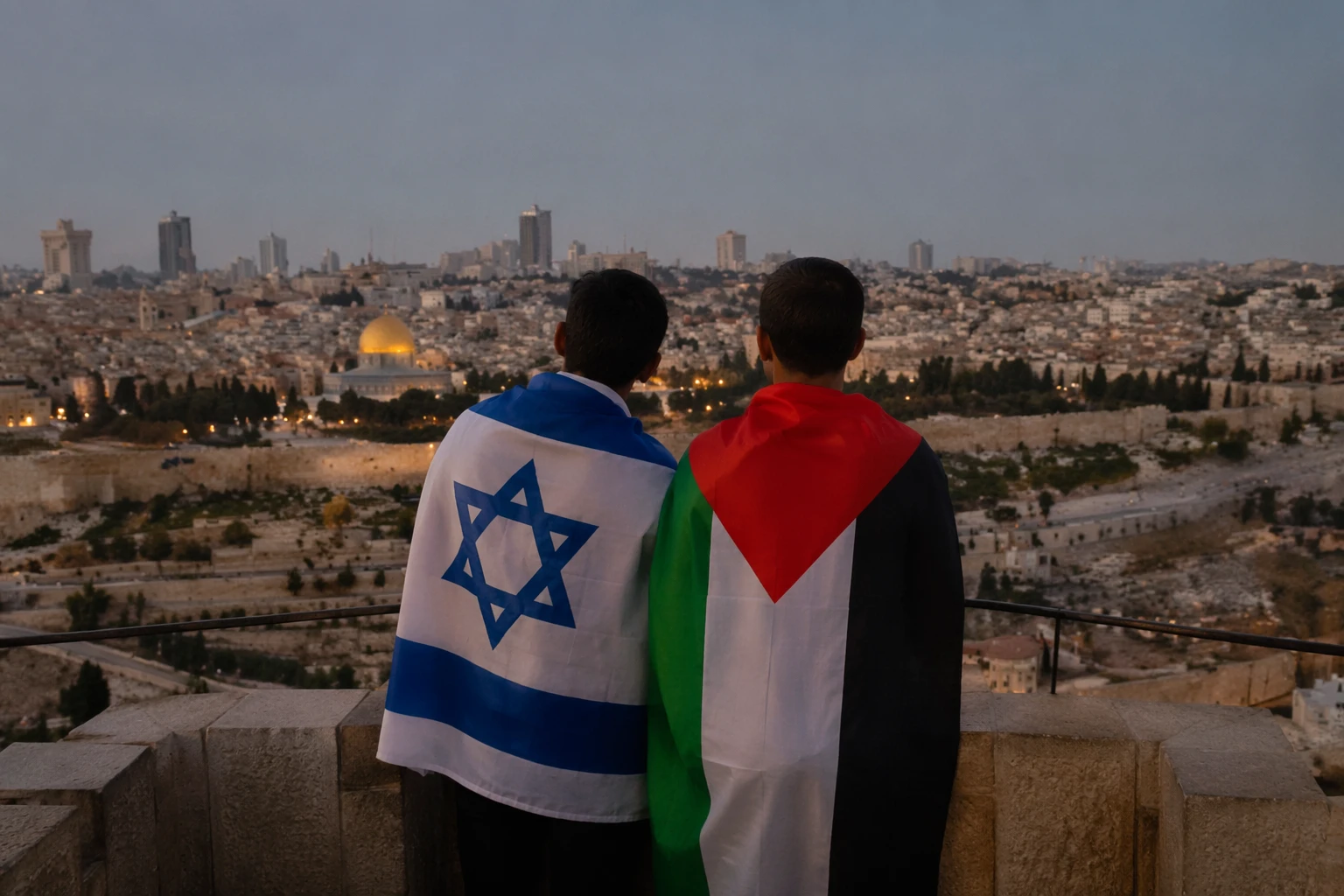
This is the model’s most explicit attempt to acknowledge that both peoples see the same land as homeland. Instead of forcing one national story to erase the other, it builds parallel citizenship tracks that recognize both claims at once. The result is less a compromise between competing identities than a legal structure designed to keep them from canceling each other out.
Who is leading the movement
The organization is jointly led by May Pundak and Dr. Rula Hardal, who serve as co-leaders or co-executive directors. A Land for All says its first joint board convening took place on October 10, 2023, after a long preparatory process, which gave the movement a more visible institutional form at a moment when the regional context was deteriorating.
Its public profile has also widened outside the region. On March 19, 2024, the group presented its ideas to the European Parliament’s Subcommittee on Human Rights, showing that the model is being pitched not only as a grassroots vision but also as a serious policy framework for international audiences.
Why the movement says the moment has changed
The organization presents itself as a response to the collapse of older peace paradigms and to the violence and political deadlock of recent years. Its public writings frame the project as a “day after” plan, a way to think beyond stalled negotiations and slogans that no longer fit the facts on the ground.
The U.S. arm uses the name A Land for All in the U.S., and says it was formerly known as Americans for a Confederation of Israel and Palestine. That shift in naming mirrors the broader strategy: not to abandon two states, but to rework them into a shared political architecture that can survive a land where separation has never been clean.
How different audiences are receiving it
The reception has been mixed, which is exactly what one would expect from a proposal that asks both sides to accept deep coexistence alongside sovereignty. B’nai Jeshurun described the movement as rapidly growing and said its leaders were offering practical solutions to the conflict’s hardest sticking points, while Waging Nonviolence reported warm responses from progressive Jewish and Palestinian groups during a U.S. tour.
Critics remain unconvinced. On October 9, 2025, Sheffield PSC said the proposed peace plan does not end Israel’s occupation or denial of Palestinian self-determination. That criticism goes to the heart of the debate around A Land for All: whether a confederation can deliver real liberation and real safety, or whether it simply repackages the old dispute in a more elegant form.
The movement’s challenge is therefore not just to present a hopeful future, but to show how sovereignty, security, settlements, movement, refugees, and political legitimacy can all coexist inside the same legal design. That is the problem it is trying to solve, and the reason its proposal keeps drawing attention even from people who are not ready to embrace it.
Sources
- [1]nytimes.com
- [2]alandforall.org
- [3]europarl.europa.eu
- [4]bj.org
- [5]wagingnonviolence.org
- [6]sheffieldpsc.org.uk
- [7]alandforall.us