Health
AAP updates drowning prevention guidance for young children
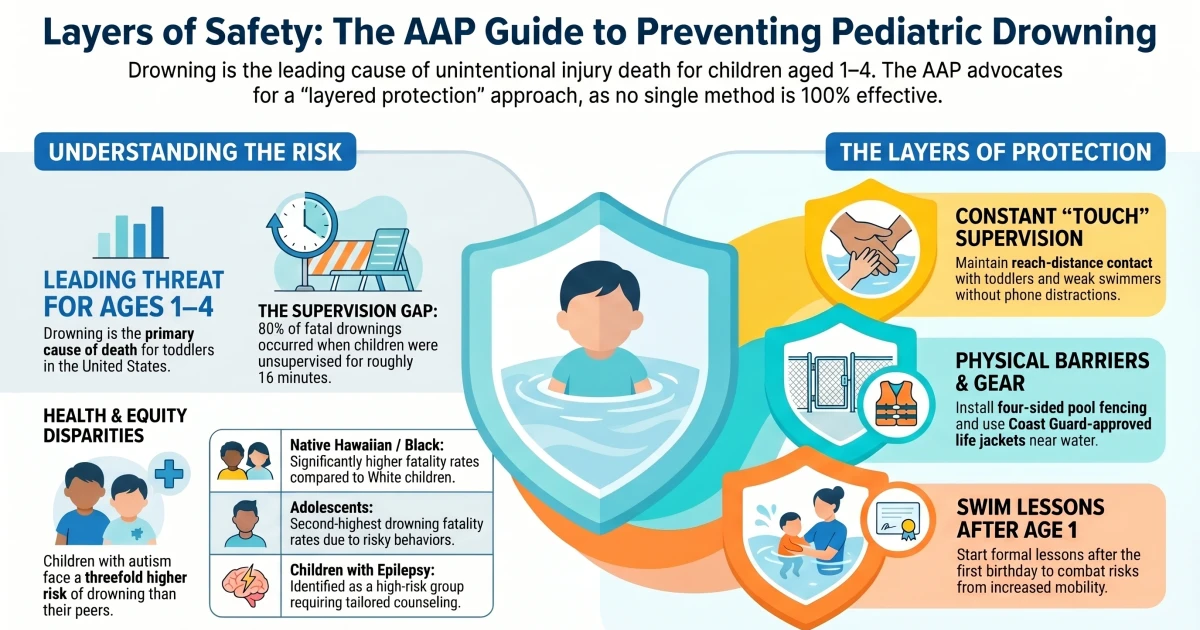
Drowning remains the leading cause of death for children ages 1 to 4 in the United States, and the American Academy of Pediatrics is now pressing families and clinicians to treat prevention as a stack of defenses, not a single safeguard. Its revised policy statement, Prevention of Drowning, published in the July 2026 issue of Pediatrics, updates guidance the academy last issued in 2019.
The academy says no one step can stop every tragedy. Its advice centers on close, constant, attentive and capable adult supervision, along with early swim lessons, and it directs the guidance to clinicians, families, community partners, injury-prevention professionals and policymakers. The message is direct: drowning is a leading cause of unintentional injury death in children, and the response has to be broader than one lesson or one warning.
The toll remains stark. In 2023, 981 U.S. children under age 20 died from drowning, according to the academy’s technical report. The Centers for Disease Control and Prevention says drowning is the second leading cause of unintentional injury death for children ages 5 to 14, and it estimates about 4,000 fatal unintentional drownings and 8,000 nonfatal drownings each year in the United States.

The AAP says pediatric drowning fatality rates declined from 1999 to 2019, then began trending upward again. The update also flags widening disparities by race and ethnicity, a point echoed in CDC reporting that shows the highest drowning rates among non-Hispanic American Indian or Alaska Native people and non-Hispanic Black people. The CDC says almost 40 million adults in the United States do not know how to swim, and more than half have never taken a swimming lesson.
That gap helps explain why the academy is sharpening its message now. Summer brings more exposure to pools, lakes and beaches, but the risk does not end when the season does. By putting supervision and early swim lessons at the center of its guidance, the AAP is aiming at the point where prevention can still work, before a child gets near water without a watchful adult and before a family learns too late how unforgiving drowning can be.
Sources
- [1]cbsnews.com
- [2]publications.aap.org
- [3]cdc.gov
- [4]aap.org