Entertainment
Aaron Pierre on joining DC Universe as John Stewart in Lanterns
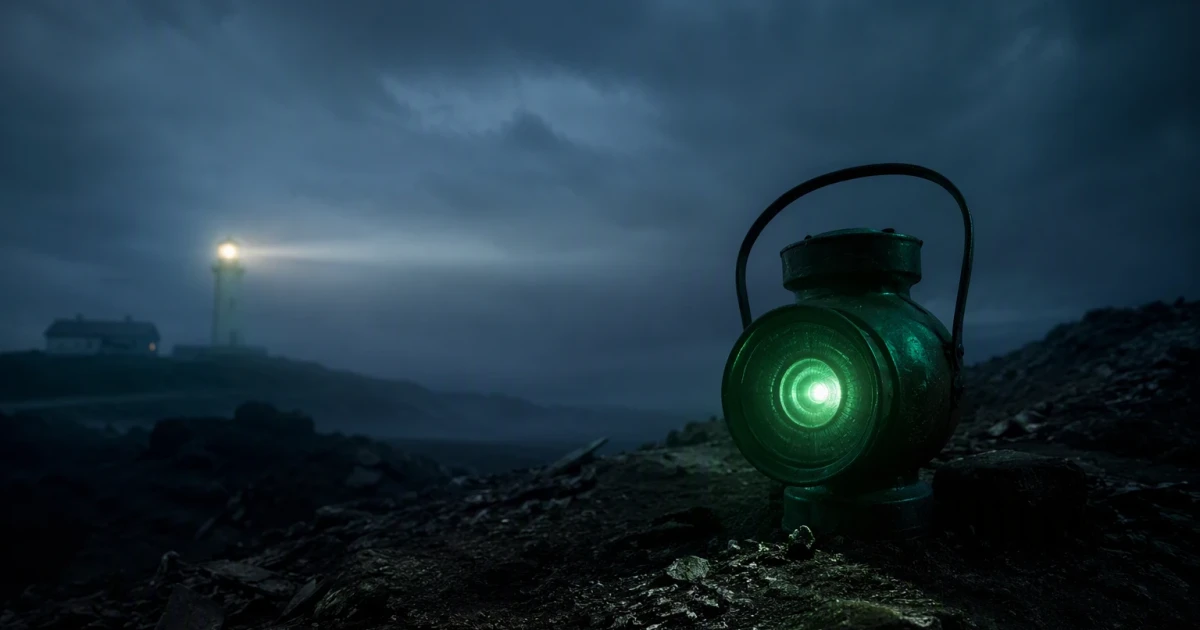
Aaron Pierre’s casting as John Stewart does more than fill a Green Lantern slot. It places one of DC’s most visible Black superheroes at the center of James Gunn and Peter Safran’s rebooted universe, where Lanterns is being used as a character-driven doorway rather than a pure effects showcase. Pierre has leaned into that pressure with a personal answer: “The thing I love most about John Stewart is that he inspires me.”
Why John Stewart matters in the DC reset
John Stewart carries a different kind of franchise weight than a standard comic-book lead. He is one of DC’s most prominent Green Lanterns, and his place in the mythology has long made him a major reference point for representation in superhero storytelling. That matters inside the new DC Universe, which is being organized under the first phase known as Gods and Monsters: Chapter One.
The casting also lands at a moment when DC Studios is trying to make its shared universe feel more deliberate after years of resets and competing approaches. Putting Pierre at the center of Lanterns signals that the studio is not treating John Stewart as a supporting brand name, but as a lead who can anchor a prestige-style series within the broader DCU.
How Lanterns is being positioned
Lanterns is built around a pairing that gives the series a procedural spine and a legacy-comic balance. Kyle Chandler plays Hal Jordan opposite Pierre’s John Stewart, and the series follows Stewart as he trains under Jordan while the two are drawn into a mysterious murder case in a small American town. That setup pulls the story away from simple interstellar spectacle and into a more grounded mystery.
That structure is important for the DCU’s creative direction. Rather than introducing John Stewart through a dense crossover event, Lanterns is presenting him through a relationship, a case, and a recognizable earthly setting. The result is a series that appears designed to make the character’s discipline, judgment, and emotional stakes as central as any superpower.
The casting race and the scrutiny around the role
Pierre did not inherit the role in an untended field. Deadline’s 2024 coverage showed that Pierre and Stephan James were both in the running for John Stewart, a reminder that the part was being treated as one of the most closely watched openings in the DC slate. James Gunn then publicly welcomed Pierre to DC after describing the auditions as “a long and grueling series.”
That scrutiny is understandable. John Stewart is not just another hero name on a call sheet, and DC Studios knows the audience recognizes what the character represents. The studio’s decision to move ahead with Pierre suggests confidence that the role needs more than likeness or fan familiarity. It needs an actor who can carry the authority, restraint, and seriousness the character has accumulated over decades.
Pierre’s own comments reinforce that reading. His focus has not been on novelty or nostalgia alone, but on the responsibility of portraying a character who means something to audiences beyond the basics of the costume and ring. That emphasis fits a DCU trying to present its leads as people first and icons second.
Surgery, auditions, and the cost of getting the part right
Pierre’s path to the role was not simple, and the physical toll became part of the story. He said he had surgery before filming and remembered his team calling to ask whether he still wanted to do it. Another account of the audition process described a serious bicep injury that nearly cost him the role, underscoring how closely the production was watching his readiness to carry the part.
That detail matters because it sharpens the contrast between abstract fan casting and the reality of landing a franchise lead. Pierre was not just meeting the expectation of a popular character, he was doing so while navigating recovery and uncertainty. The fact that he kept going gives the casting a practical dimension: Lanterns chose an actor who appeared willing to absorb the strain that comes with a flagship role.
Pierre’s comment that John Stewart inspires him also helps explain why the part resonated. It frames the character as something larger than a superhero badge. In Pierre’s telling, Stewart is a figure worth protecting, not just performing.
What the rollout says about DC Studios
The marketing trail around Lanterns has already signaled that the project is being treated as a major DCU entry. A first teaser appeared on March 4, 2026, followed by a second teaser on May 18, 2026. HBO Max also promoted the show with an August 16 premiere date, although one Facebook caption suggested August 17, leaving a small discrepancy in the promotional material.
That rollout shows the series being handled as a visible part of the new universe rather than a side experiment. The timing, the teaser campaign, and the emphasis on two Green Lanterns all point to DC Studios using Lanterns to test a formula it clearly wants to repeat: recognizable characters, a contained story, and enough mythological weight to support future crossover decisions.
For viewers watching the new DCU take shape, Pierre’s John Stewart is the clearest signal yet that the studio sees representation and franchise architecture as linked goals. Lanterns is not just introducing a hero. It is staking part of DC’s future on how that hero is written, performed, and received.
Sources
- [1]cbsnews.com
- [2]ign.com
- [3]flickeringmyth.com
- [4]deadline.com
- [5]youtube.com
- [6]facebook.com