US News
Adult bike classes help Americans learn to ride later in life
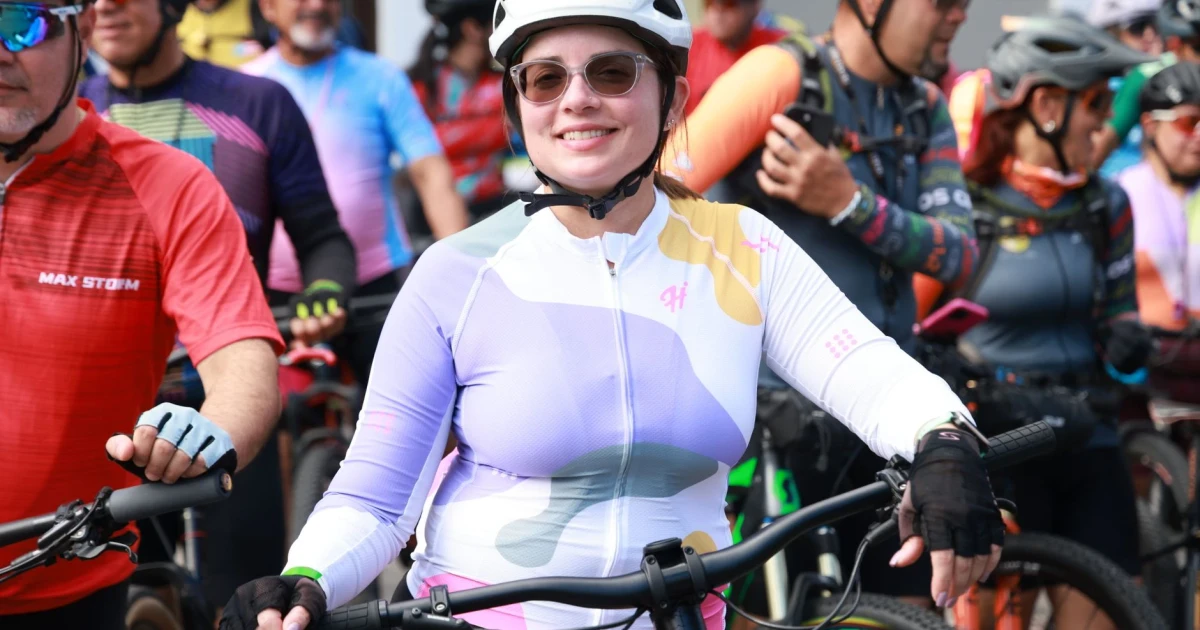
Michael George visited one class built for late learners, where adults who never got a childhood bike lesson worked through a skill most Americans pick up as children. For them, the same two wheels can feel intimidating rather than freeing. Programs around the country treat cycling less as a novelty than as a practical path to mobility, confidence and participation in everyday life.
Why adult lessons matter
The need is simple to describe and often hard to admit. People who were never taught as children can reach adulthood without the muscle memory that many riders take for granted, and even those who rode long ago may come back to the skill with hesitation. Coco Khan in The Guardian framed the experience as one of confidence as much as balance, and that is the thread running through adult bike instruction across the country.
These classes are designed for the emotional barrier as much as the physical one. They break a skill that looks effortless from the outside into manageable pieces, giving adults a way to move from uncertainty to repetition, and then to the kind of comfort that makes riding part of commuting, errands or recreation.
Chicago puts adult riders on city streets
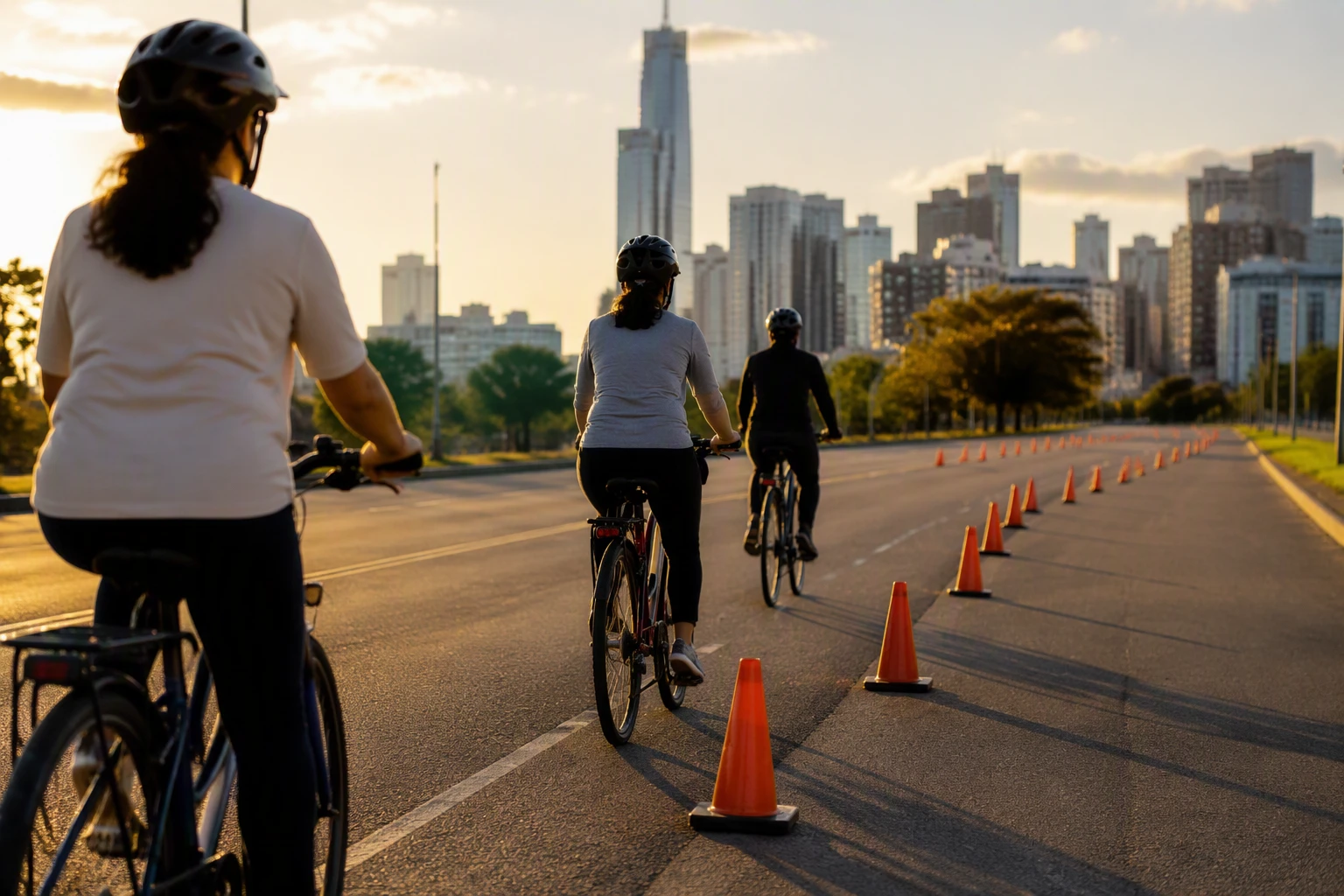
Chicago has treated the problem as a public-access issue, not just a personal one. The city offered free bicycle riding classes for adults intended to encourage people who had never ridden, or who had not ridden recently, to feel comfortable riding on city streets. The classes started on a Monday and ran in two-hour sessions, a format that signals enough time to practice without overwhelming beginners.
For many adult learners, the barrier is not desire but exposure. A short, free class removes a cost hurdle at the same time it offers direct practice in a city setting, where traffic, turns and lane positioning are part of the lesson, not an afterthought.
New York City uses group classes across the boroughs
New York City has taken a similarly practical route. The programs help first-time adult bikers “take life by the handlebars,” with Coby leading group learn-to-ride classes for adults at various locations across the city. Instead of placing instruction in one fixed neighborhood, the classes move across the city, making them available to more adults with different schedules and transit patterns.
Group learning also changes the experience. Adults who arrive convinced they are the only ones starting from zero find themselves in a room with others at the same stage, which can reduce embarrassment and help normalize the process.
Richfield offers a Spanish-language path into cycling
BikeMN’s program in Richfield shows how instruction can also meet language needs. The organization offers adults a chance to learn to ride through a four-week course that is almost entirely in Spanish. The class uses a step-by-step progression built around walking, gliding and striding before a rider reaches the point of independent cycling.
The sequence turns a skill many adults imagine as binary, either you can ride or you cannot, into a gradual process. Walking with the bike, gliding on balance and striding into motion give learners a way to absorb movement before they are asked to control it fully. For Spanish-speaking adults, the nearly all-Spanish format lowers another barrier and makes the class more accessible from the start.
What the lessons actually cover
Adult learn-to-ride instruction works because it strips cycling down to its fundamentals. A 2017 Sheffield Press guide on learning to ride as an adult laid out two-hour lessons covering mounting, starting, stopping, braking and steering, with plenty of time to practice each step. Those basics may sound elementary, but for someone who never learned as a child, they are the foundation of every later trip.
The sequence also reflects how adult bodies and adult habits learn. Teachers do not assume balance will arrive all at once. Instead, they build repetition into the lesson so riders can feel how the bike responds, how braking changes speed and how steering connects with balance. That kind of instruction turns a vague fear into a set of concrete motions that can be practiced and improved.
The practical cost of never learning
The hidden cost of never learning to ride is larger than embarrassment. It can mean depending more heavily on cars, transit or rides from other people for short trips that a bicycle could cover more cheaply and more directly. It can also mean missing out on the flexibility that matters in dense cities, where a bike can open access to errands, commutes and recreational trips that fit between work and family obligations.