Entertainment
After 50 years, New Mexico’s Star Axis is finally ready to open
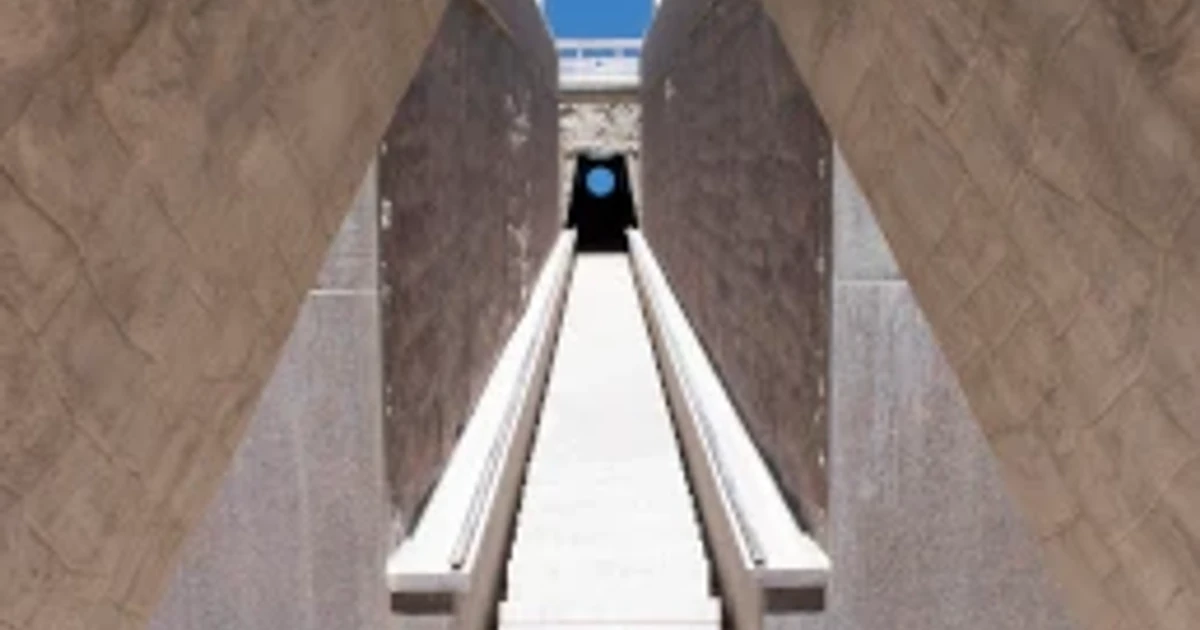
Star Axis has spent five decades at the edge of visibility: part sculpture, part observatory, part test of whether monumental art can still find a public without giving up its silence. Charles Ross conceived the work in 1971 and began building it in 1976 after a four-year search for the right mesa in the Southwest. Now the New Mexico land work is finally close enough to completion that institutions, state officials, and a new generation of viewers are treating it less as a private epic and more as a site that has to be opened, maintained, and explained.
What Star Axis is
Ross describes Star Axis as an architectonic earthwork constructed with the geometry of the stars, centered on Polaris, the North Star. He has also called it a naked-eye observatory, and that distinction matters: this is not a telescope facility, but a structure designed to train the human eye on the sky itself. Ross has said the work should “rise up out of the land, not be imposed on it,” a line that captures both its scale and its refusal of the usual museum logic.
The site remains listed by Charles Ross Studio as a work begun in 1971 and still in progress. That framing fits the project’s long timeline, but it also explains why Star Axis has always felt slightly outside the normal arts calendar. It is an artwork that requires weather, distance, darkness, and time, all of which resist the quick scan that now governs so much cultural attention.
How the structure is built
Public descriptions put Star Axis at about 11 stories tall and 0.1 mile wide, which gives a sense of how far it exceeds the scale of a conventional sculpture park object. The work is organized through a sequence of chambers, including the Star Tunnel, Equatorial Chamber, Upper Room, Solar Pyramid, Hour Chamber, and Shadow Field. Each part is meant to stage a different relationship between body, earth, and sky rather than simply present an object to be viewed from a distance.
The Solar Pyramid is one of the clearest examples of Ross’s method. It is a tetrahedron built to the angles of the sun at the summer and winter solstices, making the calendar physically legible in earth and light. Together, the chambers turn the site into a measured passage through celestial geometry, a work built on alignment rather than image.
Where it sits, and why that matters
Star Axis stands on a mesa in eastern New Mexico, and the site’s exact geographic shorthand can vary. Some references place it near Chaco Park and the Chaco Culture region, while others locate it in the area of Highway 84 near Anton Chico, New Mexico. That ambiguity is part of the larger challenge: this is not a destination that can be consumed casually from a roadside pull-off, even if it is now entering a more public phase.
The New Mexico Department of Cultural Affairs has already turned that challenge into an administrative question. In 2025, it issued a request for proposals for a feasibility study for Star Axis as a publicly owned site in San Miguel County. The proposal package set a May 30, 2025 release date and a July 11, 2025 due date, and the department’s Q&A put the study budget at $100,000. The stated purpose of the study included improving access and parking, which gets to the core issue: if Star Axis is to be more widely seen, the surrounding infrastructure has to be treated as part of the work’s future.
How the public is being invited in
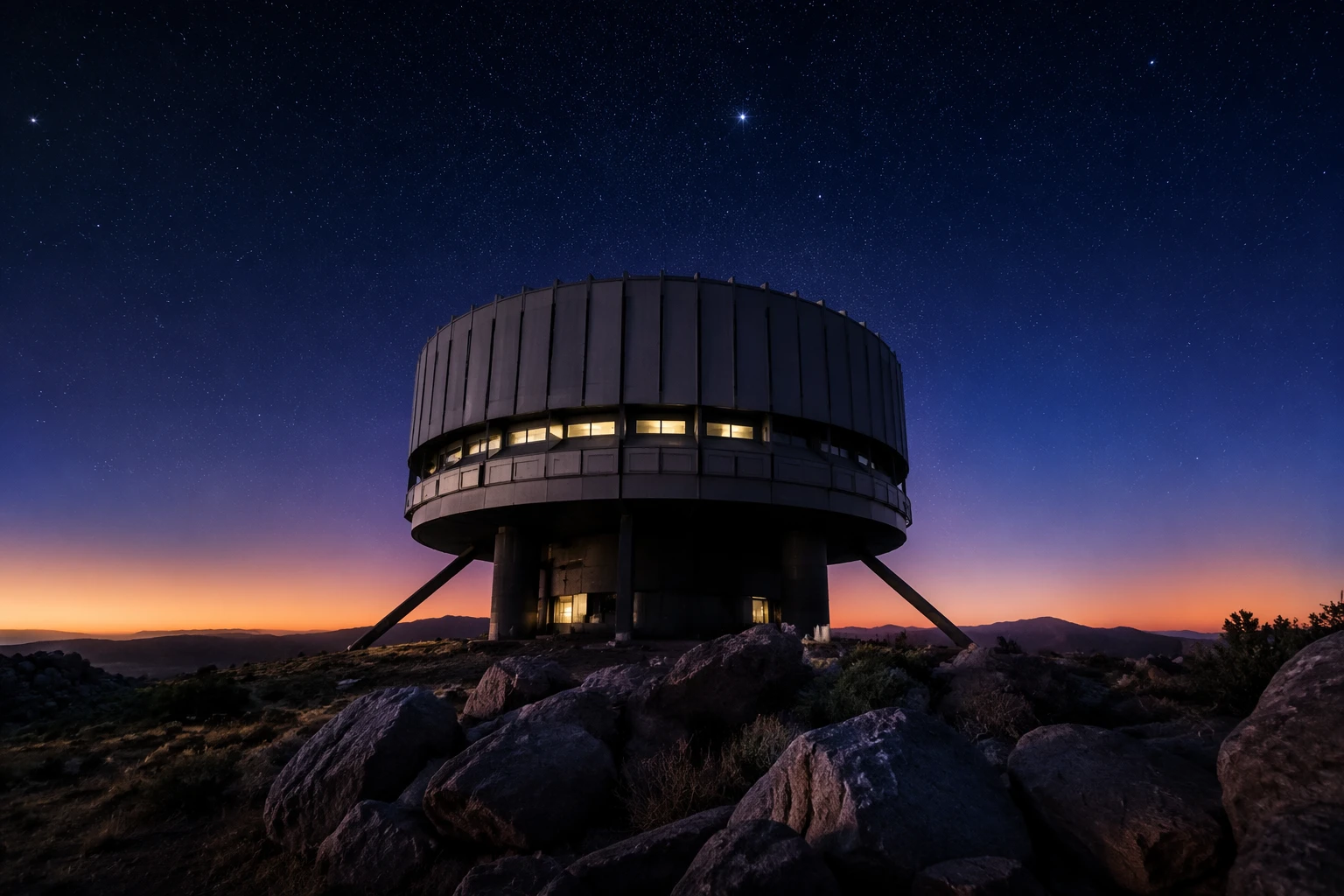
The most visible sign of renewed attention came through the Harwood Museum of Art in Taos, which organized rare overnight Charles Ross’s Star Axis + Dwan Light Sanctuary art excursions. The museum scheduled them for June 14 and 15, 2025, and again for September 6 and 7, 2025, presenting the trips as sold-out, intimate field experiences. That format fits the work better than a conventional day-trip model: Star Axis is built for twilight, darkness, and duration, not for quick turnover.
The fact that the museum paired Star Axis with Dwan Light Sanctuary is revealing. Both works ask viewers to move through light rather than simply look at it, and both depend on controlled conditions that cannot be replicated on a screen. In an era when cultural visibility is often measured in shares and scrolls, the museum’s overnight model suggests a different way to build an audience: scarcity, travel, and the discipline of being there in person.
How the art world has kept circling Ross’s work
Ross’s orbit has widened beyond the site itself. Franklin Parrasch Gallery presented Pole Star from November 3 to December 16, 2022, describing the paintings as the first of their kind whose imagery captures celestial geometries inspired by Star Axis, Ross’s monumental earth and sky work. The Brooklyn Rail published a September 2024 conversation between Ross and Michael Straus, keeping the project in circulation among readers who follow art, process, and long-form artistic practice.
The broader critical frame is already set. The Long Now Foundation has discussed Star Axis in the context of land art and deep time, and the Smithsonian Institution catalogs it as a sculpture and earthwork. Those references place Ross alongside Robert Smithson, Michael Heizer, Nancy Holt, and James Turrell, artists who made geology, duration, and cosmic scale central to American art. Star Axis belongs to that lineage, but its current phase is different: it is moving from an almost-private monument into a site that state agencies, museums, and galleries now have to help interpret and sustain.
Why this opening matters now
Star Axis arrives at a moment when institutions are reassessing who gets remembered and what kinds of work deserve the slow maintenance required by large-scale art. Its off-grid location, its dependence on night viewing, and its refusal of quick consumption make it a hard fit for the attention economy, yet those same qualities are what give it force. A public that is increasingly shaped by climate anxiety, digital saturation, and shortened cultural memory is being asked to meet a work built over 50 years, one chamber, one alignment, and one long desert horizon at a time.
Sources
- [1]nytimes.com
- [2]charlesrossstudio.com
- [3]staraxis.org
- [4]santafenewmexican.com
- [5]newmexicoculture.org
- [6]harwoodmuseum.org
- [7]franklinparrasch.com
- [8]brooklynrail.org
- [9]longnow.org
- [10]si.edu