World
Aftershocks rattle southern Philippines as quake death toll rises to 45
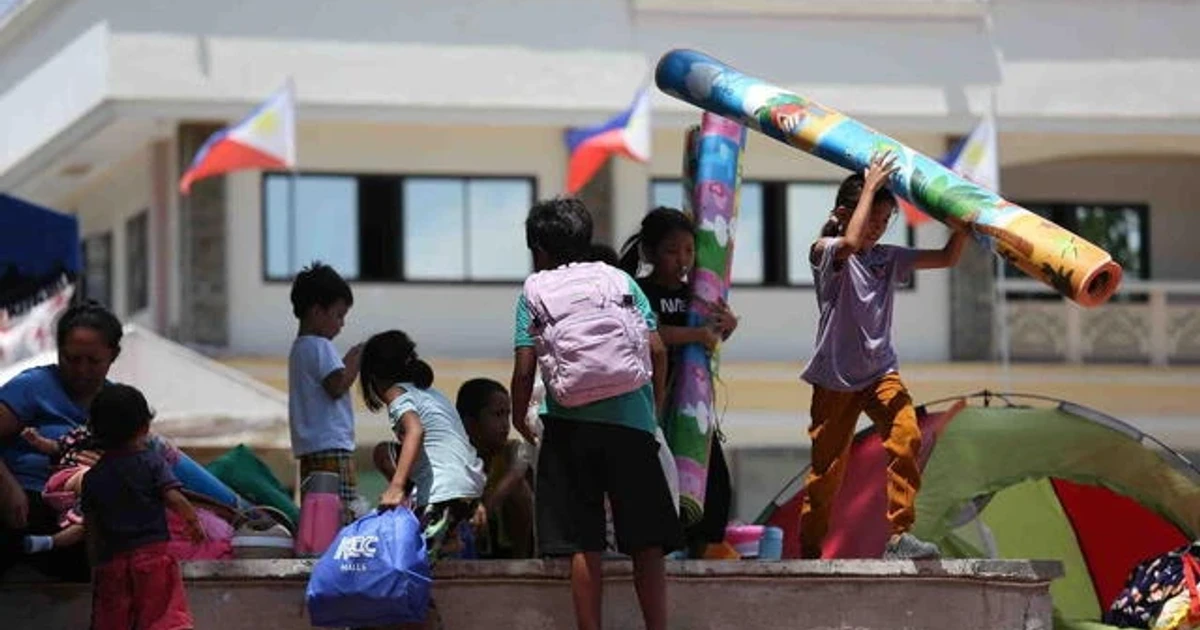
Aftershocks kept shaking southern Philippines on June 10, turning rescue work into a second disaster layered on top of the first. In General Santos, dozens of rescuers in hard hats scrambled out of a partially collapsed grocery store as debris continued to fall, a stark sign that the emergency was still active and dangerous days after the quake. The death toll rose to 45, 17 people were still missing, and more than 25,000 residents remained displaced.
The earthquake struck on June 8 at 7:37 a.m. Philippine Standard Time, a magnitude 7.8 offshore event centered about 32 kilometers west of Maasim, Sarangani, at an estimated depth of 33 kilometers. The Philippine Institute of Volcanology and Seismology said it was tectonic in origin and tied to subduction along the Cotabato Trench. PHIVOLCS had already recorded 138 aftershocks by midday on June 8, ranging from magnitude 1.3 to 6.7, and later counts topped 2,100, including some as strong as magnitude 6.4. Officials warned the aftershocks could continue for days to weeks.
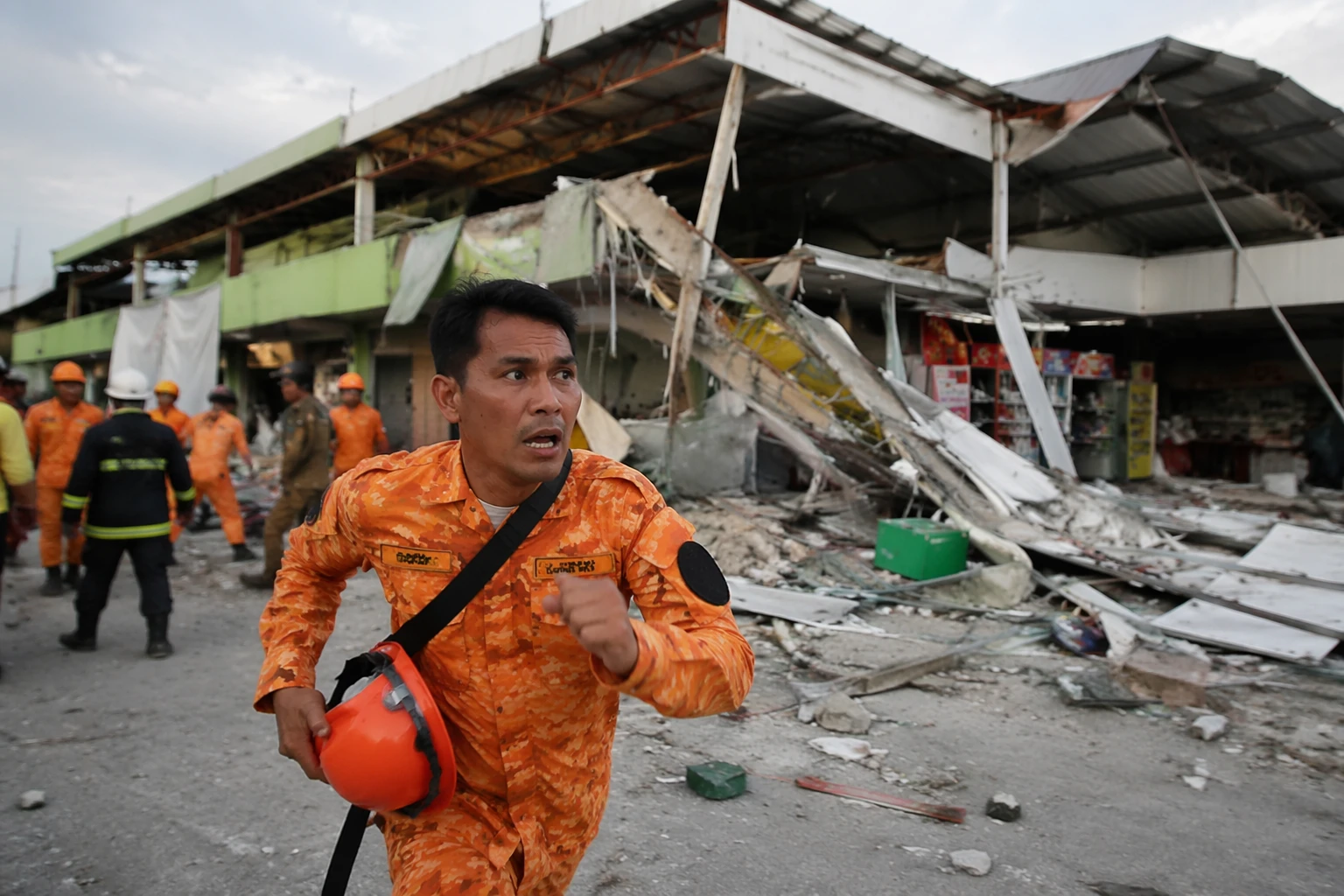
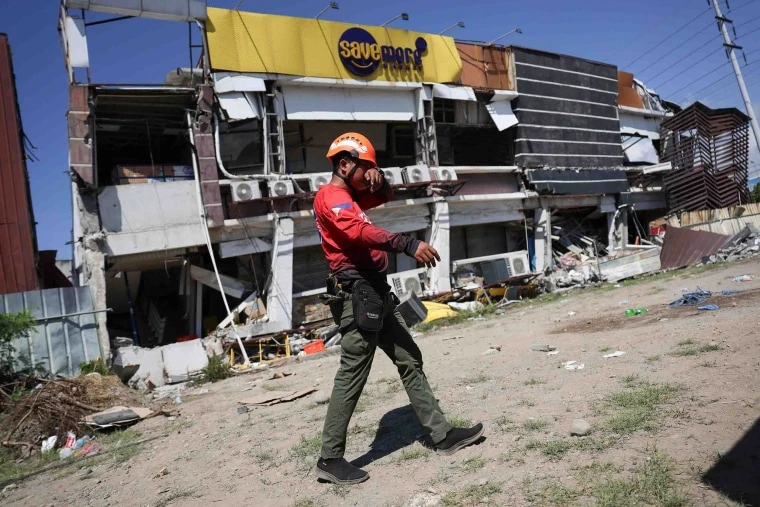
The quake triggered tsunami alerts across Sarangani, Davao Occidental, Tawi-Tawi, Sulu, Basilan, Zamboanga del Sur, Zamboanga Sibugay, Sultan Kudarat and South Cotabato. Waves of about 1 meter were recorded in Maasim and Kiamba in Sarangani, with smaller waves detected farther away, including Samar, before the warning was lifted. The scale of the damage stretched far beyond the coastline: at least 630 people were injured, more than 3,100 houses were damaged, 29 roads and 11 bridges were affected, and more than 100 government buildings suffered damage.
The United Nations Office for the Coordination of Humanitarian Affairs said more than 3.2 million learners were affected and classes were suspended in over 6,200 public and private schools while safety checks continued. Homes, hospitals, schools and government buildings were damaged or destroyed, while power and telecom outages and damaged roads were making access to affected communities slower and more uncertain. That is what makes the disaster national in scope, not just local: when roads fail, schools close and power lines go dark, rescue and recovery become a prolonged struggle.

By June 10, the government had placed the National Disaster Risk Reduction and Management Council on Red Alert and activated an Inter-Agency Coordinating Cell. Sharon Garin said 71,525 consumers were still without power, down from 130,463 when the quake struck, and President Ferdinand Marcos Jr. said families of those who died would receive 50,000 pesos each. In General Santos, the country’s tuna capital and a bustling commercial hub, the quake exposed how vulnerable quake-prone regions remain when a major rupture hits the Pacific Ring of Fire.
Sources
- [1]usnews.com
- [2]phivolcs.dost.gov.ph
- [3]unocha.org
- [4]gmanetwork.com
- [5]ksat.com
- [6]inquirer.net