Lifestyle
AI and space wealth reshape luxury buying habits
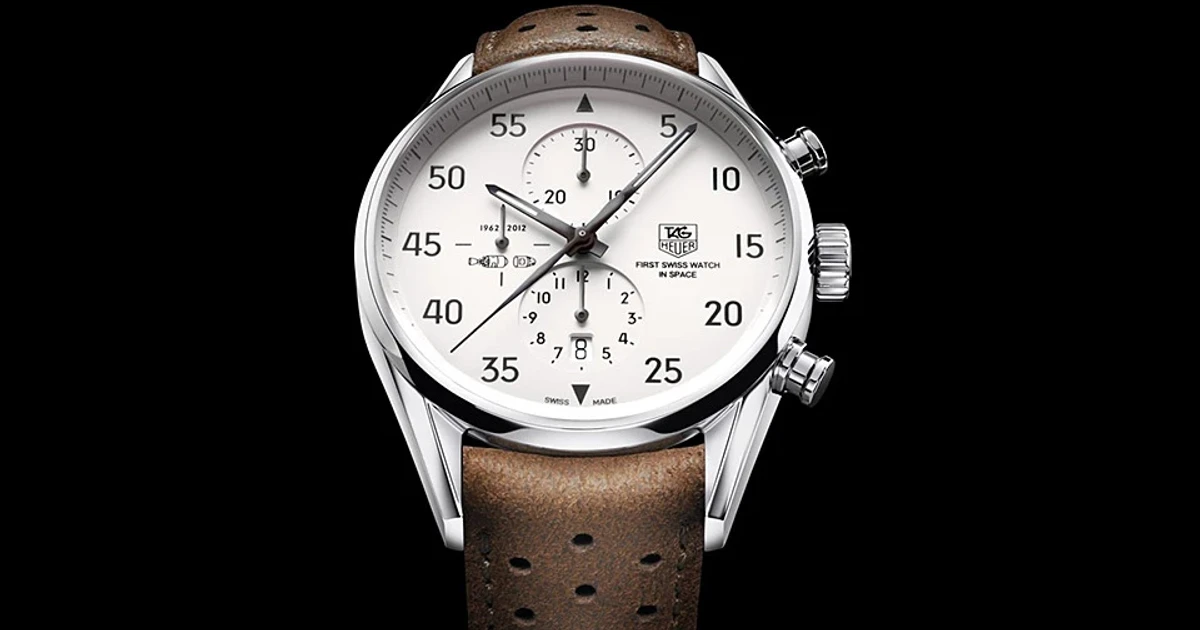
A former SpaceX data scientist with about $3.5 million in shares has been buying meteorites, a fire truck, and eyeing a TAG Heuer watch tied to John Glenn. His tastes point to a larger shift: new tech wealth is creating luxury buyers who want objects that signal irony, identity, and inside knowledge as much as wealth.
A new luxury buyer is emerging
Chip, a former SpaceX data scientist, has already spent $10,000 on meteorites and $5,000 on a fire truck. He is also considering a TAG Heuer Carrera Calibre 1887 SpaceX Chronograph, a watch that folds space history into brand storytelling with unusual precision. The purchases are eccentric on the surface, but they capture a sharper change in elite consumption: the new rich are not only buying status, they are buying references.
Wealth coming from AI companies, stock-market gains, and space ventures is arriving in a cohort that tends to be younger, more online, and more willing to spend on collectibles, experiments, and conversation pieces.
The wealth wave is large enough to move the market
The spending shift is arriving alongside a surge in millionaire creation. UBS counted nearly one million new U.S.-dollar millionaires worldwide in 2025, while Capgemini put global millionaire wealth at a record $98.3 trillion and the number of new U.S. millionaires at 736,000 that year. UBS put global wealth growth at 10.8% in 2025, its fastest pace since 2017, driven by strong financial markets.
Roughly 440,000 U.S. millionaires were minted by stock-market gains last year, and more have emerged through AI-company listings. This is not a narrow niche of founders and early employees buying one-off novelties. It is a widening class of high earners with liquid paper wealth, concentrated in sectors where exits can be sudden and taste is shaped by tech culture.
Luxury brands are chasing growth in a softer market

The broader luxury market is still sizable, but its center of gravity is changing. Bain put global luxury spending at €1,443 billion in 2025, while personal luxury goods totaled €358 billion and are expected to grow 2% to 4% in 2026. Luxury experiences continue to outpace tangible goods, a sign that many affluent buyers are putting more money into travel, access, and once-in-a-lifetime moments than into wardrobes alone.
Bain’s 2026 luxury outlook has the Americas surging, while Europe and the Middle East are dragging on performance. For luxury groups, North America has shown strength even as consumer confidence weakens in other regions.
What the watch story reveals
TAG Heuer’s connection to space dates to February 20, 1962, when John Glenn became the first American to orbit the Earth and wore a Heuer stopwatch as backup timing equipment. TAG Heuer later launched the Carrera Calibre 1887 SpaceX Chronograph in 2012 to mark the 50th anniversary of that mission, turning a piece of aerospace history into a luxury object with a built-in story.
The appeal is not just the price or craftsmanship, but the cultural shorthand: NASA, first orbit, backup timing, SpaceX, and a collector’s logic that rewards obscure references.
The new status code is stranger, faster, and more personal
The buyers shaping this market are often drawn to experiences, wellness, collectibles, and playful status goods rather than classic handbags or jewelry alone. Recent luxury research also points toward understatement and emotional luxury, where value comes from meaning, scarcity, and personal narrative instead of obvious display.
Sources
- [1]money.usnews.com
- [2]finance.yahoo.com
- [3]bain.com
- [4]ubs.com
- [5]capgemini.com
- [6]magazine.tagheuer.com
- [7]tagheuer.com