Technology
AI Expansion Challenges Tech Giants’ Climate Ambitions
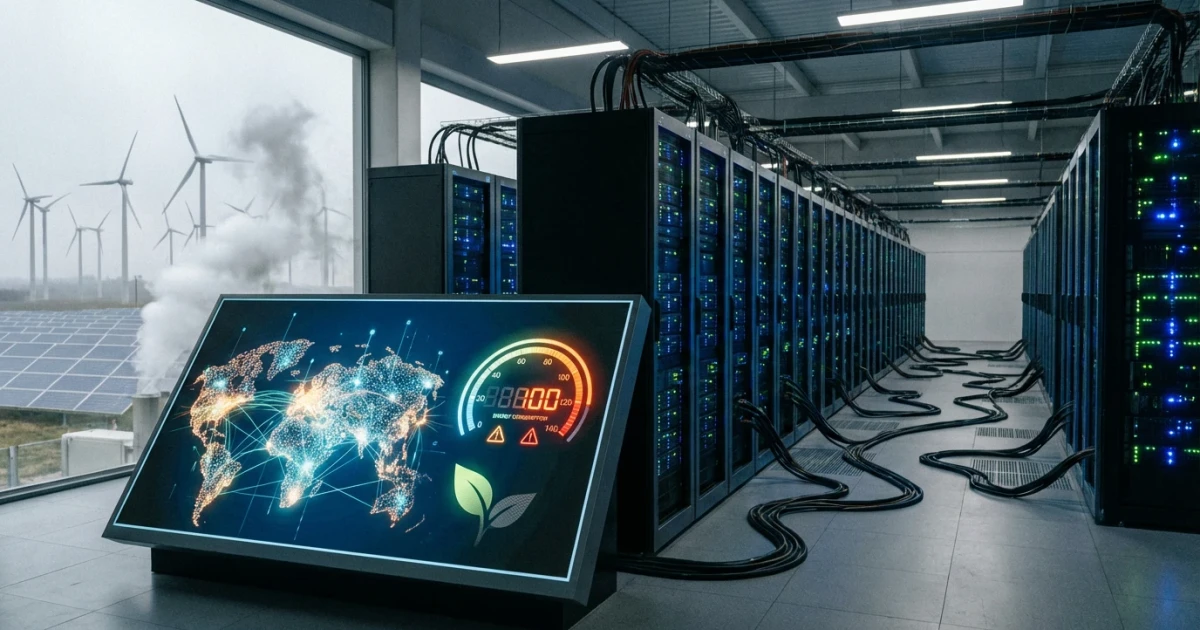
Artificial intelligence is transforming the technology sector, but the rapid expansion of AI is creating new challenges for Big Tech’s climate goals. As companies like Google, Microsoft, and Amazon pour resources into advanced AI models and data centers, their efforts to reduce greenhouse gas emissions are colliding with the growing energy demands of these technologies.
Rising Energy Consumption Amid AI Growth
The surge in data center energy use is closely tied to the proliferation of AI workloads. Training and running large language models and other AI applications require massive computational power, much of which is handled in sprawling data centers worldwide. The International Energy Agency’s (IEA) 2024 report highlights that global electricity demand from data centers, cryptocurrencies, and AI could double between 2022 and 2026, reaching over 800 terawatt-hours (TWh) – equivalent to the electricity consumption of some mid-sized nations.
- Google, for example, reported a 48% jump in data center electricity use between 2019 and 2022, largely attributed to AI expansion.
- Microsoft’s Emissions Impact Dashboard shows that total energy use has climbed in parallel with the company’s AI investments.
According to the Los Angeles Times, these increases are undermining previously set climate targets. Many tech giants had pledged to achieve net-zero carbon emissions by 2030 or sooner. However, the additional energy required to power AI training, inference, and services often comes from grids still reliant on fossil fuels, leading to higher emission totals.
Environmental Impact and Emissions
Peer-reviewed research published in Nature Climate Change finds that training a single large AI model can emit as much carbon as several hundred trans-Atlantic flights. As AI adoption accelerates across cloud platforms, streaming services, and enterprise tools, the aggregate environmental impact grows further.
- Data from the U.S. EPA confirms that technology sector emissions are a rapidly growing share of national greenhouse gas totals.
- The IEA estimates that AI and data centers together could account for as much as 4% of global electricity demand by 2026.
Balancing Innovation and Sustainability
Major tech firms are responding with new investments in renewable energy, more efficient data center designs, and advanced cooling technologies. Google’s environmental report details efforts to match energy use with renewable power procurement, while Microsoft is piloting grid-interactive data centers to reduce reliance on carbon-heavy electricity during peak periods.
Nonetheless, the Los Angeles Times notes that the speed of AI’s growth is outpacing these sustainability measures. Many experts are calling for industry-wide standards and more transparent reporting to fully account for AI’s carbon footprint. Some advocate for government policies that would incentivize greener data infrastructure and research into less energy-intensive AI algorithms.
Looking Ahead
As AI becomes more deeply embedded in daily life and business, the tension between innovation and sustainability will remain a central challenge for the tech sector. Future progress may depend on breakthroughs in clean energy, efficiency gains, and systemic changes in how digital services are delivered.
For now, the promise of AI must be carefully balanced against its environmental costs, ensuring that technological advancement does not come at the expense of global climate goals. Readers can explore more on the evolving relationship between data center energy use and technology sector emissions, as well as the latest global data center electricity consumption trends.