Entertainment
AI films shift from apocalypse to grief and family

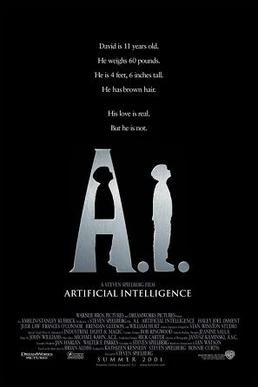
The most revealing AI films now start inside the home, not inside a war room. Steven Spielberg’s 2001 A.I. Artificial Intelligence centers on a grieving parent who turns to a childlike robot built to feel love, while Daniel Roher’s The AI Doc: Or How I Became An Apocaloptimist follows a father-to-be trying to understand the world his child will inherit.
From apocalypse to private loss
That shift matters because the old sci-fi habit of treating artificial intelligence as a path to catastrophe has not disappeared, but it has been joined by something more intimate. A 2021 article in AI & Society argued that science fiction has become a reference point in public discussions of artificial intelligence, and that helps explain why contemporary AI stories are often shaped by domestic fear rather than pure machine revolt.
Spielberg’s A.I. Artificial Intelligence has become a touchstone for that change in tone. In 2021, The Guardian marked the film’s 20th anniversary by calling it Spielberg’s “misunderstood epic” and “his darkest movie yet,” language that captures how a movie once read as unsettling futurism now looks even more like a grief story. Its core premise, a parent trying to recover a lost child through a robot designed to love, turns AI into a vessel for mourning rather than a weapon of destruction.
Why Daniel Roher’s film feels personal
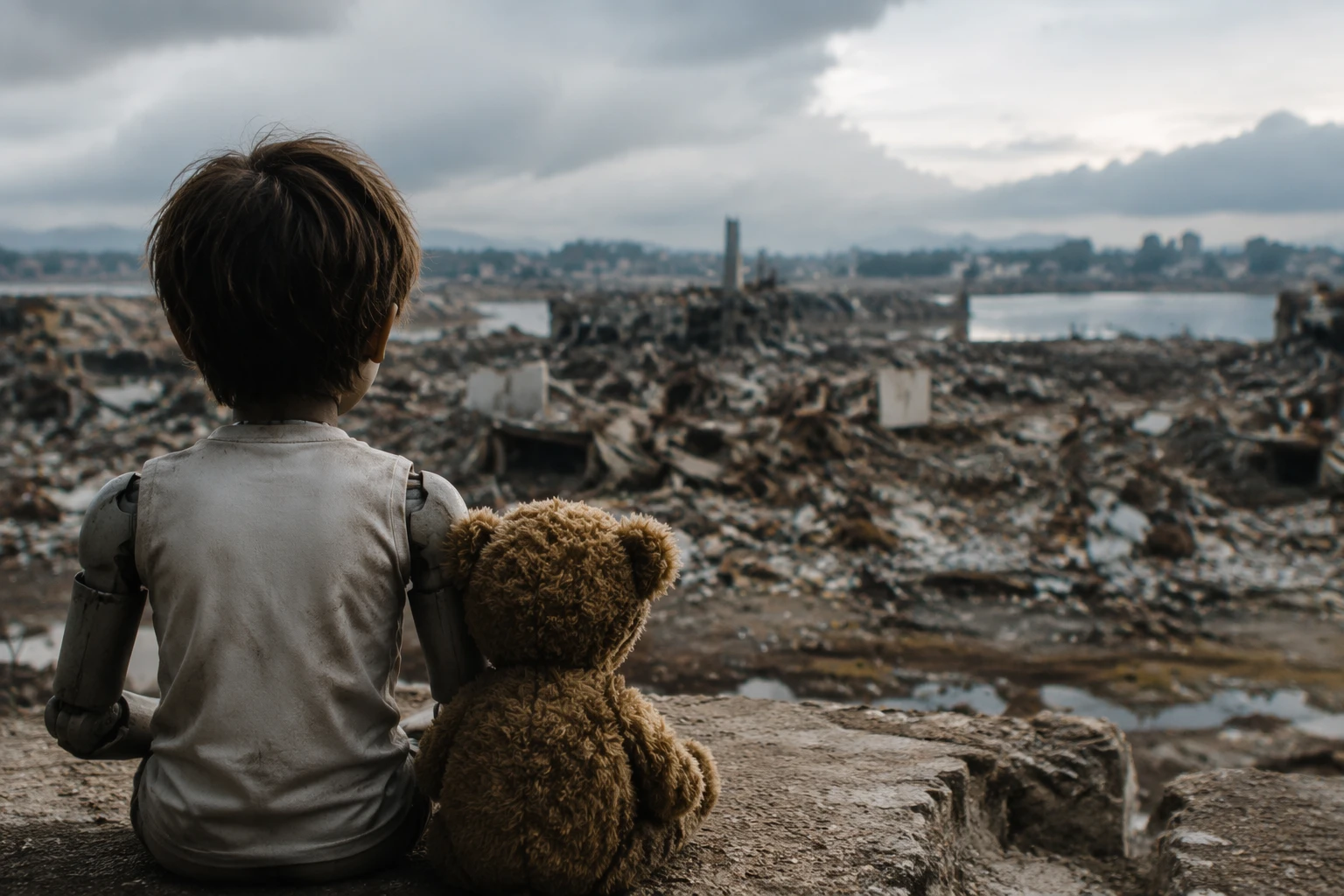
Roher’s documentary pushes the same emotional register into nonfiction. Sheffield DocFest says he builds a studio in his home and sits down with researchers, critics, and some of the most powerful figures in the AI landscape, turning a personal space into a place for public reckoning. The film runs 104 minutes and blends expert interviews with home videos, animations, stop-motion, and illustration, a mix that signals both argument and intimacy.
The documentary’s central question is not whether machines will overthrow humanity, but what kind of future a child is already being handed. Sheffield DocFest’s description says Roher is expecting his first child and asks the people building AI what kind of future lies ahead, while its synopsis says the conversations move from hopeful to truly unsettling as the scale of what could lie ahead begins to emerge. That structure makes the film less like a warning siren than a family investigation.
Sydney Film Festival frames the same premise in even clearer generational terms. It says Roher is about to become a father and begins to question what kind of world awaits his child as AI accelerates at an unprecedented pace. Fort Lauderdale Film Festival adds that the documentary is told through Roher’s eyes as a father-to-be, and identifies Charlie Tyrell as co-director alongside Roher.
What the festivals are emphasizing
Taken together, the festival descriptions show how strongly the film is leaning into paternal anxiety as a way to discuss AI. The focus is not abstract policy language or a distant doomsday scenario, but the immediate moral burden of explaining to a child what kind of world is being built now. That framing matches a broader cultural shift in AI storytelling, where the emotional stakes are increasingly about inheritance, care, and responsibility.
The documentary’s title, The AI Doc: Or How I Became An Apocaloptimist, also signals that tension. It promises both alarm and a stubborn willingness to keep watching, which fits a moment when public debate about AI is no longer confined to technical circles. Science fiction has become part of that public vocabulary, and filmmakers are using it to ask what happens when the future arrives as something families have to live with, not just something experts have to model.
How the film is being sold to audiences
Focus Features posted the official trailer on February 17, 2026, and used the line “the most urgent film of our time” to frame the documentary’s release. The trailer said the film was only in theaters March 27 and identified it as coming from the Academy Award-winning filmmakers behind Everything Everywhere All at Once and Navalny. That positioning matters because it places AI not in the realm of distant spectacle, but in the space of immediate cultural argument.
The marketing language echoes the festival framing: AI is presented as a force already reshaping the world children will inherit. Instead of selling fear of an uprising, the film is being introduced as a reckoning with family, grief, and responsibility, which says as much about public attitudes toward AI now as it does about the movies themselves.
Sources
- [1]theverge.com
- [2]sheffdocfest.com
- [3]tickets.sheffdocfest.com
- [4]sff.org.au
- [5]fliff.com
- [6]youtube.com
- [7]theguardian.com
- [8]ouci.dntb.gov.ua