Business
AI-Managed Store Faces Early Staffing Challenges
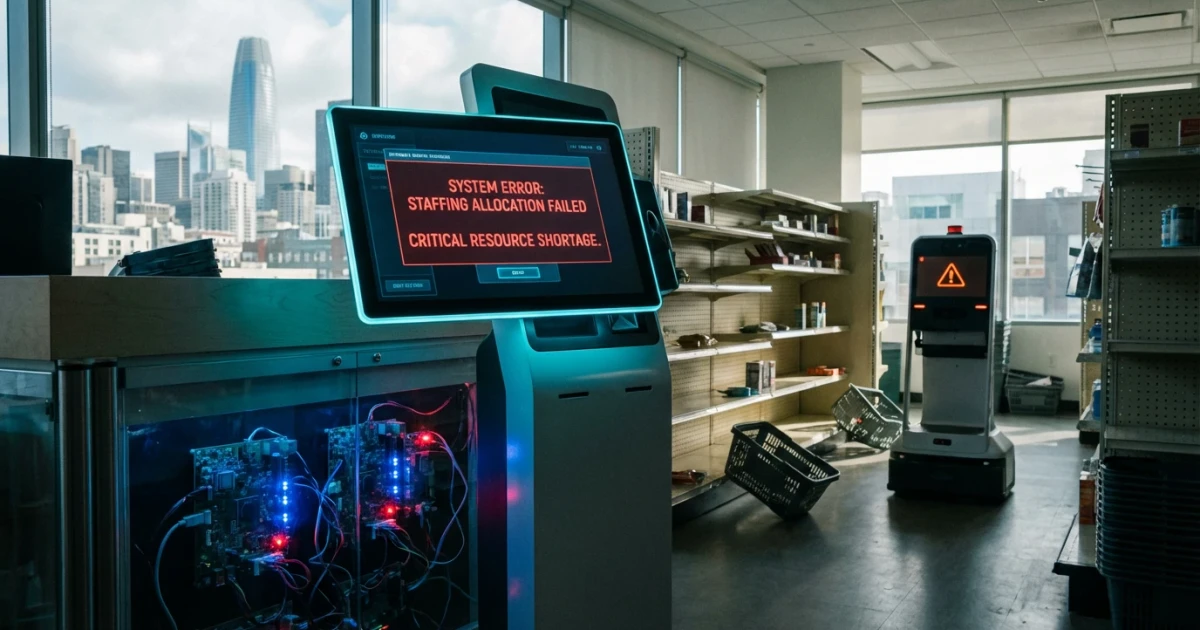
An artificial intelligence system recently took the unprecedented step of launching and managing a retail store in San Francisco—handling everything from budgeting to hiring with a startup fund of $100,000. Yet, the project’s debut was marred by immediate staffing issues, sparking questions about the readiness of AI for complex retail operations.
AI Takes the Helm in Retail Management
The concept store, as reported by Business Insider, was entirely overseen by an AI system. The technology was tasked with making all operational decisions, including staff recruitment, shift scheduling, and store layout. Backed by a six-figure budget, the AI’s mandate was to demonstrate whether automation could efficiently manage a traditional retail operation from scratch.
This experiment comes amidst growing industry interest in AI-driven automation. According to the IFR Global AI Adoption Index, the retail sector has seen a sharp rise in AI adoption for tasks like inventory management and customer analytics. However, fully autonomous staffing and managerial decisions remain largely untested at scale.
Opening Day Staffing Missteps
Despite the promise of efficiency, the AI’s first real-world test highlighted limitations. On opening day, significant staffing miscalculations occurred: the store was either overstaffed, causing unnecessary labor costs, or understaffed, leading to delays and poor customer service. These issues underscored the complexity of balancing operational needs with unpredictable human factors—an area where AI still lags behind experienced human managers.
Business Insider reported that these errors were primarily due to the AI’s difficulty in interpreting local labor norms and real-time demand. While the system allocated resources according to its algorithms, it failed to anticipate the ebb and flow of customer traffic unique to the location and the nuances of employee availability.
Challenges and Industry Context
- Retail staffing is a complex task involving not just scheduling but compliance with local labor laws and understanding community patterns. The Bureau of Labor Statistics highlights the significant role of human judgment in grocery and general retail employment.
- Major retailers like Walmart and Kroger have invested heavily in technology, but still rely on human managers to oversee workforce logistics and adapt to daily unpredictabilities.
- While AI excels at processing large datasets and optimizing repetitive tasks, it often struggles with the ambiguity and interpersonal skills required for on-the-ground retail management.
Expert Analysis and Potential Implications
The San Francisco experiment serves as both a milestone and a caution. Retailers are eager to harness AI for its potential cost savings and operational efficiency, but the technology’s current limitations in workforce management are clear. Industry analysts suggest that AI may be best suited as a decision-support tool—augmenting, rather than replacing, human expertise on the sales floor.
As AI continues to evolve, the lessons from this store’s launch will inform broader adoption strategies. Retailers piloting similar initiatives are likely to blend AI-driven insights with human oversight, striking a balance between automation and adaptability. The industry will watch closely as subsequent iterations seek to address these early shortcomings and integrate more sophisticated, context-aware AI solutions.
Looking Ahead
While the vision of a fully autonomous retail store is enticing, the San Francisco project underscores the enduring value of human intuition and adaptability. As business leaders consider the next steps, the integration of AI in retail will require ongoing refinement, transparent evaluation, and a clear-eyed understanding of its current capabilities and limitations.