Technology
AI may ease work, but researchers warn of weaker thinking
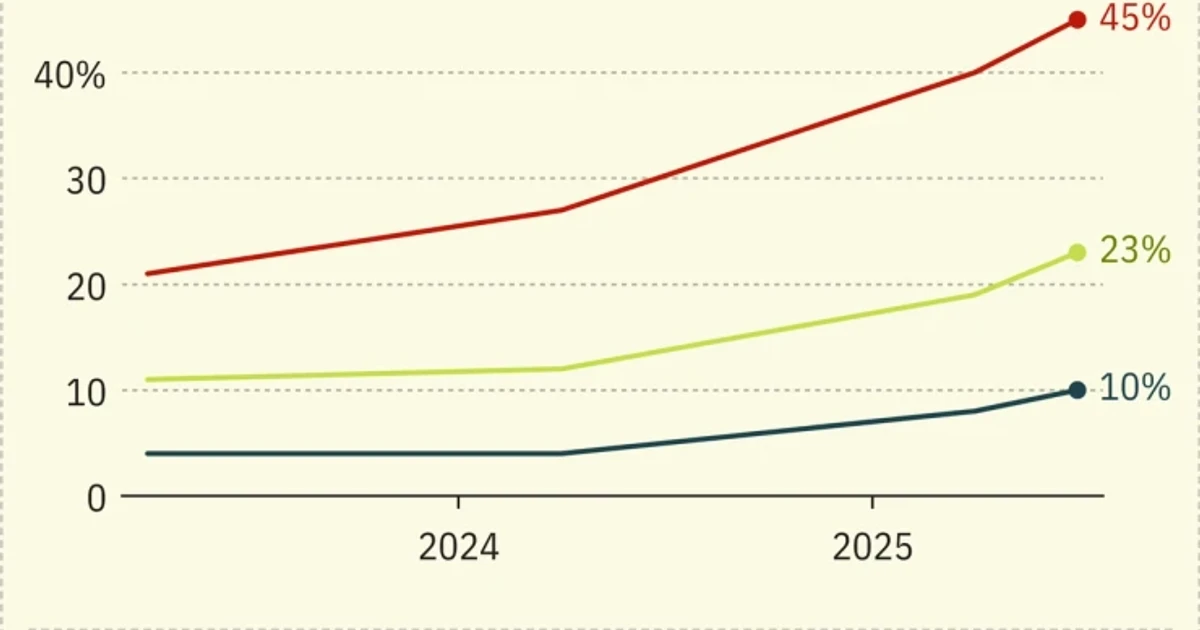
Half of U.S. workers now use AI in their role at least a few times a year, and 13% use it daily, Gallup said in April 2026. The speed is part of the appeal, but it is also what worries researchers: when a tool delivers the answer before a person has to wrestle with the problem, the work can feel easier even as the thinking gets thinner.
That concern has moved from theory into the center of the debate around generative AI. A 2024 commentary in Nature Human Behaviour warned that large language models can produce sophisticated text or code with little user input, with the potential to impoverish human writing and thinking skills. Nature later cautioned in 2025 against reading too much into a small ChatGPT brain-activity experiment that drew heavy attention, a sign that the evidence is real but still developing.
The public is not especially reassured. Pew Research Center found in 2025 that 51% of U.S. adults were more concerned than excited about AI, compared with 15% of AI experts. Pew also found that more than six in 10 Americans want more control over AI in their own lives, underscoring how quickly the question of dependence has moved from a workplace concern to a broader issue of autonomy.
The strongest worry is not that people will stop using their brains altogether, but that they will stop practicing the parts of thinking that make learning stick. Recent studies have linked generative AI use with lower cognitive load and better immediate performance, while also raising concerns about weaker critical thinking, decision-making and analytical reasoning, especially in higher education. In practical terms, that can mean fewer chances to draft, revise, outline, recall, compare, and test ideas before accepting an answer.

Researchers and companies are now trying to keep AI from becoming a shortcut that erases the hard parts of learning. OpenAI introduced Study Mode in July 2025 as a guided ChatGPT experience that works step by step, using questions, scaffolding and feedback instead of just giving quick answers. OpenAI has also expanded memory features so ChatGPT can remember context from past chats, while still giving users controls to turn memory off or use temporary chats.
Harvard Business School research has found that generative AI can raise productivity and improve idea generation, including in field experiments with consultants and product teams, but the benefits depend heavily on workflow and task design. The lesson running through that work is simple: AI can help people think more efficiently, but only if the human keeps doing enough of the thinking to stay sharp.
Sources
- [1]nytimes.com
- [2]nature.com
- [3]gallup.com
- [4]pewresearch.org
- [5]openai.com
- [6]aiinstitute.hbs.edu
- [7]hbs.edu