Science
AI Revolutionizes Astronomy: Hundreds of Cosmic Anomalies Detected in Hubble Archive
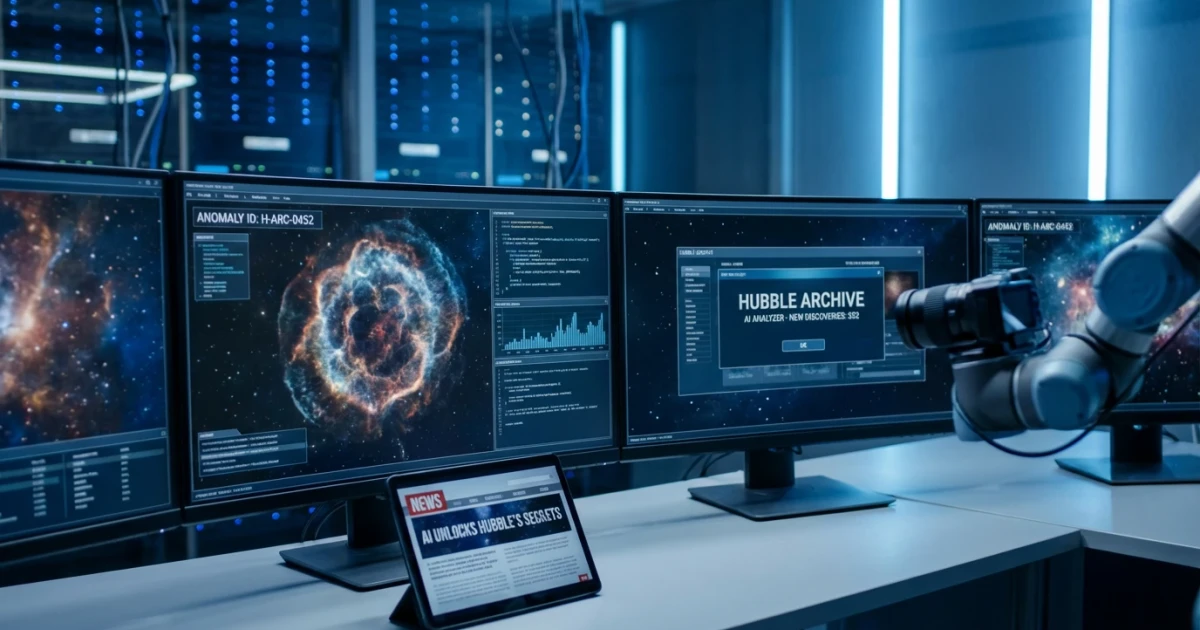
In a landmark advancement for astronomical research, an artificial intelligence (AI) tool has enabled scientists to detect hundreds of previously unidentified cosmic anomalies within the vast archive of data collected by the Hubble Space Telescope. This breakthrough marks a significant leap forward in utilizing AI to unlock the mysteries of the universe and could pave the way for new discoveries about the cosmos.
AI Tool Uncovers Hidden Celestial Phenomena
The recently developed AI system was tasked with analyzing extensive datasets from Hubble’s decades-long mission. According to reports, the algorithm rapidly sifted through millions of images, identifying hundreds of astrophysical anomalies—unusual objects or events that had previously escaped human detection. These anomalies represent outliers in the data: phenomena that do not fit established categories, ranging from odd galaxy formations to potential signatures of rare cosmic events.
Why Anomalies Matter
- Anomalies often lead to paradigm shifts in astronomy, offering hints of unknown processes or objects.
- Previous major discoveries—such as pulsars and quasars—were first identified as anomalies.
- The new findings could include rare events like gravitational lensing, exotic supernovae, or even entirely new classes of astronomical objects.
How AI Is Changing Astronomy
Traditionally, astronomers rely on manual inspection and established algorithms to analyze telescope data. However, the sheer volume of images collected by Hubble—spanning over 30 years—makes comprehensive human review impractical. The new AI system, trained to spot deviations from the norm, can process vast datasets at speeds unattainable by humans, identifying subtle patterns and outliers that might otherwise go unnoticed.
Both ScienceAlert and NASA Science emphasize the transformative role of AI in this discovery, noting that the tool has enabled a new era of data-driven exploration. The anomalies flagged by the AI are now prime candidates for follow-up investigation, potentially guiding future observational campaigns.
What Was Found: Hundreds of Anomalies
The AI combed through Hubble’s extensive image repository and flagged hundreds of cosmic anomalies. While the exact nature of these anomalies remains to be fully analyzed, astronomers are optimistic that the sample includes:
- Unusual galactic morphologies
- Potential gravitational lensing events
- Transient or variable phenomena
- Objects with atypical spectral signatures
Researchers are now working to catalog and study these objects in more detail, which could lead to new insights into galaxy evolution, dark matter, and the structure of the universe.
Significance for Future Research
This breakthrough demonstrates the power of AI to accelerate scientific discovery by handling large, complex datasets. The identification of hundreds of anomalies suggests that even well-studied archives like Hubble’s still hold untapped potential. As astronomers continue to analyze these findings, the scientific community anticipates that some anomalies could redefine current theories or reveal entirely new phenomena.
Looking Forward
The success of this AI-driven approach is expected to influence future space missions and research strategies. With upcoming telescopes such as the James Webb Space Telescope and the Nancy Grace Roman Space Telescope set to collect even more data, AI will be indispensable for unlocking new cosmic secrets.
The detection of hundreds of cosmic anomalies in Hubble’s archive illustrates how AI is revolutionizing astronomy—making the impossible not just possible, but routine. As scientists dig deeper into these anomalies, the universe may soon reveal more of its hidden wonders.