Science
AI Revolutionizes Astronomy: Hundreds of Cosmic Anomalies Discovered in Hubble Archive
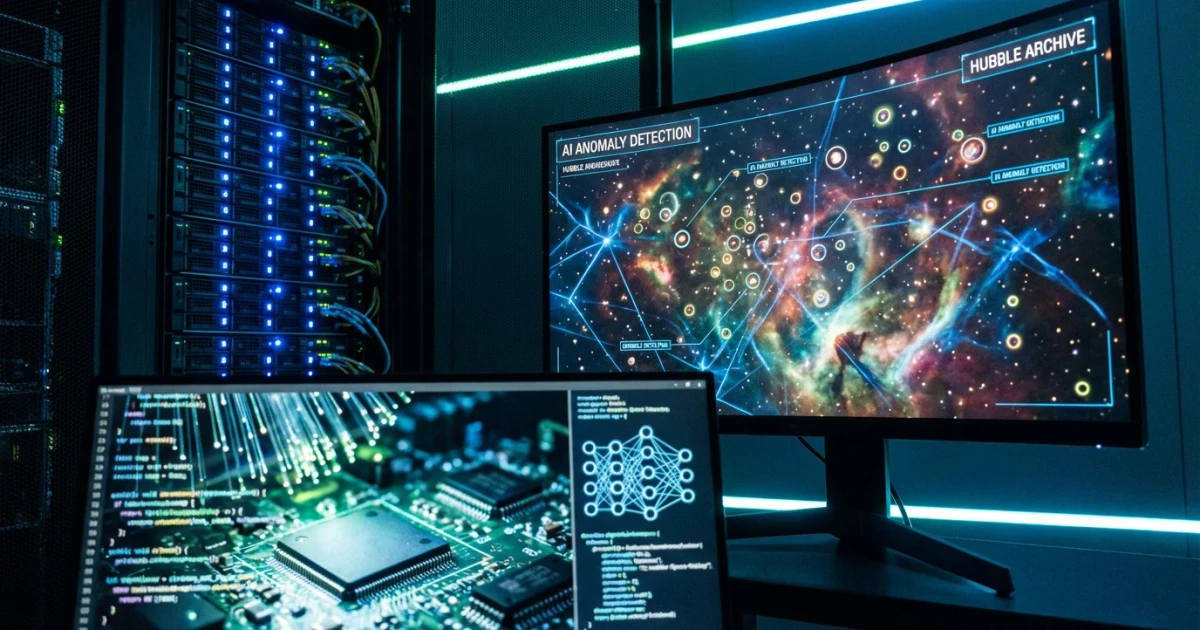
Astronomers have made a groundbreaking leap in the search for cosmic mysteries by leveraging artificial intelligence to uncover hundreds of previously undetected anomalies within the Hubble Space Telescope's vast archival data. This technological advance is poised to transform our understanding of the universe and spark new lines of scientific inquiry.
AI Tool Unearths the Unexpected
By applying a cutting-edge AI algorithm to decades of Hubble Space Telescope observations, researchers have identified hundreds of astrophysical anomalies—objects and events that diverge from known cosmic phenomena. Both ScienceAlert and NASA Science highlight that this achievement marks a significant milestone in the use of machine learning for space research.
- The AI combed through terabytes of archival Hubble images and data, flagging anomalies that were previously overlooked by human researchers.
- These anomalies include unusual galaxies, rare star configurations, and other enigmatic features that defy current astronomical categorization.
- Many of these objects could offer insights into unexplored astrophysical processes.
Breakthrough for Big Data in Space Science
With the Hubble Space Telescope collecting data since 1990, the archive has grown to a scale that is nearly impossible for traditional methods to analyze exhaustively. The new AI tool bridges this gap, automating the search for unusual cosmic phenomena across massive datasets.
- AI excels at pattern recognition and anomaly detection, making it ideal for identifying rare or unexpected cosmic events.
- The project demonstrates how AI can accelerate discoveries in astronomy, allowing scientists to focus on the most intriguing findings for further analysis.
Potential for New Discoveries
Scientists are now examining the flagged anomalies to determine their nature and significance. While some may be previously unknown types of galaxies or stars, others could represent entirely new astrophysical classes or rare phenomena such as gravitational lensing events, merging galaxies, or even signatures of phenomena yet to be theorized.
- The anomalies could help refine existing models of galaxy formation and evolution.
- Some findings may provide clues about the early universe or the fundamental forces shaping cosmic structures.
Looking Ahead: AI and the Future of Astronomy
This breakthrough underscores the growing role of artificial intelligence in space science. As more advanced tools come online and more missions generate ever-larger datasets, AI is expected to play an even more central role in identifying, classifying, and understanding the universe's hidden phenomena.
The ongoing analysis of these newly discovered anomalies may lead to major scientific revelations and could inspire future missions or targeted observations by telescopes like James Webb Space Telescope and other observatories.
Conclusion
The discovery of hundreds of cosmic anomalies with AI marks a pivotal moment in astronomy, demonstrating how technology can amplify human curiosity and catalyze new explorations of the cosmos. As researchers delve into these findings, the universe's most profound secrets may soon come to light.