Business
AI spending, earnings and Fed shift to test U.S. stocks

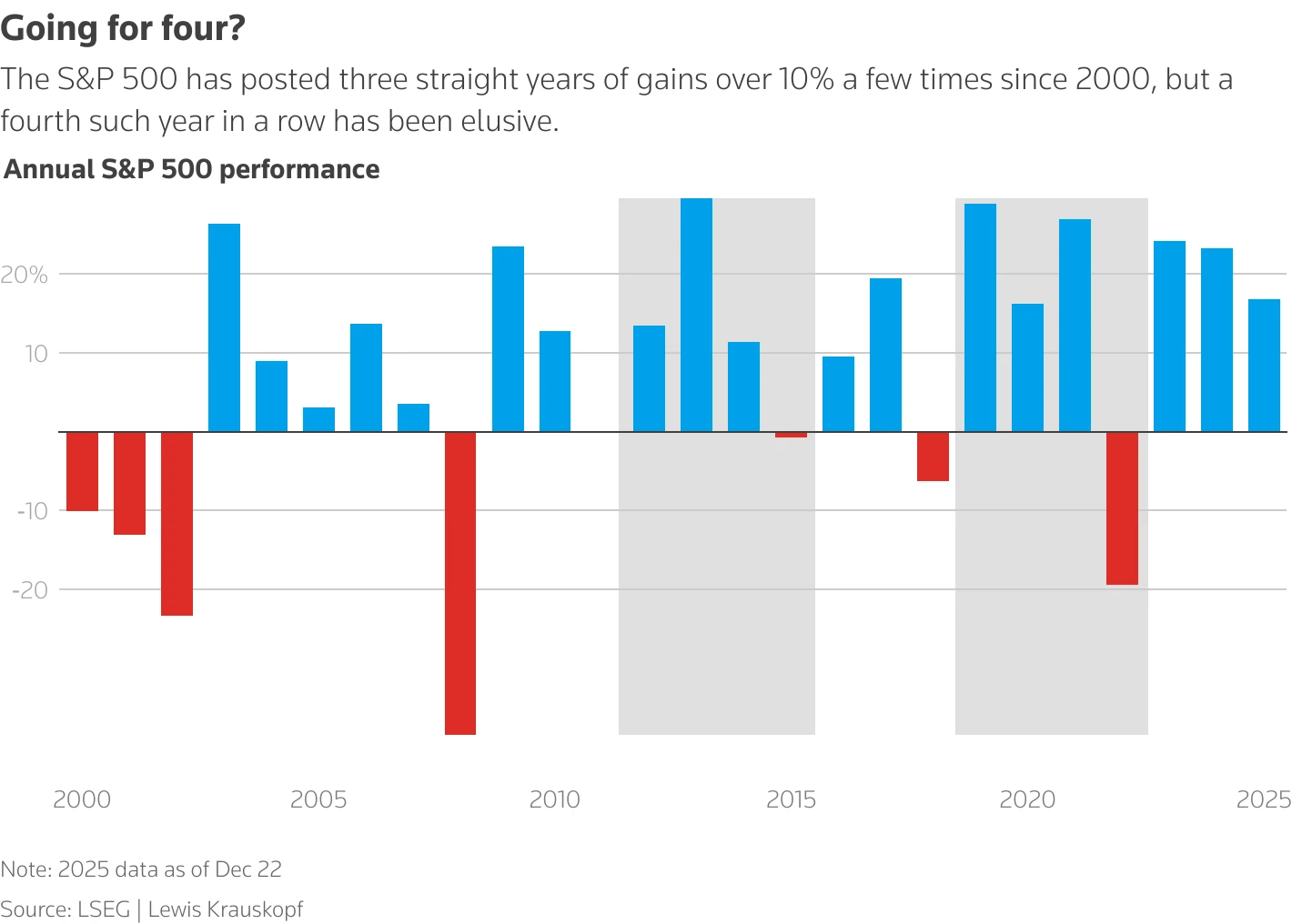
The S&P 500 has climbed more than 8% this year and the Nasdaq Composite about 11%, but June’s uneven trading made one thing clear: the AI-led advance is no longer moving in a straight line, and investors now want proof.
The question hanging over the rally
The central issue is whether the same forces that powered the first half can keep carrying valuations higher. AI spending has become a pillar of the bull market, and corporate earnings have held up well enough to justify much of the optimism. What changes now is the burden of proof: markets will need to see that enormous capital spending can translate into real profit growth, and that the Federal Reserve can adjust policy without breaking confidence.
When large-cap technology shares drive the market, they can lift 401(k)s and retirement accounts quickly, but they can also pull them back just as fast if the narrative shifts.
AI spending has become the market’s main support
The biggest single support for stocks remains the AI infrastructure buildout. JPMorgan forecasts that five companies, including Microsoft, Alphabet and Amazon, will spend about $730 billion in combined capital expenditures this year. That scale of spending has fueled a trade that reaches well beyond software and cloud computing.
Semiconductor shares have benefited as investors bet that chip demand will stay strong. Industrial and energy stocks have also gained from the need to build data centers and supply their power.
The risk is that crowded positioning leaves little margin for error. If investors start to doubt that hyperscalers can earn adequate returns on this spending wave, the pullback could hit the very parts of the market that have done the most to support household portfolios.

Earnings still justify the market, but only if they keep beating
Earnings remain the second major test. S&P 500 earnings are expected to rise by more than 26% in 2026, and all 11 sectors are projected to post higher profits.
But projections are not the same as delivery. Investors are now focused on whether companies can actually clear those expectations, especially in technology, where the AI theme has driven much of the multiple expansion. If results come in merely decent rather than exceptional, the market could react harshly because valuations already reflect a lot of good news.
Rising earnings can justify higher stock prices, but slowing profit growth can compress valuation multiples even if revenues continue to climb. In practical terms, that means a 401(k) heavy in large-cap growth funds could remain vulnerable if companies spend heavily on AI while margins fail to expand at the same pace.
Margins are the hidden pressure point
Corporate margins are the real battleground in the second half. Heavy AI capital expenditures can be bullish for suppliers and infrastructure names, but they also raise the question of when, and whether, those investments begin to generate enough revenue to offset the cost. If companies keep pouring cash into chips, servers, data centers and power systems without showing a clear path to returns, profit margins could come under pressure.
The more investors assume that spending automatically means future earnings power, the more sensitive stocks become to any sign that payback is delayed. For retirement accounts, that can mean higher day-to-day volatility in the same funds that benefited from the first-half rally.
Fed uncertainty could reset valuation math
The third big variable is the Federal Reserve, now led by a new chairman. Investors are trying to understand how that leadership shift will affect policy, especially as rate-cut expectations remain a major part of the market’s valuation support. Lower rates tend to help growth stocks because they reduce the discount rate applied to future profits, which is one reason the tech-heavy Nasdaq has been so sensitive to Fed signals.
If rate-cut expectations rise, stocks can get another lift, particularly in sectors with long-duration earnings such as technology. If those expectations fade, the opposite can happen quickly. That change would not stay on Wall Street; it would feed directly into retirement accounts through index-fund exposure, growth-stock allocations and bond-market repricing that affects balanced portfolios.
Mega IPOs could add another layer of strain
The market also faces a new wave of large offerings. Expected mega IPOs from Anthropic and OpenAI could put pressure on market liquidity. Large deals can draw capital away from existing stocks, and they can force investors to rebalance at a time when valuations are already elevated.
For a market led by AI enthusiasm, these offerings create a strange mix of validation and strain. They reinforce the scale of investor appetite for artificial intelligence, but they also test whether public-market demand is deep enough to support both the incumbents and the new entrants. If liquidity gets tighter, the impact can spill into broader indices and the retirement accounts tied to them.
What investors should watch next
The second half now turns on a few concrete signals: • Corporate AI spending must stay high enough to support the infrastructure trade. • Profit margins must hold up well enough to justify 2026’s earnings growth forecasts. • Rate-cut expectations must remain supportive without forcing a sharp rethink of valuations.
Sources
- [1]kitco.com