Technology
AI unlocks first complete reading of Herculaneum scroll
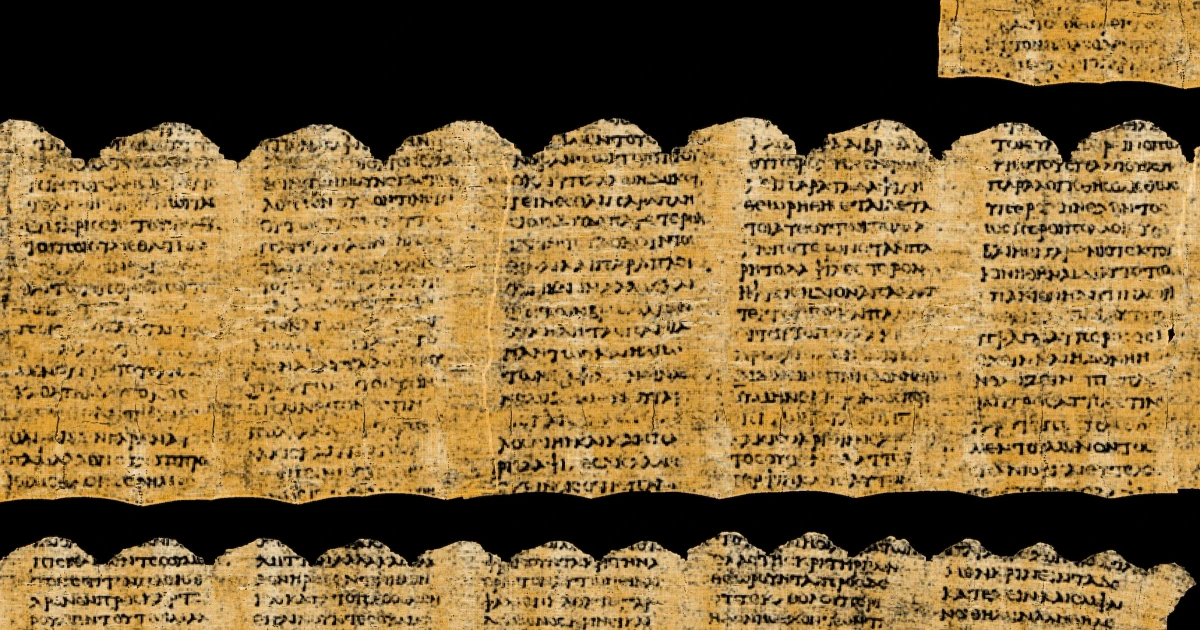
An entire Herculaneum scroll, PHerc. 1667, has been virtually unwrapped and read from beginning to end for the first time, turning a charred relic from the Villa of the Papyri into readable text. On June 25, the Vesuvius Challenge made the data and code behind the breakthrough openly available.
The scroll comes from the library buried at Herculaneum when Mount Vesuvius destroyed the town in 79 CE. Systematic excavation there began in 1738, and the Villa of the Papyri has since yielded hundreds of carbonized papyrus scrolls that survived only because the eruption baked them into carbon. About 300 of those scrolls still exist, with most conserved in the National Library of Naples and others held in Paris, London and Oxford.
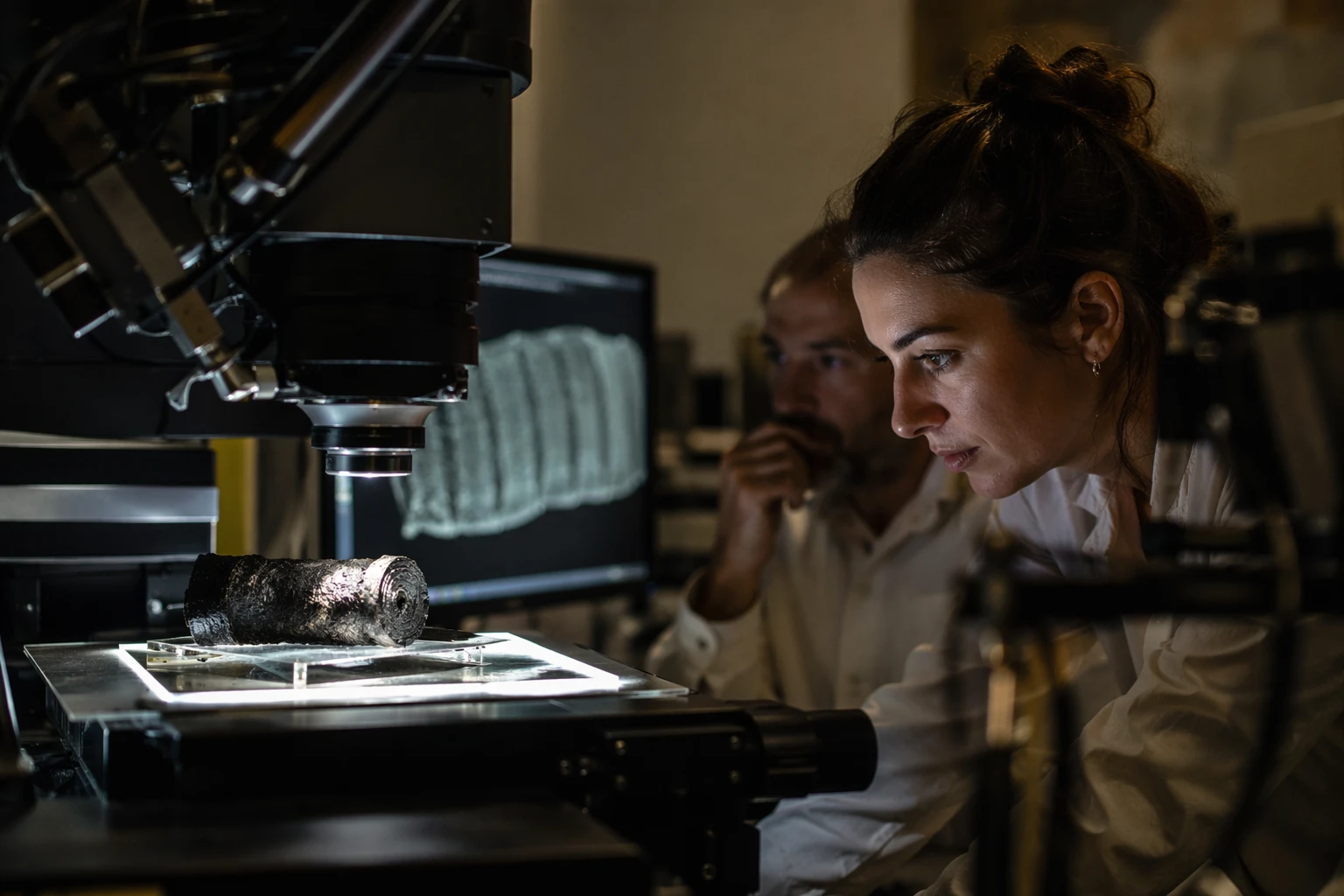
For centuries, the manuscripts were effectively unreadable. Earlier physical attempts to open the brittle rolls damaged many of them, making the surviving collection one of the hardest literary archives in the ancient world to access. The texts are Greek philosophical works, often linked to Epicureanism, and are associated with the intellectual world of the Bay of Naples and the villa owned by Lucius Calpurnius Piso Caesoninus.
The reading is part of the Vesuvius Challenge, launched in 2023 to use machine learning and computer vision, along with synchrotron micro-CT imaging, to recover the text inside the sealed scrolls. The effort has awarded more than $1.8 million in prizes. In 2024, a team won the $700,000 grand prize for reading passages from a 2,000-year-old scroll. In 2025, two researchers took home $60,000 for identifying the title and author of a sealed papyrus scroll carbonized by Vesuvius.
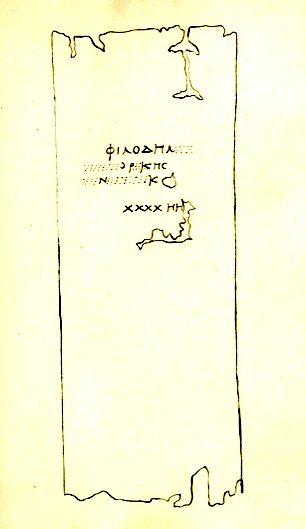
The goal is to read all 300 buried Herculaneum scrolls.
Sources
- [1]cbsnews.com
- [2]scrollprize.org
- [3]nature.com
- [4]britannica.com
- [5]www2.cs.uky.edu