Technology
AI-Written Emails May Boost Workload, Not Productivity
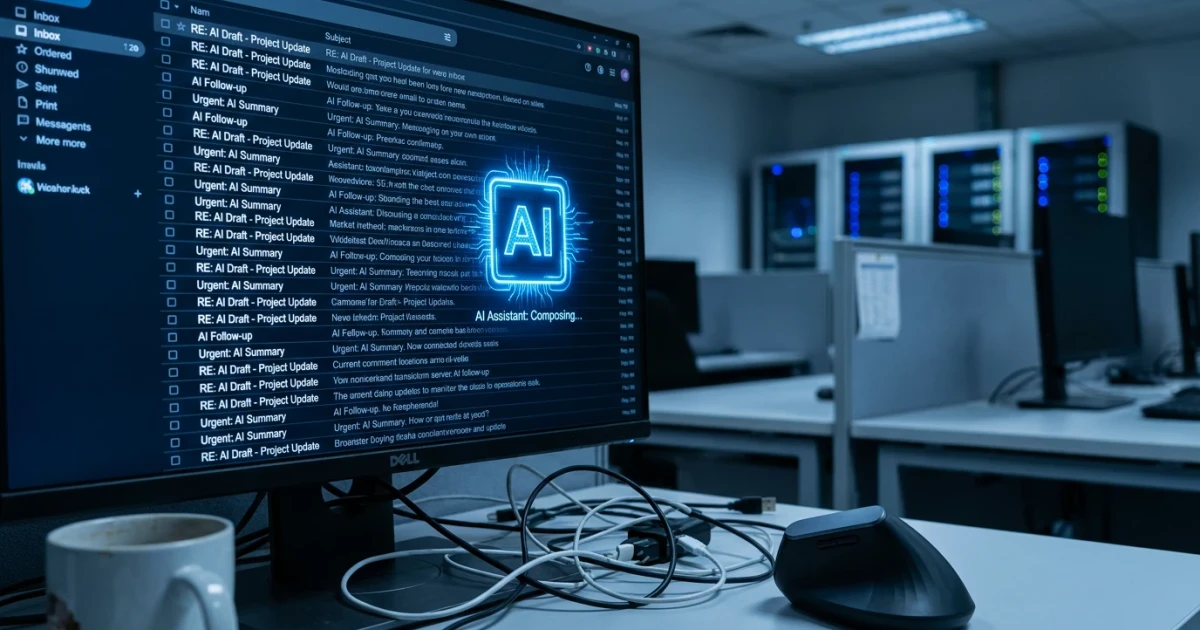
As artificial intelligence rapidly integrates into workplace communication, a growing body of evidence suggests that AI-generated emails may be adding to employees’ workloads rather than streamlining them. Recent analysis by both Business Standard and The Conversation highlights mounting concerns that AI writing assistants, designed to help with email management, are inadvertently fueling a rise in unnecessary messages and communication loops.
The Promise and Rise of AI Email Tools
AI-powered email assistants have been widely promoted as productivity boosters. Their adoption across industries is growing, with tools such as Gmail’s Smart Compose and Microsoft’s Copilot promising to draft, summarize, and even automate replies to routine messages. According to Statista data, more than 50% of businesses now report using some form of AI for communication tasks, including email management.
The technology is seen as a way to reduce the mental load of email writing, handle repetitive tasks, and enable knowledge workers to focus on higher-value activities. The Conversation notes that AI is increasingly trusted to handle generic responses—such as “Just looping you in” or “Let’s circle back”—which make up a significant portion of workplace communication.
Unintended Consequences: Volume Over Value
However, both outlets point to a paradox: AI-generated emails may be increasing the overall volume of workplace communication, rather than reducing it. Business Standard reports that as AI tools make it easier to draft and send emails, the threshold for initiating or expanding conversations drops. Employees may add more recipients, CC more colleagues, or respond to threads that might otherwise have gone unanswered.
Research cited by The Conversation supports this view, observing a trend toward longer email chains and more frequent follow-ups. The article notes that when the cost—in terms of time and effort—of sending a message decreases, people tend to send more messages, not fewer. This dynamic risks creating a “communication overload” effect, where workers spend more time sorting through automated responses and less time on meaningful tasks.
- AI can generate replies almost instantly, but the ease of use encourages more frequent and less considered communication, both sources agree.
- The Conversation references behavioral studies showing that automation can increase the total number of actions (in this case, emails) by lowering friction.
- Business Standard warns that as AI-generated emails proliferate, employees may feel compelled to reply or stay informed on threads with little direct relevance to their work.
Productivity Impacts Under Scrutiny
While AI tools are marketed as productivity enhancers, their real-world impact is more complex. Labor productivity data shows only modest improvements in recent years, despite widespread AI adoption in communication and project management. The OECD's AI at Work 2022 report notes that automation can shift the nature of work but does not always reduce overall workload—especially when it comes to tasks like email, which can expand in scope.
Business Standard highlights the risk of “busywork” expanding as a result of AI, with employees spending more time managing inboxes and less on creative or strategic activities. The Conversation echoes these concerns, suggesting that organizations may need to rethink how they measure productivity and effectiveness in the age of AI-powered communication.
Calls for Smarter Adoption and Digital Etiquette
Both sources suggest that the solution isn’t to abandon AI email tools but to use them thoughtfully. Experts recommend organizations train staff not just in using AI features, but also in digital communication best practices—such as avoiding unnecessary CCs, limiting reply-all responses, and setting expectations around response times.
- The Conversation recommends periodic audits of communication volume and relevance, using analytics to identify patterns of over-automation.
- Business Standard points to the importance of clear guidelines and cultural norms to ensure AI tools support productivity, rather than undermine it.
Looking Ahead: Balancing Efficiency and Overload
As AI becomes further embedded in workplace communication, the challenge will be to harness its efficiency benefits while guarding against overload. Companies are urged to pair technological solutions with organizational strategies that prioritize quality over quantity in internal communication.
For workers and managers alike, the rise of AI-generated emails is a reminder that technology alone rarely solves complex productivity challenges. Thoughtful adoption, clear etiquette, and ongoing review are essential to ensure that AI delivers on its promise—without burying employees under a mountain of “looped in” messages.