Sports
Aidan O’Brien reaches 100 Royal Ascot winners with Gold Cup victory
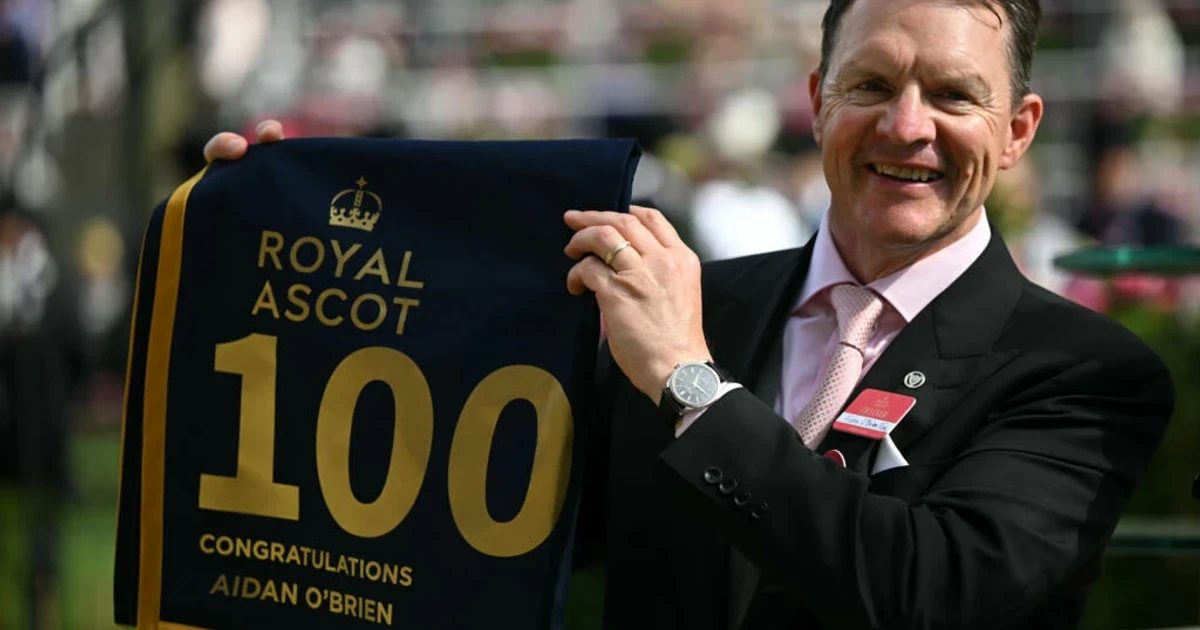
Aidan O’Brien reached one of racing’s defining milestones when Scandinavia won the Gold Cup at Royal Ascot, giving the trainer his 100th winner at the meeting and reinforcing a level of consistency that has become rare in elite sport. The victory also gave O’Brien the most Royal Ascot wins in history, a mark built across nearly three decades at the summer showcase.
The Gold Cup, Royal Ascot’s flagship stamina test, was the race that pushed O’Brien to the century mark after he had already matched it earlier in the week when Mission Central won the King Charles III Stakes. Scandinavia’s defeat of Trawlerman completed the job in a race that carried more than symbolic weight: Royal Ascot featured record prize money of £10.65 million this year and remained a central stage for the British and Irish flat-racing season.

O’Brien’s first Royal Ascot winner came in 1997, a detail that shows how long he has operated at the top of the sport. Since then, Ballydoyle has produced a stream of top-class runners that has kept O’Brien central to the biggest meetings year after year, with success in the Gold Cup adding another chapter to a career already defined by staying power and reinvention.
The scale of the achievement reaches far beyond Ascot. O’Brien has trained more Epsom Derby winners than anyone else and has collected more than 400 Group 1 victories overall, placing him among the most decorated trainers in modern racing history. The 100-win mark at Royal Ascot now sits alongside those numbers as another measure of a stable that has repeatedly adapted to different horses, different generations and changing race conditions without losing its edge.
The occasion carried a ceremonial touch as well, with King Charles presenting O’Brien with a commemorative racing tack to mark the milestone. That gesture matched the significance of the result: a landmark victory for a trainer whose influence has shaped Royal Ascot for almost 30 years and whose record may stand for a long time.