Business
Air Canada Collision at LaGuardia Closes Airport, Kills Two
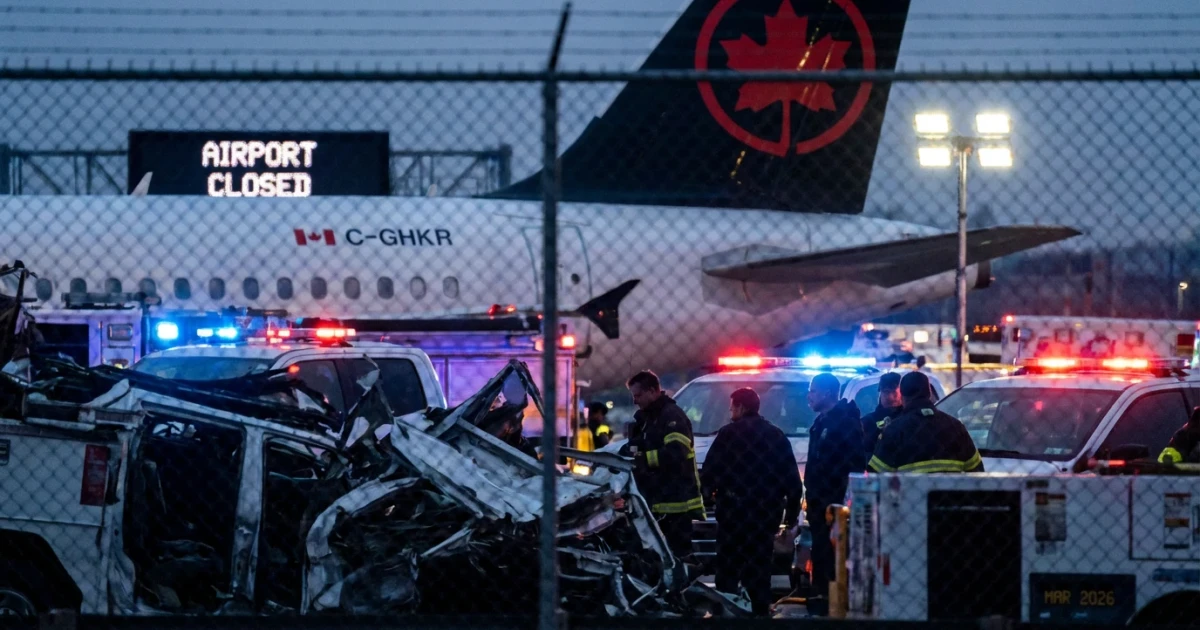
LaGuardia Airport was shut down on Saturday after an Air Canada aircraft collided with a ground vehicle on the tarmac, leaving two people dead and dozens injured. The incident, which drew an immediate response from emergency services and federal investigators, has raised renewed questions about airport ground safety and operational protocols.
Details of the Collision
According to Forbes, the crash occurred as the Air Canada plane was maneuvering on the ground. The aircraft struck a ground service vehicle, resulting in a fatal impact for two individuals who were on or near the vehicle. Dozens of other people, including airline and ground staff, were reportedly injured and received medical attention on site.
While the pilot and co-pilot’s conditions were not specified in available reports, the severity of the incident prompted the immediate closure of all runways at LaGuardia. The National Transportation Safety Board (NTSB) and Federal Aviation Administration (FAA) have already begun investigating the circumstances leading up to the collision.
Impact on Operations and Passengers
The closure of LaGuardia, one of New York City’s busiest airports, caused significant disruption throughout the region’s air traffic network. Flights were diverted to nearby airports, and hundreds of passengers faced delays and cancellations. According to Bureau of Transportation Statistics, incidents of this nature are rare but can have wide-reaching consequences for airport operations and safety perceptions.
Airport officials coordinated with emergency responders and airline representatives to assist injured parties and communicate with affected travelers. Efforts were also made to clear the wreckage and assess runway conditions to determine when normal operations could resume.
Investigation and Safety Concerns
This incident has placed a spotlight on the risks associated with runway incursions and ground vehicle operations at major airports. The NTSB is expected to release a preliminary report in the coming days, but initial focus will likely center on communication protocols between cockpit crews and ground support teams, as well as the visibility and routing of service vehicles around active aircraft.
- The FAA’s runway safety statistics show that while incidents involving ground vehicles are infrequent, they account for a significant proportion of ground accidents each year.
- LaGuardia has previously recorded a handful of surface incidents, as detailed in NTSB records, but fatal collisions remain exceedingly rare.
The investigation will also consider whether weather, lighting, or other operational factors contributed to the crash. Lessons learned from past accidents, available in the NTSB aviation accident database, will inform both the immediate response and any future safety recommendations.
What Happens Next
As LaGuardia gradually reopens, airlines and federal agencies are reviewing safety procedures for both flight and ground operations. The tragedy underscores continued challenges in managing busy airport environments safely, and authorities are urging patience as the investigation proceeds.
Travelers are encouraged to check with airlines for updated flight information and to expect residual delays as the airport works to restore normal service. The final NTSB report will likely prompt further discussion on how to minimize the risk of future ground collisions at U.S. airports.