Politics
Air Force investigates officer after Capitol protest against Trump, Vance
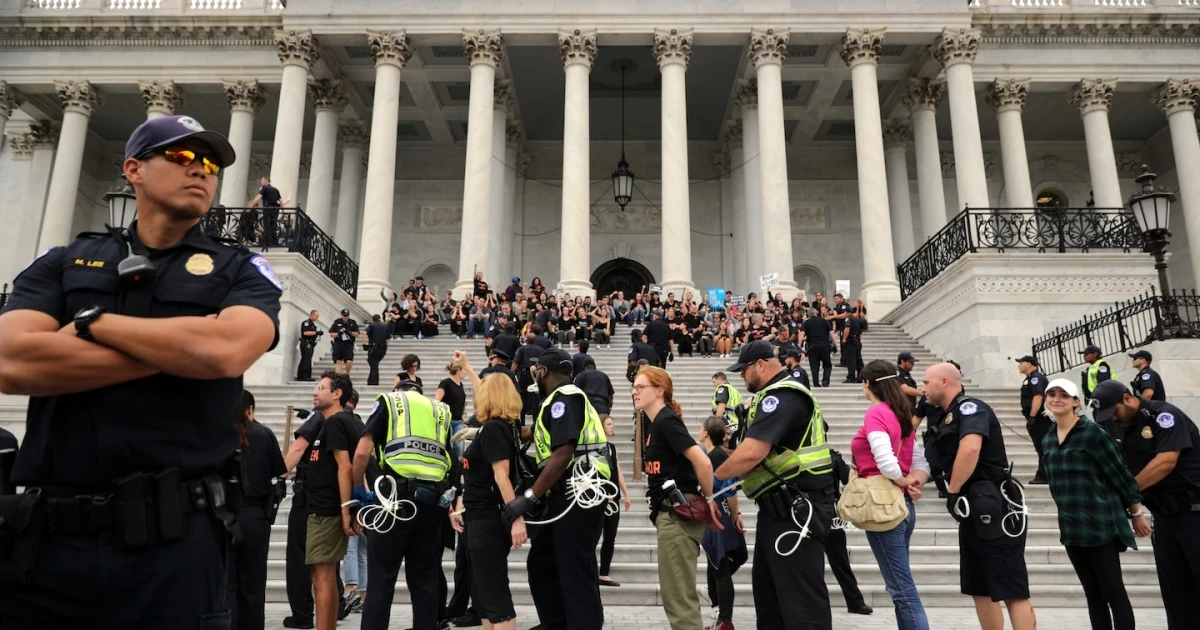
The Air Force opened an investigation into Maj. Jason Watson after the active-duty officer was arrested at the Capitol for joining a protest that demanded the impeachment, conviction and removal of President Donald Trump and Vice President JD Vance. The service said the case would proceed “unimpeded” and stressed that misconduct allegations are taken seriously because they can erode the military’s nonpartisan nature.
Watson was taken into custody by Capitol Police at about 1:15 p.m. local time on July 1 after demonstrating on the House steps, where protests are allowed only when a sitting member of Congress is present. Capitol Police said the charge was “Crowding, Obstructing, and Incommoding” under D.C. Code 22-1307. Reports from the scene said Rep. Al Green, D-Texas, was initially with Watson before leaving, and officers then directed Watson to come off the steps or face arrest.
In a video posted online, Watson appeared in uniform and held a sign calling for Trump and Vance to be impeached, convicted and removed from office. He denounced the pair over the war with Iran, saying they had gone to war without congressional authorization. Other accounts of the protest said he also criticized Trump’s policies on Venezuela and immigration. The demonstration was organized by the Removal Coalition.
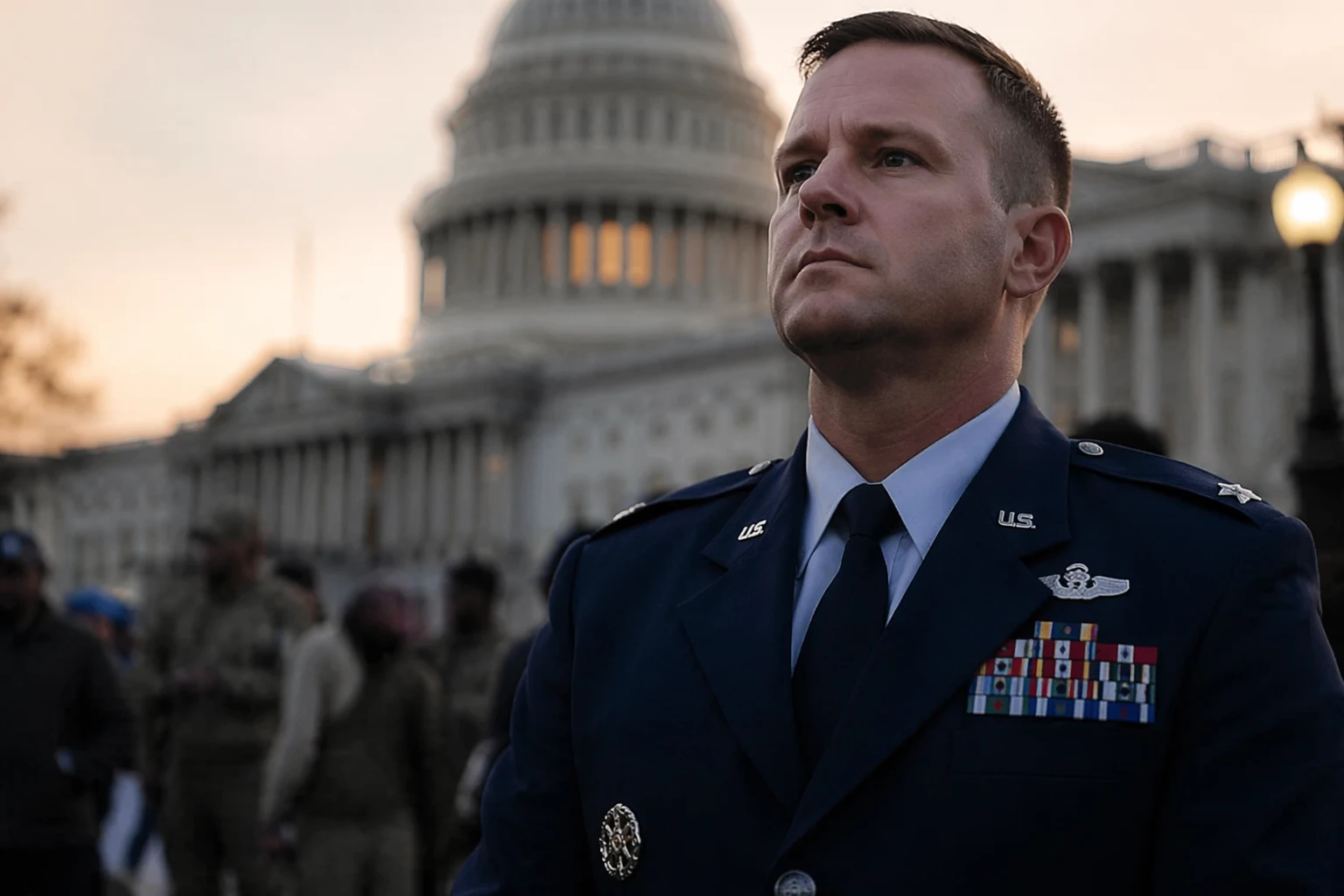
The episode put military speech rules back under scrutiny. Article 88 of the Uniform Code of Military Justice, codified at 10 U.S.C. § 888 and dating to 1956, bars commissioned officers from using contemptuous words against the president, vice president, Congress and certain other senior officials. The restriction has long served as one of the clearest legal limits on political expression for officers, especially when they appear in uniform and speak in a public setting.
Watson’s appearance also drew support from civil-liberties advocates. John Bonifaz of Free Speech For People praised Watson’s comments as an act of courage and said he honored the constitutional oath. That split, between defending political speech and enforcing discipline, is why the Air Force case carries weight beyond one protest at the Capitol: it tests how the services police partisan expression and how firmly they protect the image of an apolitical force.
Sources
- [1]yahoo.com
- [2]usnews.com
- [3]airforcetimes.com
- [4]nbcnews.com
- [5]thehill.com
- [6]uscode.house.gov
- [7]af.mil
- [8]truthout.org