Technology
AI’s Expanding Role Brings Opportunity and Questions for North Carolina
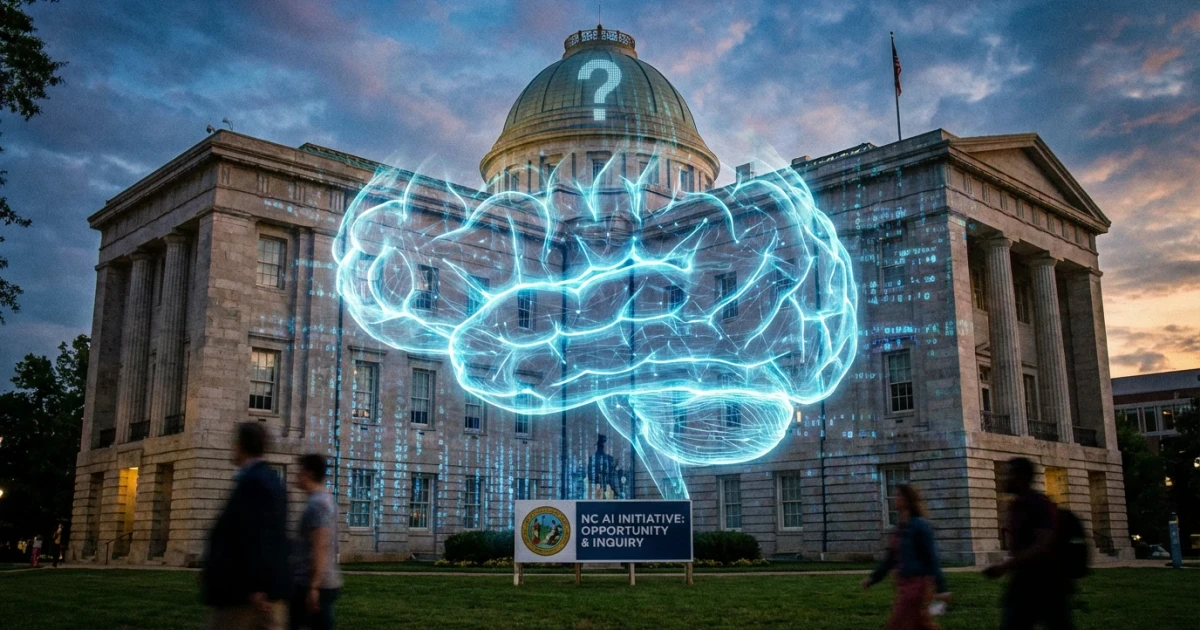
Artificial intelligence (AI) is rapidly reshaping North Carolina’s economy and workforce. As the state invests in AI-driven technology, it faces both significant opportunities and new challenges—ranging from job growth in tech sectors to uncertainties around regulation and workforce adaptation. According to a recent analysis by The Asheville Citizen Times, state leaders, businesses, and educators are all grappling with the implications of this technological transformation.
Growth in Tech Jobs and Economic Potential
North Carolina has positioned itself as a rising hub in the AI sector, with technology workforce reports showing year-over-year growth in AI-related employment. The state’s technology industry now supports thousands of jobs, with computer and mathematical occupations—many driven by AI—offering competitive wages. Data from the Bureau of Labor Statistics reveals that North Carolina’s technology workers earn an average annual wage well above the state’s median, underscoring the sector’s economic impact.
- The state added over 5,000 technology positions in the past year, many in AI, data science, and automation.
- Major employers such as banks, healthcare systems, and logistics companies are investing in AI-driven solutions to boost productivity and create new products.
- Public institutions and research universities, including NC State University, are expanding AI research, partnering with industry, and offering new academic programs to train the next generation of AI professionals.
Challenges: Workforce Transition and Policy Uncertainty
Despite the promise of new jobs, AI’s rise has sparked concerns about workforce displacement and social equity. The Urban Institute has highlighted that while AI creates opportunities, it may also automate certain roles—particularly in manufacturing, retail, and administrative support. Some experts argue that workers in these sectors need targeted retraining and upskilling to transition into the evolving economy.
The North Carolina AI Task Force has recommended greater investment in education and workforce development, calling for more robust partnerships between industry and community colleges. These measures, they argue, are essential to ensure that the benefits of AI are widely shared and that the state’s labor force remains competitive.
Regulation, Ethics, and the Unknowns
With AI’s growing influence, state policymakers are also considering regulatory and ethical frameworks to guide its development. North Carolina’s statewide IT policies emphasize data privacy, transparency, and accountability, but some experts warn that existing regulations may not keep pace with rapidly advancing technology.
State agencies, guided by the NC AI Initiative, are piloting projects that use AI for improving government services, transportation logistics, and healthcare analytics. These initiatives demonstrate both the promise and complexity of integrating AI into public life, with ongoing debates about bias, oversight, and the social impacts of automation.
Looking Ahead: Balancing Promise with Preparedness
As North Carolina continues its AI journey, the road ahead is marked by both optimism and caution. Stakeholders across the state agree that collaboration—among government, industry, and education—is critical for managing the transition. Proponents argue that with proactive planning and investment, North Carolina can harness AI’s potential while addressing its risks. However, much remains unknown, with future developments in technology—and their societal consequences—difficult to predict.
For policymakers and citizens alike, the challenge will be to ensure that North Carolina’s approach to AI is both ambitious and responsible, maximizing innovation while safeguarding the well-being of its people and communities.