Technology
AI’s future may hinge on who controls the chips
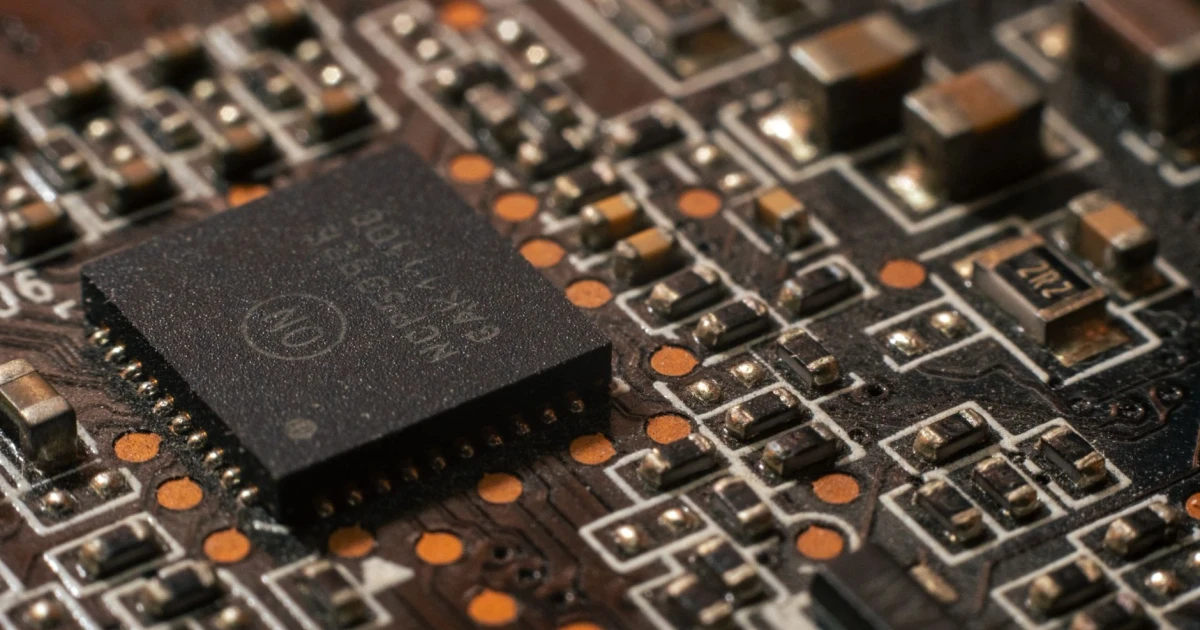
Restrictions released on Monday, January 13, cover advanced AI chips, cloud access, and model weights, the three ingredients that allow frontier models to be trained, deployed, and copied at scale. Access to those systems now reaches far beyond software design, because semiconductors, cloud capacity, and even model weights can determine which companies scale and which countries fall behind.
The real bottleneck is hardware
The new U.S. AI diffusion policy and export controls are a direct attempt to slow the spread of advanced AI capability. The policy targets the hardware, cloud access, and model weights that determine who can train, deploy, and copy AI at scale. Implementation depends on support from the Trump administration.
The AI contest is no longer just about who builds the best model. It is also shaped by governance, adoption, and geopolitical competition, with the United States and China at the center and other countries trying to secure their place in the supply chain. In practice, the deciding factor is often not a breakthrough in code but a shipment of accelerators, a cloud contract, or a licensing decision.
Who controls the chips
Nvidia remains the dominant force in AI chips, but the market is no longer static. AMD, Broadcom, Google, Amazon, and Qualcomm are all seeking some share of the compute market that powers generative AI. Nvidia has also adapted its chips as reasoning models become more important, a sign that chip design is following the demands of new model architectures rather than setting them.
Demand has stayed strong. In 2025, Nvidia’s sales tripled, a sign that AI build-outs were still absorbing massive amounts of compute. That growth sits alongside another pressure point: high-bandwidth memory, or HBM, which is essential for advanced AI chips. SK Hynix expected brisk HBM demand to continue through 2025, while chipmakers overall were seeing record demand tied to generative AI and data-center expansion.

The result is a global bottleneck with a small number of choke points. If one company controls the most desirable accelerators, another controls memory, and a third controls cloud access, then AI growth depends on a chain of dependencies rather than a single product cycle.
Why chip exports have become geopolitical
The most revealing disputes are not about consumer devices but about where advanced chips can be sold. Nvidia and AMD would give the U.S. government 15% of AI chip sales to China under an unusual arrangement reached after Jensen Huang met with Donald Trump. Nvidia also won permission to resume sales of its H20 chip to China after Huang met Trump.
Those decisions show how tightly commercial sales now track security policy. Washington is not only deciding whether chips can leave the country, but also under what terms, to whom, and with what safeguards. Trump’s chips deal with the United Arab Emirates was delayed because national-security officials worried China could gain access to advanced Nvidia chips through the arrangement.
For companies, China is too large a market to ignore. For governments, it is too sensitive to leave to market forces alone.
Government money is moving toward compute

The scramble is not limited to the United States. The U.K. government announced a £1.1 billion plan to back chip firms, expand computing power, and build skills for AI. It is part of a broader attempt to strengthen domestic and allied capacity at a moment when governments see compute as strategic infrastructure, not just industrial policy.
Building an AI ecosystem requires more than one factory or one research lab. It needs chip design, fabrication capacity, advanced memory, power, data centers, and the skilled workforce to keep the stack running. The U.K. plan reflects the same calculation driving U.S. policy: if a country cannot secure enough compute, it cannot compete at the frontier for long.
The case against controls is already visible
Export limits are meant to slow rivals, but history gives no simple answer. An October 2025 ITIF report, Backfire: Export Controls Helped Huawei and Hurt U.S. Firms, argued that the first Trump administration’s restrictions on Huawei ended up strengthening Chinese companies while weakening American competitiveness. That argument has since become central to the debate over whether controls on AI chips will block Chinese progress or simply push Beijing to build around them.
The Council on Foreign Relations called the new AI chip export policy to China strategically incoherent and unenforceable. That view reflects a broader fear in Washington: the more tightly the United States restricts chips, the more incentive other countries have to diversify suppliers, localize design, and build parallel supply chains.
Sources
- [1]nytimes.com
- [2]cfr.org
- [3]wsj.com
- [4]gov.uk
- [5]www2.itif.org