Health
AJPH links ultra-processed foods and tobacco-style corporate tactics
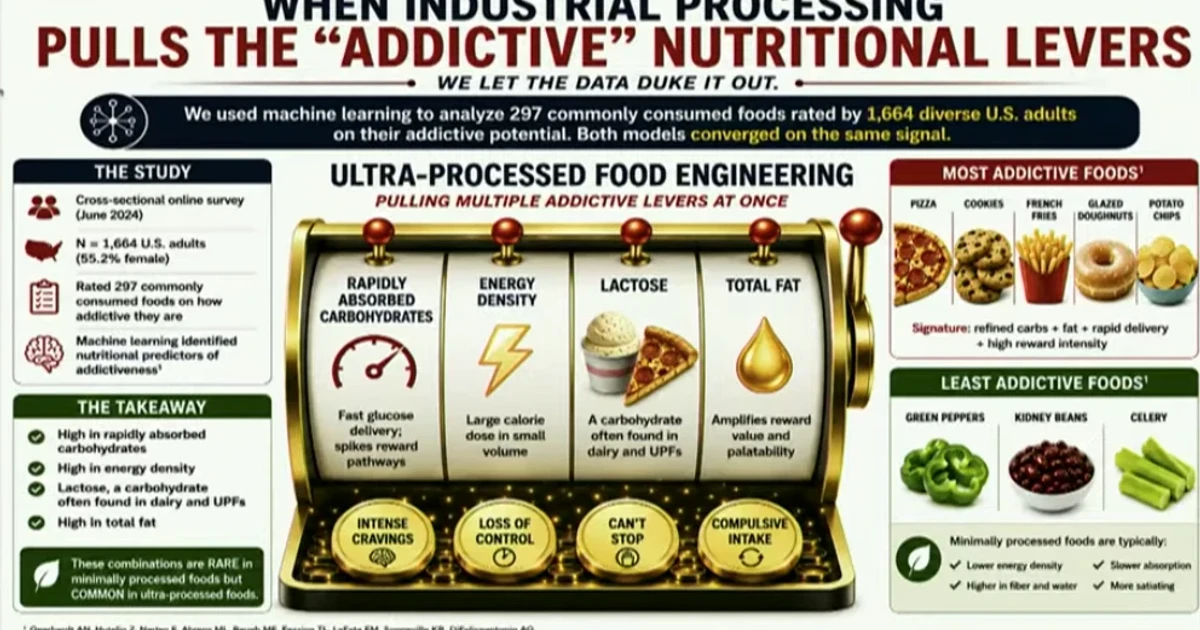
Ultra-processed food companies are now being judged through a tobacco lens: not only for what they sell, but for how they design products, market them, and protect their business model. A new feature section in the American Journal of Public Health argues that this is not just a rhetorical comparison. It is a test of whether public health, regulators and courts are willing to treat ultra-processed foods as a commercial driver of disease on the scale of tobacco.
Why AJPH is drawing the comparison
The feature section, published online ahead of print on June 3, 2026 and slated for the July issue, presents one of the most comprehensive examinations to date of ultra-processed food as a public health crisis. Its central argument is that the harms associated with these foods are shaped not only by nutrition, but by corporate practices, political influence and regulatory failure. The issue frames ultra-processed food as a “commercial determinant of health,” a phrase that places business strategy at the center of the disease burden.
Lead editorial author Nicholas Chartres argues that the evidence points to a commercial system that has engineered, marketed and normalized products linked to widespread chronic disease. That framing matters because it moves the conversation away from individual willpower and toward the structures that make highly processed products ubiquitous, cheap and difficult to avoid. The editorial package calls for coordinated government intervention, stronger oversight, legal accountability and greater protections for children from aggressive marketing and harmful food environments.
What the industry-document record shows
One of the analytic essays reviewed 113 primary-source industry documents and found that U.S. tobacco companies built billion-dollar food businesses that were prominent internationally between the 1980s and the mid-2000s. The paper says Philip Morris and R.J. Reynolds moved into food in the 1980s, when they had strong cash flow but faced growing scrutiny over tobacco. Buying food companies helped them diversify assets, reduce financial risk and improve corporate image.
That history is important because the essay argues the firms did not simply buy unrelated businesses. By owning food companies, tobacco corporations could transfer knowledge, skills and strategies from cigarettes into ultra-processed foods and beverages. In other words, the same industrial logic that had been used to sell tobacco, including brand management, product optimization and market expansion, was repurposed for the food aisle.
The broader historical record reinforces that point. Philip Morris acquired Kraft General Foods, and tobacco-owned food businesses such as Kraft, Nabisco and General Foods helped spread ultra-processed products more widely before many tobacco companies divested their food holdings by 2007. The tobacco-to-food story is not about a brief detour in corporate diversification. It is about a long period in which firms learned how to scale profitable, engineered products across categories and geographies.
Why the health stakes are already visible
The public-health case is not built on theory alone. CDC data cited in the coverage show that youth ages 1 to 18 consumed 61.9% of their calories from ultra-processed foods, compared with 53.0% for adults age 19 and older. The FDA estimates that about 70% of the U.S. food supply is comprised of foods commonly considered ultra-processed, and that children get over 60% of their calories from them. Those numbers suggest the issue is not marginal. It is embedded in the everyday diet.
Ultra-processed foods are described as industrially processed products with few or no whole foods, designed for convenience and appeal. The concern is not just that they are processed, but that they are often hyper-palatable and may have addictive qualities. Researchers in the coverage connect that profile to obesity, metabolic disease, cardiovascular disease, mental health problems, chronic disease and premature death. The result is a policy debate that now looks less like a niche nutrition argument and more like a broad industrial health challenge.

Where the tobacco analogy holds up
The analogy is strongest when it comes to product design, marketing and political influence. The AJPH feature section argues that tobacco companies helped build and scale the modern ultra-processed food industry by normalizing tactics that shape consumer behavior before choice ever enters the picture. That includes engineering products for repeat use, targeting children, influencing public understanding and working to shape science and regulation.
The comparison also holds up in public messaging. A survey of 2,000 U.S. adults found broad concern across Democrats, Republicans and independents, with majorities agreeing that ultra-processed foods are addictive and a major cause of obesity, type 2 diabetes and cardiovascular disease. There was also support for safety testing of additives, banning artificial dyes, warning labels and reducing sugar and salt in foods. That level of bipartisan agreement gives regulators a political opening that food policy often lacks.
It also helps explain why the federal government is under pressure to do more, even as Health Secretary Robert F. Kennedy Jr. has made ultra-processed foods a major issue. Researchers quoted in the coverage argue that the FDA’s promised formal definition of ultra-processed foods will matter because a narrow definition could miss much of the food supply. If the definition is too limited, companies can keep the same product architecture while escaping the policy response.
Where the comparison gets complicated
The tobacco parallel is persuasive, but it is not perfect. The widely used NOVA classification system helps categorize foods by the extent and purpose of processing, and it has become a common framework for dietary monitoring and target-setting. Yet critics say NOVA can oversimplify differences between processed foods and does not fully account for affordability or cultural diet patterns.
That critique matters for regulation and litigation alike. Tobacco policy worked in part because the product itself was broadly harmful and the evidence of addiction was overwhelming. Food policy is messier because not every processed item has the same nutritional profile, and households depend on price, access and cultural habits. A successful policy response will need to identify the most harmful products without pretending that all processing is equivalent.
What a tobacco-style response would look like
The AJPH package and related commentary point toward a familiar regulatory toolkit: marketing limits, warning labels, tighter oversight of product design and distribution, and stronger legal accountability. That approach mirrors tobacco control, where the most effective interventions were not voluntary pledges but rules that changed the business model. If ultra-processed foods are treated as addictive, industrially engineered products rather than ordinary groceries, the policy conversation shifts from personal restraint to corporate responsibility.
That shift is the real significance of the AJPH feature section. It asks whether governments will keep treating ultra-processed foods as a nutrition problem or begin treating them as a market problem with public-health consequences. The answer will shape regulation, litigation and the language public health uses to describe one of the most influential food systems in the country.
Sources
- [1]npr.org
- [2]ajph.aphapublications.org
- [3]apha.org
- [4]statnews.com
- [5]cdc.gov
- [6]fda.gov
- [7]milbank.org
- [8]ucsf.edu
- [9]foodpolitics.com