Technology
Algorithm hides people and vehicles from surveillance cameras
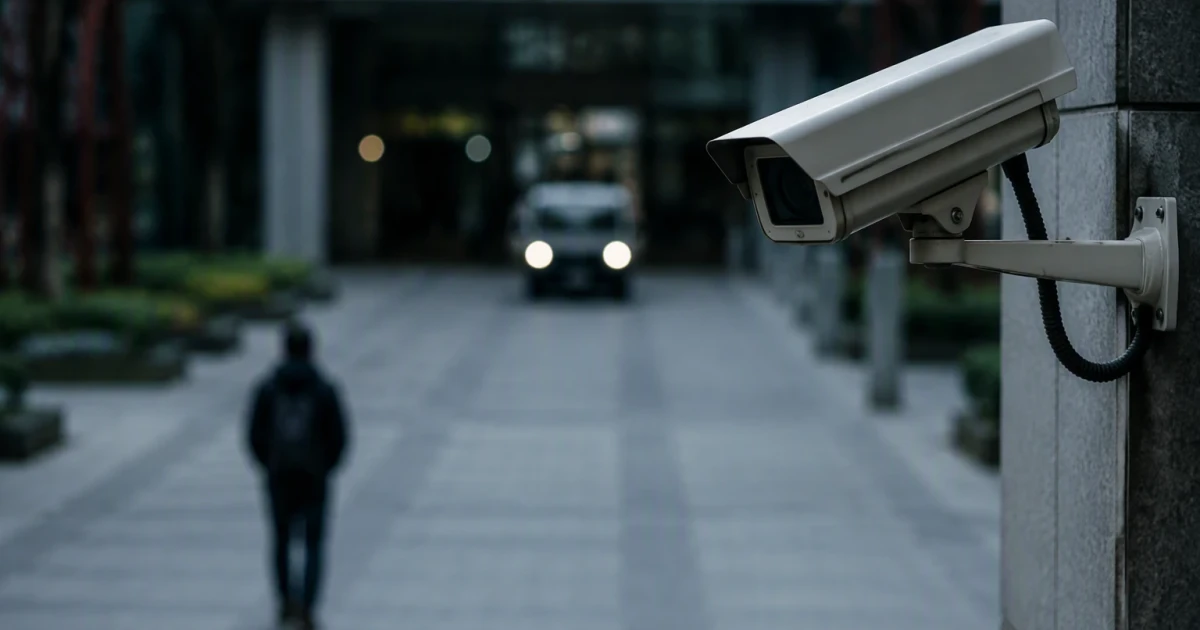
A new algorithm is pushing surveillance evasion beyond makeup and into computer-generated patterns designed to hide people, faces, and vehicles from camera systems. The technique sits inside adversarial camouflage, a field built on the idea that small printed or clothing-based changes can confuse computer-vision models enough to miss what is directly in front of them. The practical question now is whether those patterns can survive contact with police cameras, retail analytics, and the rest of the real world.
How the camouflage works
The basic trick is not invisibility in the human sense, but disruption at the model level. In the paper Fooling automated surveillance cameras: adversarial patches to attack person detection, Simen Thys, Wiebe Van Ranst, and Toon Goedemé of KU Leuven described adversarial patches as a way to attack person-detection systems. The paper describes adversarial attacks on machine-learning models as subtle input changes that can sway outputs.
Surveillance systems do not need to be fooled forever to be compromised. If a detector loses confidence at the wrong moment, a person, face, or vehicle can slip through as background noise or be mislabeled entirely. The newer algorithm fits that same logic, only with a broader target set and a more polished visual design, turning camouflage into a software problem as much as a fashion one.
From anti-surveillance art to machine-targeted disguise
The idea has a recognizable ancestor in Adam Harvey’s CV Dazzle project. Harvey says he created it in 2010 as his master’s thesis at New York University’s Interactive Telecommunications Program, and he describes it as a form of camouflage from computer vision.
By Sept. 7, 2023, PBS Terra had brought the idea into popular culture through a video on anti-surveillance fashion designers making clothing and accessories that trick facial-recognition software into mislabeling a person as something else.
What has changed is precision. Early anti-surveillance designs often leaned on striking visual breaks, theatrical makeup, or dramatic geometry. The current wave is more technical, with patterns tuned to the assumptions of machine vision rather than to the eye of a passerby.
The research keeps tightening the arms race
A 2026 arXiv paper, Adversarial Camouflage, describes facial-recognition deployment as a source of concern about mass surveillance and privacy, and presents adversarial camouflage as a privacy-protection solution. Researchers are now treating camouflage itself as a response to large-scale camera networks and biometric identification.
A 2024 paper titled NOVEL AI CAMERA CAMOUFLAGE: FACE CLOAKING WITHOUT FULL DISGUISE shows how specific the engineering has become. The paper uses subtle cosmetic perturbations and alpha-transparency layer manipulation to evade modern facial-recognition systems, and it explicitly says its approach differs from earlier methods such as CV Dazzle, adversarial patches, and theatrical disguises.
Rather than depending on an obvious disguise, the newer work aims for targeted perturbations in key-point regions, the kind of surgical adjustment that can be hard for a recognition model to interpret correctly.
Why effectiveness outside the lab is the real test
The biggest unresolved issue is not whether a carefully tuned pattern can work in a paper, but whether it can work against deployed surveillance systems in public view. Quartz argued that anti-surveillance clothing does not fool security cameras, and that critique is central to the debate.
In the lab, a method may be tested against one detector, one lighting setup, and one camera angle. In the field, the same pattern may face different models, different hardware, and changing software thresholds, which means success against one system does not equal universal invisibility.
Who will care most if these patterns get easier to use
Adversarial camouflage is aimed at people who want to reduce identification by cameras, whether they are avoiding biometric checks in public, resisting routine monitoring, or simply trying to keep themselves from being logged by automated systems.
Police departments and private security teams would treat easier evasion as an operational problem. Retailers that depend on camera-based detection, from entrance monitoring to loss-prevention systems, would have reason to worry about patterns that break identification at the edge of the frame. Civil-liberties groups, meanwhile, would see a double-edged development: a tool that can blunt overreach, but also a reminder that biometric surveillance has become normal enough to inspire a counter-industry.
What this contest says about the next phase of surveillance
The contest has moved from CV Dazzle’s early computer-vision camouflage to adversarial patches, subtle cosmetics, and alpha-transparent layers that can be tuned against specific models. As surveillance cameras become more dependent on machine vision, the pressure shifts to vendors, police agencies, and retailers to prove where their systems fail and how much automated identification they are willing to rely on.
Sources
- [1]techcrunch.com
- [2]openaccess.thecvf.com
- [3]arxiv.org
- [4]adam.harvey.studio
- [5]youtube.com
- [6]qz.com