Sports
Almiron sees first World Cup red card for covering his mouth
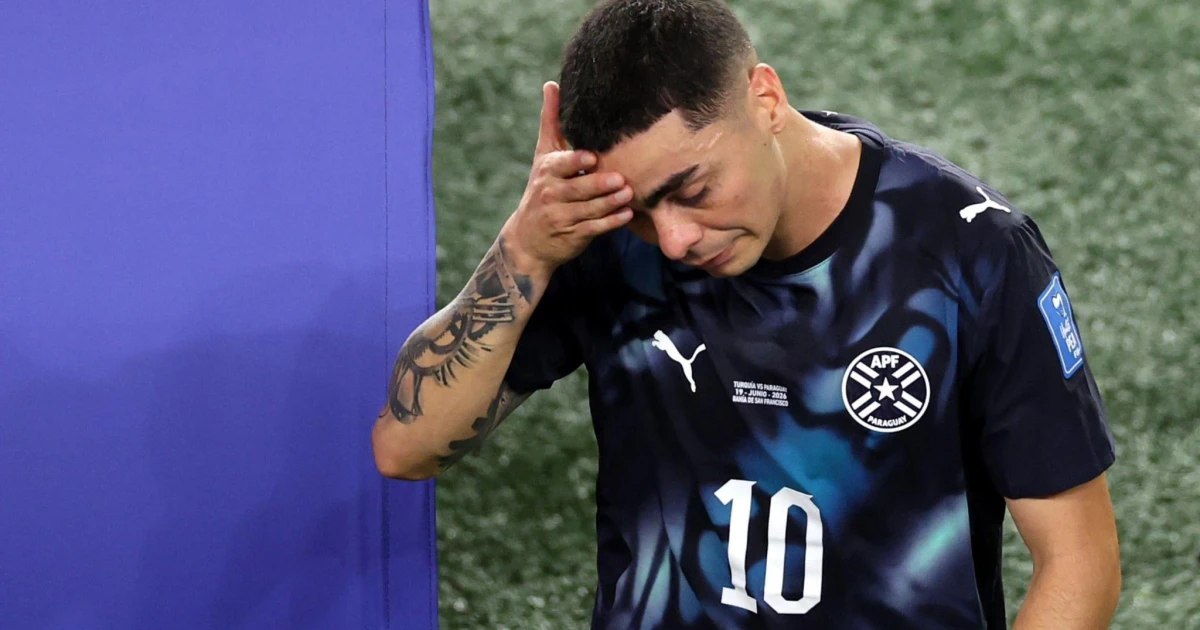
Miguel Almiron was sent off in first-half stoppage time of Paraguay’s Group D match against Turkey after covering his mouth while speaking to an opponent, turning a narrow disciplinary call into the first red card of the 2026 FIFA World Cup under a new law aimed at hidden abuse. Referee Ivan Arcides Barton Cisneros issued the straight red after a VAR review at Levi’s Stadium in Santa Clara, California, leaving Paraguay to finish with 10 men.
The decision placed a rarely noticed gesture at the center of football’s latest enforcement test. Covering the mouth while speaking has long been common in tense exchanges, often to keep words from cameras, opponents and lip-readers. In an era of omnipresent surveillance, broadcast close-ups and heightened scrutiny over discriminatory abuse, that same gesture has now become suspect enough to trigger the sport’s strongest on-field punishment.

The rule behind Almiron’s dismissal was approved on April 28, 2026, at a special meeting of The IFAB in Vancouver, British Columbia, after FIFA-led consultations with key stakeholders. Under the revised Laws of the Game, players who cover their mouths while communicating with an opponent in confrontational situations may be sanctioned with a red card, at the discretion of the competition organiser. The measure was introduced alongside another disciplinary change covering players who leave the field in protest at a referee’s decision, and FIFA has said the new language also applies to team officials who incite players to leave the pitch.
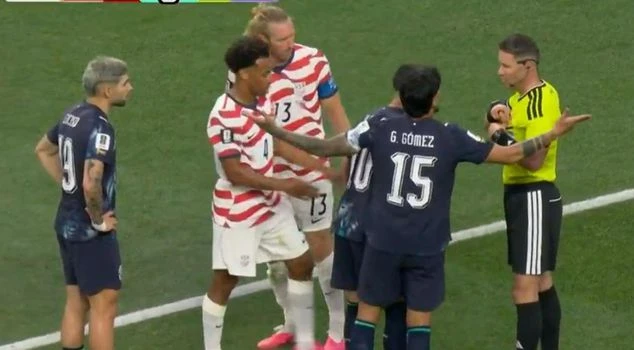
The change was prompted by controversy involving Real Madrid’s Vinícius Júnior and Benfica’s Gianluca Prestianni, after Prestianni allegedly covered his mouth during an exchange in a Champions League match. For the governing bodies, the goal is to curb discriminatory or hidden abuse before it can be concealed behind a hand or glove. For players, it creates a new line that is still easy to cross by instinct and still difficult for spectators to interpret in the moment.
That tension was laid bare in Santa Clara. Almiron’s red card was not just a costly dismissal in a pressure-filled World Cup match against Turkey; it was the first live test of whether FIFA has written a rule that players, referees and fans can actually understand. The answer, at least in one abrupt first-half stoppage, was immediate punishment and an even bigger question about how far football can go in policing words that no one could hear.
Sources
- [1]bbc.com
- [2]espn.com
- [3]apnews.com
- [4]theifab.com
- [5]downloads.theifab.com
- [6]inside.fifa.com
- [7]usatoday.com