Technology
Alphabet orders Intel to make millions of AI chips in 2028

Alphabet’s decision to tap Intel for more than 3 million AI chips in 2028 would mark a major shift in how Google secures the hardware behind its machine-learning stack. It would also give Intel one of its clearest signs yet that the company can win business from the most demanding buyers in AI, just as the industry is scrambling for more advanced manufacturing capacity.
The chips at issue are Google’s tensor processing units, custom accelerators built for AI workloads ranging from large language models and code generation to recommendation systems and speech and vision services. Google introduced its eighth-generation TPU family in 2026, with TPU 8t and TPU 8i aimed at training and inference, underscoring how central proprietary silicon has become to its AI strategy. A multi-million-unit Intel order would suggest Alphabet is not only expanding that strategy, but also broadening where those chips are made.
For Intel, the deal would be more than a revenue win. It would be a high-profile vote of confidence in Intel 18A, the manufacturing node the company has cast as a centerpiece of its turnaround. Intel has said its 18A technologies are progressing well, and it has described Panther Lake as the first client SoC line built on Intel 18A. The timing matters: AI demand has tightened supply across advanced manufacturing and packaging, pushing major customers to secure backup capacity rather than rely too heavily on any one supplier.
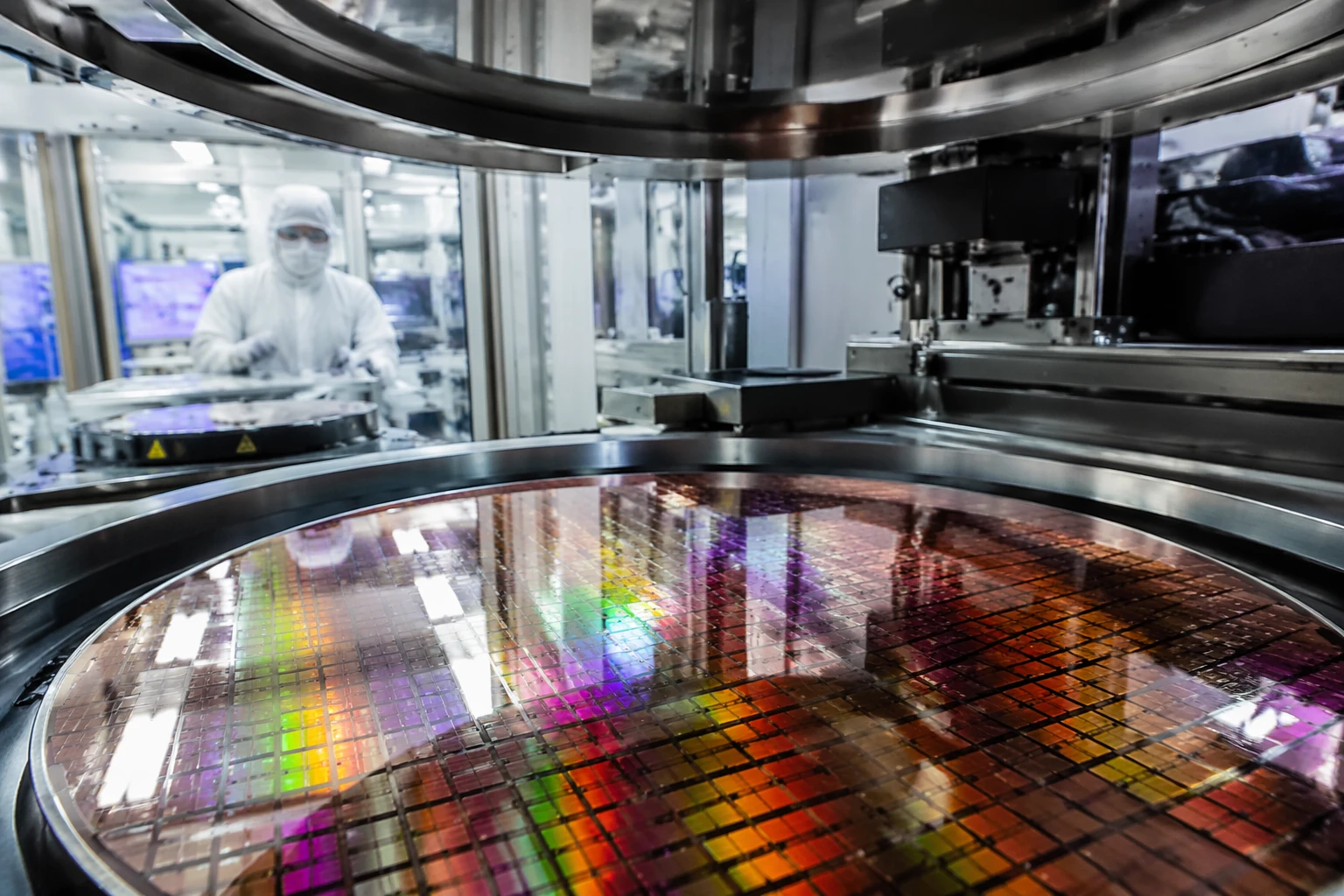
The move also fits a wider industry pattern. Nvidia has evaluated Intel technology for a processor that would combine four graphics chips into a single unit, although no order has been placed. In late 2025, Nvidia tested Intel’s 18A process but did not proceed to mass production. That makes Alphabet’s reported commitment even more significant, because it would show that Intel can move from trial runs and technical validation to real volume from one of the most important buyers in AI.
Intel shares rose sharply on the news, reflecting investor hopes that the company can translate its foundry ambitions into hard demand after years of losing ground to Taiwan Semiconductor Manufacturing Co. and struggling to persuade Wall Street that its manufacturing revival would pay off. If Alphabet does lock in the order, it would deepen the commercial link between Big Tech’s AI ambitions and Intel’s manufacturing roadmap, while signaling that the race for future compute is increasingly about diversification, not dependence.
Sources
- [1]money.usnews.com
- [2]cloud.google.com
- [3]blog.google
- [4]newsroom.intel.com
- [5]intc.com
- [6]techpowerup.com
- [7]investing.com
- [8]bloomberg.com