Business
Amazon Prime Day deals linger, with Medicube, Oura Ring discounts still live
Amazon’s four-day 2026 Prime Day ran from June 23 through June 26, ending at 11:59 p.m. PDT, but the markdowns did not all vanish at midnight. The remaining deals deserve a colder look: compare the sale price with the usual price, check product quality, and ignore anything that only feels urgent because the badge is still there.
What Amazon turned Prime Day into
Prime Day 2026 featured, by Amazon’s count, millions of exclusive deals across more than 35 categories, and the event ran in 23 countries, including the United States, the United Kingdom, Canada, France, Germany, Italy and Japan. Amazon’s June preview materials highlighted up to 40% off TVs, up to 30% off patio and outdoor entertaining, and up to 30% off trampolines, playsets and lawn mowers, a mix that shows how far the company has pushed Prime Day beyond a narrow electronics sale.
Prime Day has existed since 2015, and Amazon said the first event sold more units than Black Friday 2014 while producing the biggest day ever for new Prime memberships at that time. Moving the sale into June in 2026, after years of July timing, reflects a simple retail strategy: capture summer spending earlier, before back-to-school budgets tighten and consumers shift attention toward necessities.
Why the leftovers still matter
Prime Day 2026 was also a gauge of U.S. consumer strain: shoppers have been leaning harder into groceries, household basics and back-to-school needs instead of treating the sale as a license for discretionary splurges. Adobe Analytics estimated first-day U.S. online spending at $8.3 billion, up 5.3% from a year earlier and above its own forecast, which shows the event still has scale even when consumers are more selective.
A discount on an item you already planned to buy, whether it is a personal-care device, a wearable or a household staple, is different from a temporary price cut on something you would not have bought at full price. The difference between savings and marketing is usually found in the comparison price, the product’s track record and whether the deal survives after the first wave of urgency fades.
How to judge the live deals now
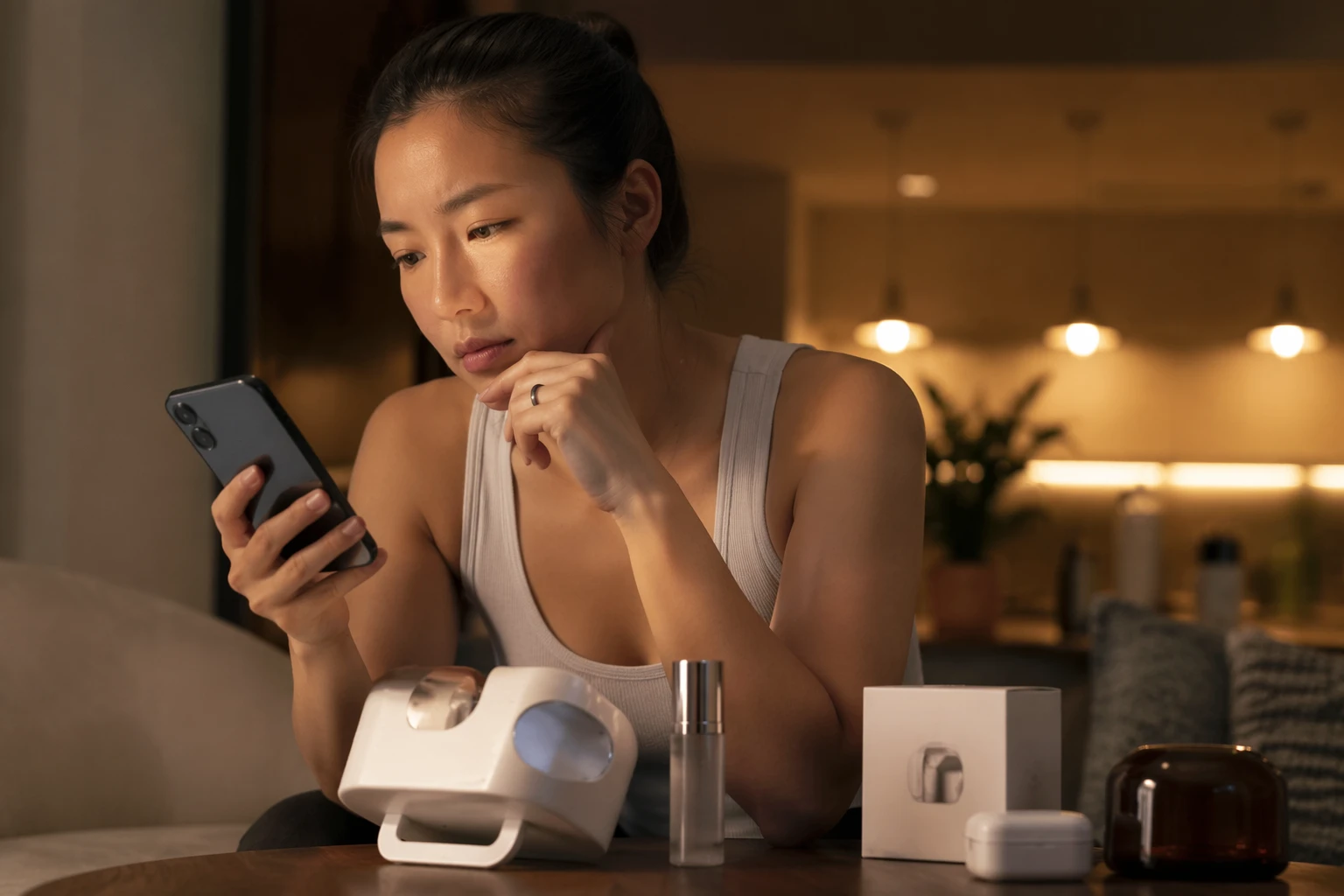
Medicube, Oura Ring and Apple are drawing attention, but the label alone is not the story. What matters is whether the discount still holds against the item’s normal pricing history, whether the product is a good long-term buy, and whether waiting a few days would likely save you more than clicking now.
A practical way to read the leftovers:
• Compare the sale price with the item’s recent regular price, not just the crossed-out number.
• Favor products with strong quality signals, especially wearables and skin-care devices that are meant to last beyond the sale window.
• Watch for deals that are only meaningful if you were already planning the purchase, such as a tracker, a device upgrade or an essential household replacement.
• Skip anything that is discounted only because inventory needs to move, especially if the brand or model is not one you would otherwise choose.
That logic is especially important for premium categories like Oura Ring, where the long-term value comes from whether the device fits your health-tracking needs over months, not from a one-day headline discount. The same applies to Apple products, where a modest cut can be attractive if you were already waiting on a specific model, but less compelling if the savings are shallow and the version on sale is not the one you actually want.
Amazon’s shopping tools are part of the pitch

Amazon also spent 2026 leaning into AI-powered shopping tools, including Alexa for Shopping, which Amazon said can build personalized Prime Day deal guides and set deal alerts. The company paired that with other shopping aids such as virtual try-on, a sign that the company wants consumers to spend less time searching and more time converting.
For shoppers, those tools are useful only if they improve discipline instead of accelerating impulse buying. A personalized deal guide can help you monitor a short list of real needs, while alerts can keep you from missing a genuine drop on a product you had already researched. The risk is that the same tools can also intensify the pressure to act quickly, especially when sale pages are still live after the main event has ended.
What to do with a deal that is still live
The strongest remaining offers tend to be the ones that fit a purchase you would make anyway. A skin-care device from Medicube, a wearable such as Oura Ring, or a selective Apple discount can still be worth buying if the price is meaningfully better than usual and the product is one you planned to keep for a while.
The weaker leftovers are the ones that depend on urgency alone. If the product is unfamiliar, the price history is unclear, or the discount looks large only because the original number was inflated, the smart move is to wait.
Sources
- [1]nbcnews.com
- [2]aboutamazon.com
- [3]press.aboutamazon.com
- [4]money.usnews.com
- [5]cnbc.com