World
Amazon spider mimics parasitic fungus in first-of-its-kind camouflage
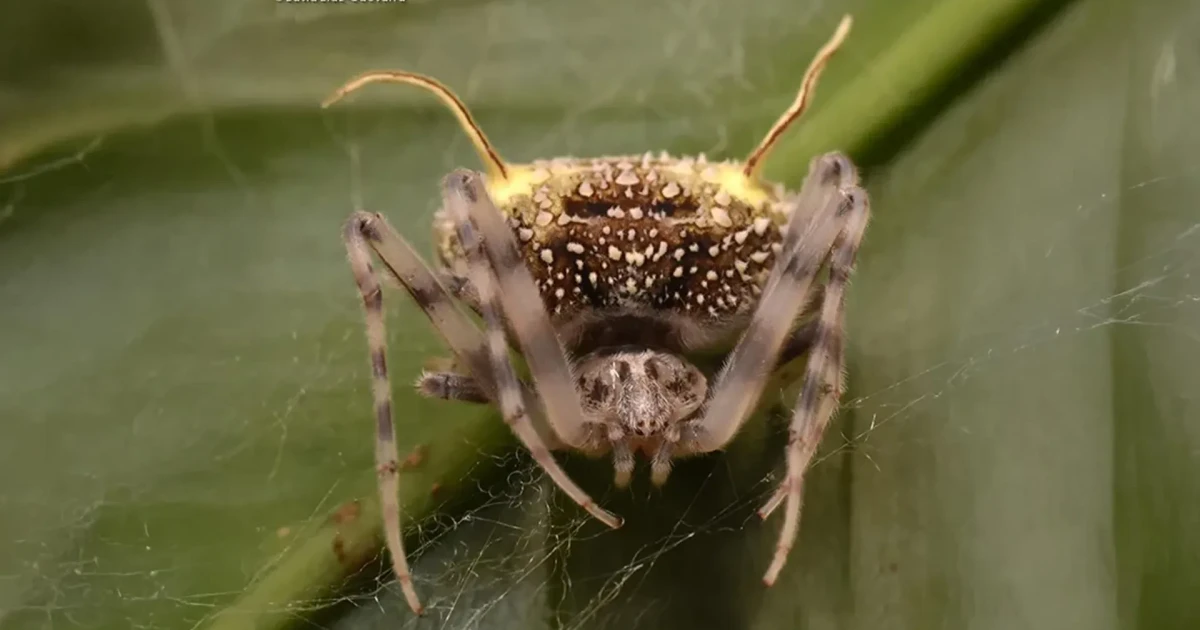
A spider in Ecuador’s Amazon has been documented with a disguise so uncanny that it was first mistaken for a mushroom on a night hike. The species, Taczanowskia waska, appears to mimic Gibellula, a parasitic fungus that grows on spiders, in what researchers describe as the first documented case of arachnid mimicry of an araneopathogenic fungus.
The spider was found in the Llanganates-Sangay Corridor during a nighttime naturalist hike at the Waska Amazonía study site, then brought to specialists through an iNaturalist observation. Alexander Griffin Bentley first noticed the animal and shared images that drew the attention of taxonomists, including David Ricardo Díaz-Guevara and arachnologist Nadine Dupérré, who helped formalize the description. The species was described from a female specimen and published in Zootaxa on February 26, 2026, along with an updated taxonomic key for females of the genus Taczanowskia.
What makes Taczanowskia waska stand out is not just that it resembles a fungus, but how many parts of the body seem to be involved in the deception. The paper describes elongated abdominal structures and a pale, fungus-like surface, along with a habit of remaining motionless on the underside of leaves. Together, those traits may help the spider avoid predators and, at the same time, position itself to catch prey.
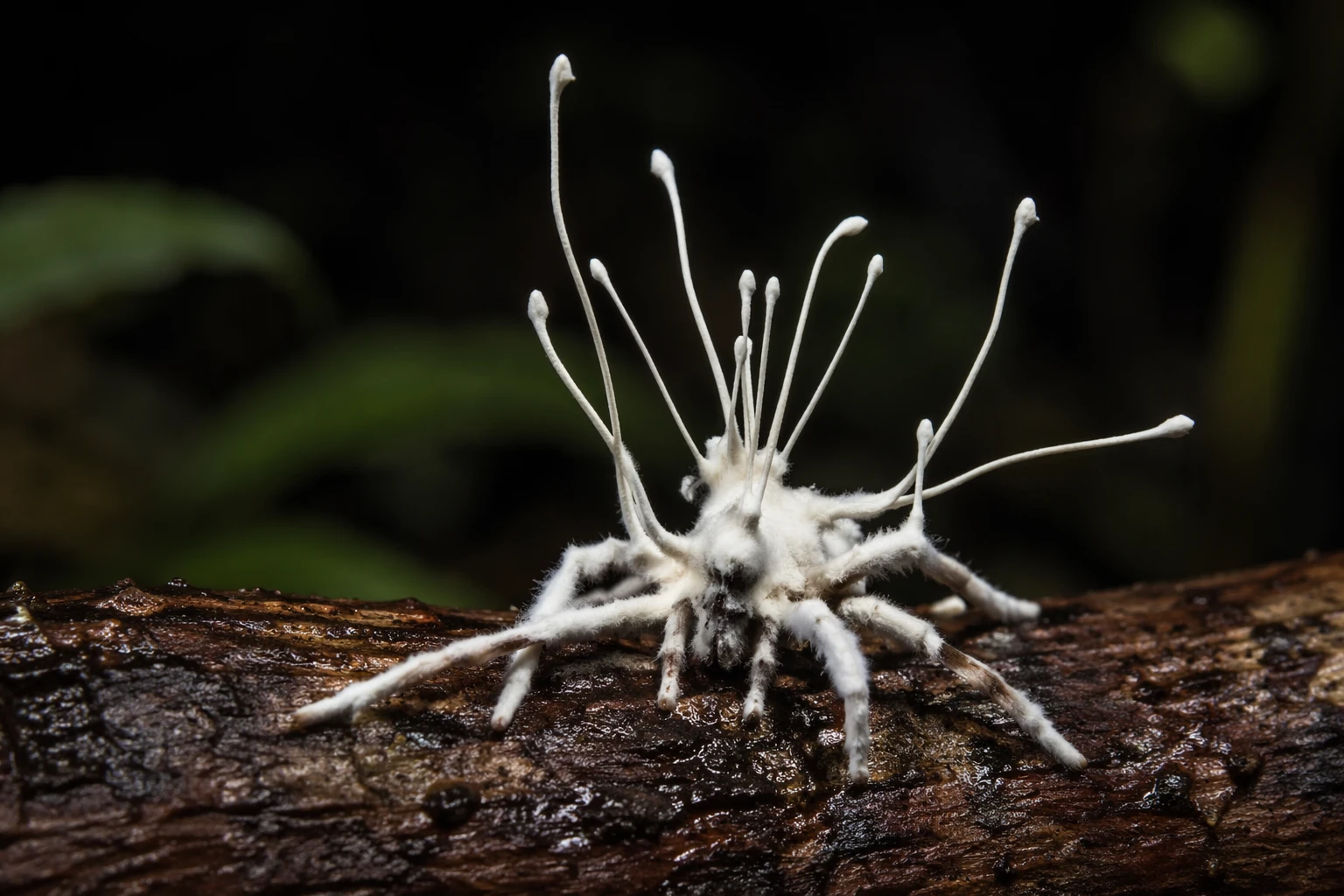
The genus Taczanowskia is considered rare and little studied, and the species’ ecology remains poorly known because these spiders are seldom observed in the wild. That rarity matters in a forest system where species can disappear before scientists even recognize them. The discovery in the Ecuadorian Amazon adds to a growing picture of tropical forests as evolutionary laboratories, where insects, fungi, predators and prey are locked into interactions that can remain invisible for years.
It also underscores the stakes of conservation in regions such as the Llanganates-Sangay Corridor, described as one of the most biodiverse places on Earth. If a spider can evolve to resemble a fungus that infects spiders, then the Amazon is still holding forms of life and behavior that scientists have barely begun to document. Some reporting also points to a Taczanowskia specimen collected in Bolivia in 1903 and later found in a museum in Germany, suggesting the genus may have been overlooked for more than a century before this species was formally recognized.
Sources
- [1]sciencedaily.com
- [2]mapress.com
- [3]leibniz-lib.de
- [4]phys.org
- [5]cbc.ca