US News
American Jews wrestle with tradition, liberal identity, and belonging
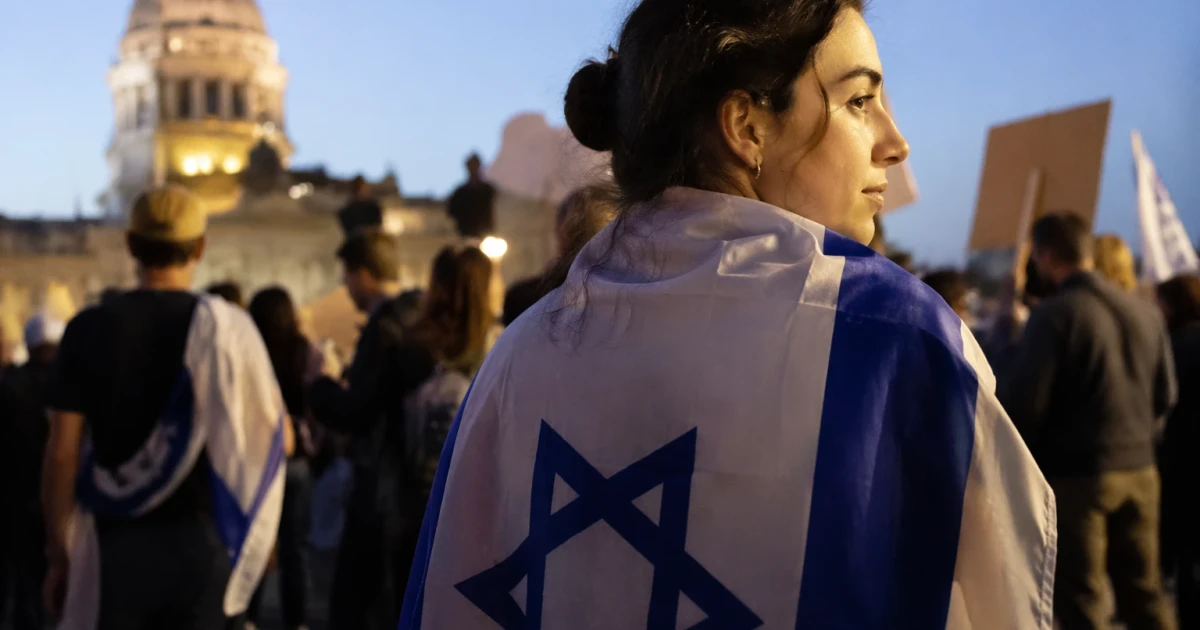
Over time, many American Jews have moved toward a version of Jewish life that earlier generations, including their own parents, might not have recognized as fully theirs. That drift is not just personal. It reflects a broader American pattern in which Jewish identity has been built around liberal politics, civic activism, and arguments over who counts as part of the community.
A liberal tradition with deep American roots
American Jews have long leaned politically liberal, and the reasons are tied to the immigrant experience as much as to theology. Jewish support for religious freedom, labor politics, and social justice helped align the community with reformist politics in the 20th century, especially as public life expanded beyond private religious observance into schools, unions, courts, and voting booths.
That liberal identity was reinforced by institutions that gave Jewish civic life a national shape. The National Council of Jewish Women was founded in 1893, the American Jewish Committee in 1906, the Anti-Defamation League in 1913, and the American Jewish Congress in 1917. Those organizations helped define Jewish engagement with American public life as organized, outward-looking, and deeply tied to questions of rights, inclusion, and democratic participation.
Civil rights left a durable imprint
The civil-rights era remains one of the clearest expressions of that tradition. Rabbi Abraham Joshua Heschel marched with Martin Luther King Jr., and Rabbi Joachim Prinz spoke at the 1963 March on Washington. Their presence tied Jewish moral vocabulary to the Black freedom struggle and gave later generations a model of public Judaism that was not confined to synagogue walls.
The movement also carried real sacrifice. Michael Schwerner and Andrew Goodman, both Jewish civil-rights workers, were killed in Mississippi in 1964. Their deaths became part of a broader memory in which American Jewish identity was linked not only to advocacy, but to direct risk-taking in the service of racial justice and constitutional equality.
Belonging is now being redrawn through family rules
That older idea of Jewish public purpose now intersects with a more intimate question: who belongs. In Reform Judaism, the Central Conference of American Rabbis adopted a patrilineal-descent resolution on March 15, 1983, accepting the Jewish identity of children of Jewish fathers and non-Jewish mothers under certain circumstances. The decision did not erase boundaries, but it marked a major shift in how lineage, home life, and communal recognition could be understood.
The 1983 resolution mattered because it reflected an older Reform instinct as well. Nineteenth-century Reform rabbis had already been more flexible about inclusion, which meant the modern debate was not simply a break with the past. It was a continuation of a long internal argument over whether Jewish continuity should rest on inherited rule, lived practice, or a broader civic and ethical attachment to the community.
Election data show the political center of gravity remains left-leaning
The current political map confirms how durable that liberal orientation remains. The Jewish Voters Resource Center found that Jewish turnout in the 2024 U.S. election was 71%, compared with 64% for the general electorate. In the same election, 71% of Jewish voters supported Kamala Harris, while 26% backed Donald Trump.
Orthodox Jews, who make up about 9% of the U.S. Jewish population, have moved noticeably toward Republicans. Non-Orthodox Jews continue to favor Democrats, which keeps the broader Jewish electorate anchored on the left even as internal differences widen. Those numbers matter because they show that the argument inside American Jewish life is not about whether political identity matters, but which kind of politics can still feel compatible with Jewish inheritance.
The issue set has shifted across generations
The disagreements are sharpened by what different generations worry about most. Recent Jewish-voter studies show that many Jewish voters prioritize democracy and abortion, while older generations are more focused on antisemitism and campus antisemitism. Those priorities are not abstract. They shape how people decide whether to center universal liberal commitments, Jewish security, Israel, or institutional preservation.
That is why debates over Israel and antisemitism now carry outsized weight. They do not sit beside Jewish identity; they increasingly define it. For some, the test is whether progressive politics can still protect Jewish safety and continuity. For others, the test is whether Jewish tradition can survive without yielding its moral claims to tribal anxiety or partisan discipline.
The local archive still holds the larger story
Even place names can remind readers how rooted these arguments are in specific communities. The Library of Congress lists Sheffield Press in Sheffield, Iowa, as a weekly newspaper first published in 1880 and still current. Separate from that Midwestern reference, Sheffield, England, has Jewish-community traces going back to 1797 and 1817, with the community growing from about 60 people in the 1840s to about 800 by 1900 before the central synagogue was destroyed in the Blitz of December 1940.
Those records point to a larger truth about Jewish life in America and beyond: belonging is built over generations, then tested by politics, migration, marriage, and memory. The present conflict is not between faith and modernity alone, but between different ways of surviving as a people when public life keeps forcing the private questions into view.
Sources
- [1]nytimes.com
- [2]sheffield.gov.uk
- [3]loc.gov
- [4]myjewishlearning.com
- [5]gilderlehrman.org
- [6]jewishvoters.org