US News
Americans mark the Bicentennial with parades, exhibits and patriotic revival
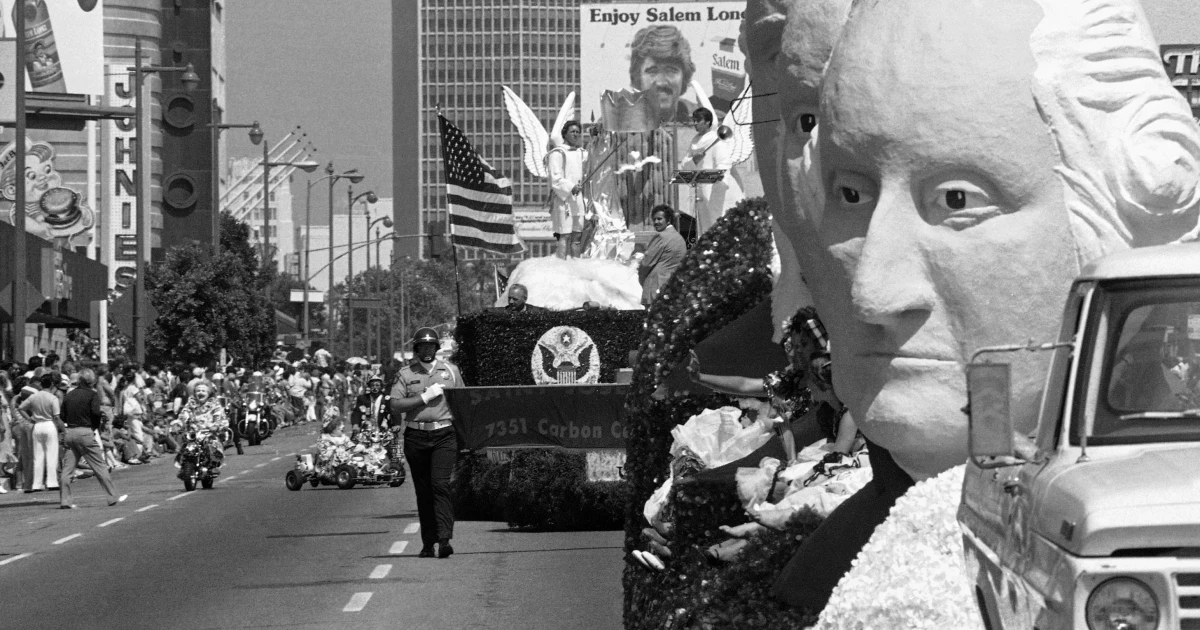
Parades, fireworks and a revived strain of public patriotism turned the nation’s 200th birthday into a season rather than a single day. The 1976 Bicentennial carried extra weight because Americans were celebrating independence after Vietnam, Watergate, recession and an energy crisis had shaken confidence in the country itself.
A Bicentennial Era, not a single day
Federal planning began a decade before the anniversary. The American Revolution Bicentennial Commission was established in 1966, and the National Archives and Records Administration preserves the paper trail of the American Revolution Bicentennial Administration, which became the federal body responsible for carrying the commemoration forward. By 1974, that administration was coordinating observances and urging local events, turning the 200th anniversary into a national project rather than a single ceremonial date.
The Smithsonian Institution describes the run-up as a Bicentennial Era, a series of observances, celebrations and commemorations leading to the 200th anniversary of the adoption of the Declaration of Independence on Sunday, July 4, 1976. That framing matters because it captures the scale of the moment: the country was not merely marking a holiday, it was staging a long civic performance about what the United States had been and what it still hoped to become.
Patriotism with political bruises
The emotional force of 1976 came from the gap between national ceremony and national mood. Inflation, unemployment and post-Watergate pessimism were still part of daily life, and the memory of the Vietnam War was still fresh. The Bicentennial therefore worked as both a patriotic revival and a public search for renewal, a reminder that national confidence had to be rebuilt, not assumed.
That tension is what gives the Bicentennial its staying power in the historical record. It did not erase the decade’s doubts. It placed them beside flags, bandstands and official pageantry, producing a celebration that felt proud but not innocent.
The traveling spectacle
One of the clearest symbols of that effort was the American Freedom Train, which began a 21-month tour of the 48 contiguous states on April 1, 1975. Its route made the anniversary visible well beyond Washington, and it gave families and schoolchildren a moving display of patriotic display tied to the Revolution’s legacy.
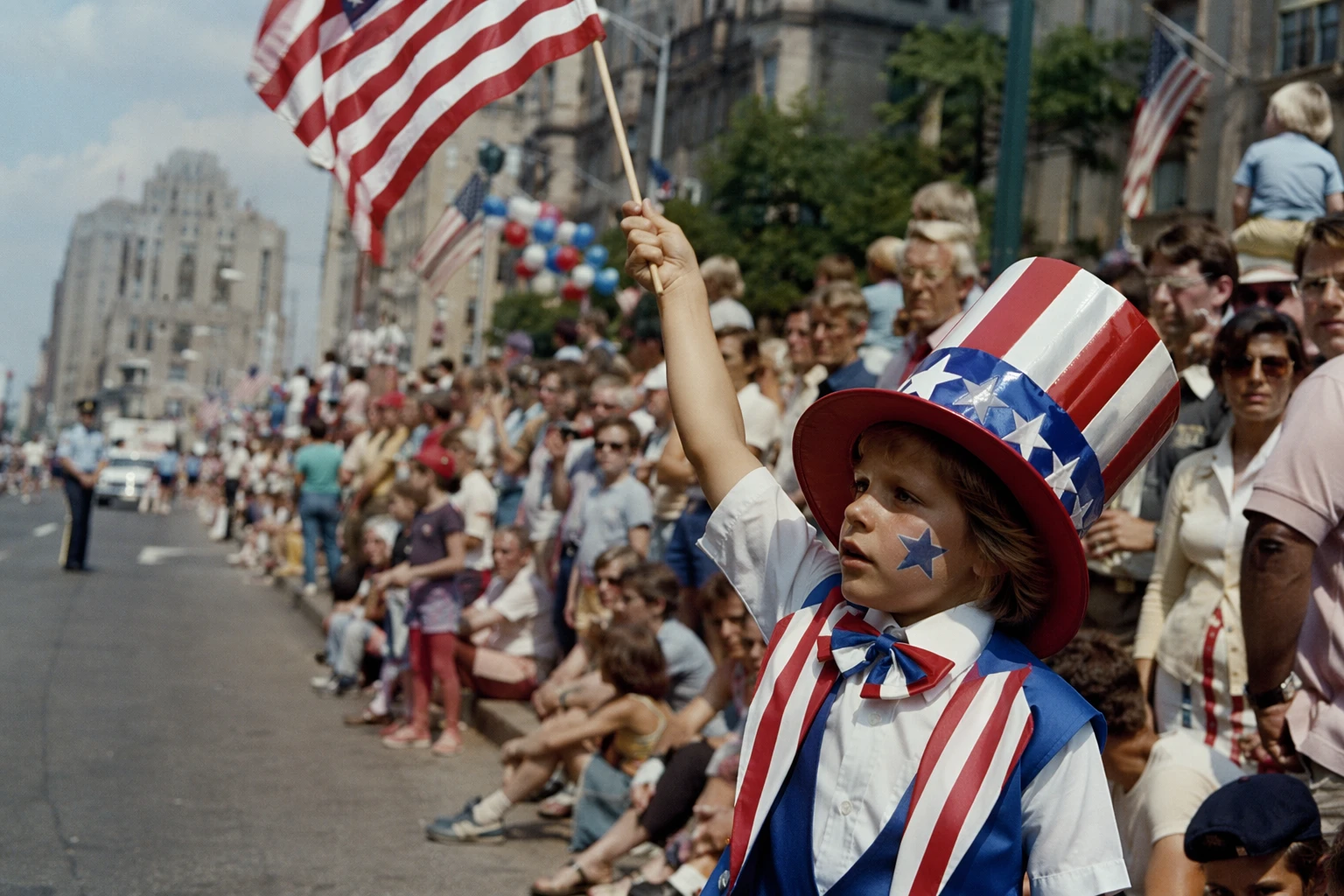
The rest of Bicentennial America built on that same visual language. Communities marked the year with parades, wagon trains, tall ships, fireworks, school programs, commemorative coins and local festivities. Historical collections show that communities in all 50 states held their own events, which helped the celebration feel both national and local at once.
That broad reach mattered. The Bicentennial was not confined to a few elite institutions or a single city; it spread through county fairs, classrooms, waterfronts and downtown streets. In a period often described as fractured, the anniversary created a shared calendar of civic gestures.
Boston and Philadelphia anchored the symbolism
The most carefully staged moments tied the modern presidency to Revolutionary memory. On April 18, 1975, President Gerald R. Ford visited Boston’s Old North Church, where two lanterns were lit and a third was added to recognize the country’s third century. The setting reached back to the city’s revolutionary mythology, but the third lantern pushed the image forward, signaling a new chapter rather than a frozen past.
Ford later spoke at Independence Hall in Philadelphia on July 4, 1976, during a ceremonial event marking the Bicentennial. On the morning of that same day, he also issued a Bicentennial proclamation that ran in the Washington Post. Together, those gestures linked Boston, Philadelphia and the capital into one national script, using the founding geography to give the anniversary the weight of state ritual.
The Smithsonian turned memory into a public showcase
In Washington, the Smithsonian Institution made the Bicentennial feel like a citywide exhibition of American identity. Its observances included a 12-week Bicentennial Festival of American Folklife, a visit from Queen Elizabeth II and the opening of the National Air and Space Museum on the National Mall on July 1, 1976. That sequence gave the anniversary unusual range, blending folk culture, royal diplomacy and a major new museum into one summer of public programming.
The Smithsonian’s role also showed how the Bicentennial tried to broaden the nation’s self-portrait. Folklife programming pointed toward regional traditions and ordinary people’s histories, while the new Air and Space Museum placed technological achievement at the center of the national story. Queen Elizabeth II’s visit added a global dimension, underscoring how American independence was being commemorated on a stage watched well beyond the United States.
What the Bicentennial says about the national story in 2026
The 1976 model remains useful because it shows how a nation tells a story about itself when it is both proud and unsettled. The Bicentennial was expansive enough to include schoolrooms, museum galleries, local parades and presidential ceremonies, yet the broader atmosphere was still shaped by division and doubt. That balance is the lesson for any 2026 anniversary story: the strongest national rituals do not flatten conflict or pretend unanimity.
They leave room for spectacle, memory and the harder question of who gets to feel included in the celebration. The Bicentennial did that imperfectly, but it did it on a scale that still defines the benchmark for American civic storytelling.
Sources
- [1]abcnews.com
- [2]si.edu
- [3]archives.gov
- [4]fordlibrarymuseum.gov
- [5]whitehousehistory.org
- [6]archives.org
- [7]americanarchive.org
- [8]history.com