US News
Americans’ retirement confidence falls as inflation and costs bite

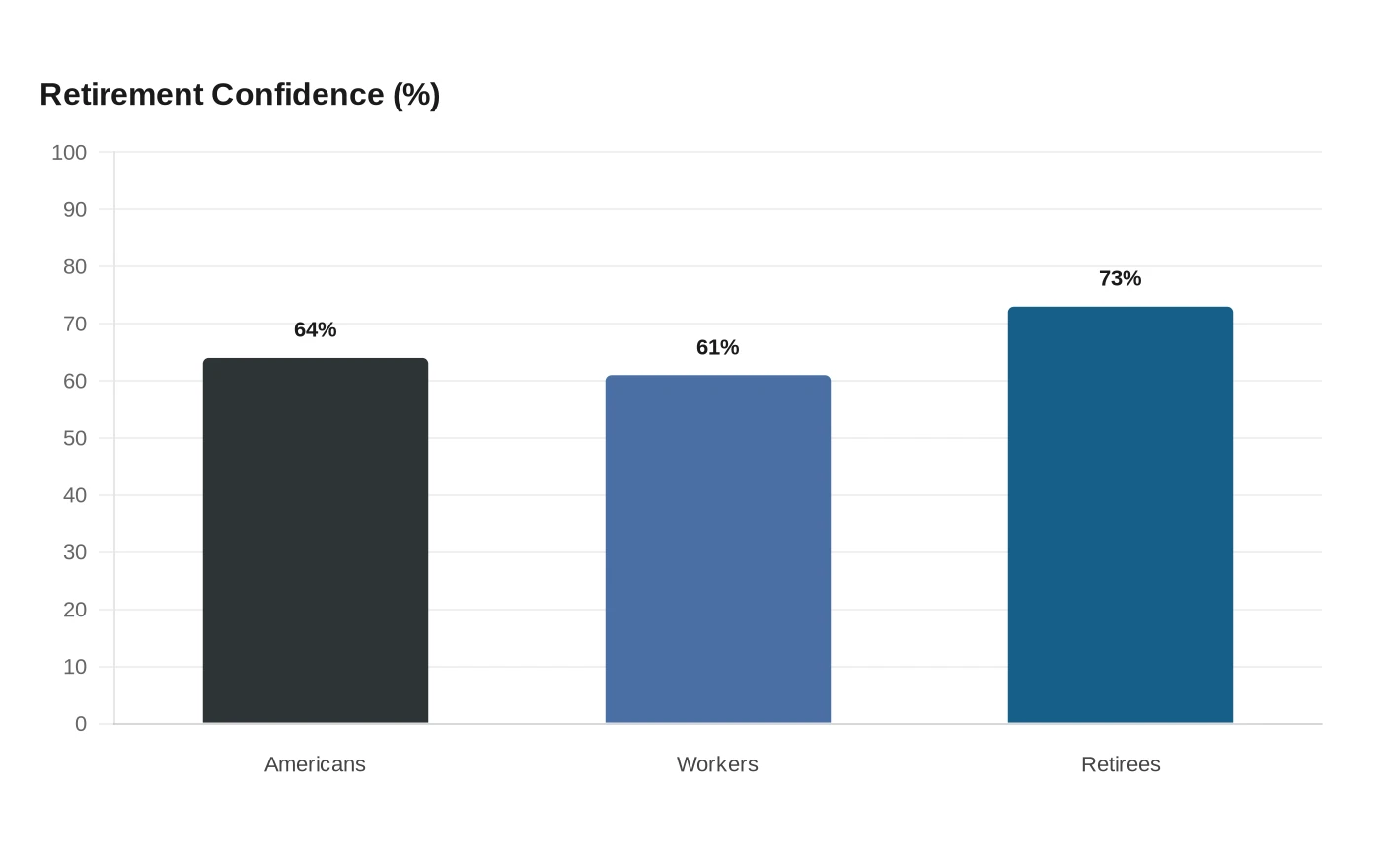
Americans are entering retirement with more money saved on paper, yet less faith that it will be enough. The latest confidence reading from the Employee Benefit Research Institute found that 64% of Americans felt they had enough money to live comfortably throughout retirement, a decline from a year earlier as workers and retirees confronted higher costs and growing uncertainty.
The 2026 Retirement Confidence Survey was fielded online from January 2 to January 28 and included 2,544 respondents, with a general population sample of 2,052 Americans, including 1,007 workers and 1,045 retirees, plus an oversample of 492 caregivers. It was the 36th annual survey, the longest-running of its kind, and it showed confidence falling on both sides of the retirement divide.

Among workers, confidence dropped 6 percentage points from 2025 to 61%. Retiree confidence also fell, slipping 5 points to 73%. EBRI said the retreat reflected worries about inflation, debt, health care costs, housing expenses and possible changes to the retirement system. Craig Copeland, EBRI’s director of wealth benefits research, said Americans were facing immediate financial pressure along with long-term uncertainty, with workers under strain from debt, inflation, housing and health care costs, while retirees were increasingly focused on Social Security and Medicare.

That anxiety was not limited to abstract policy fears. Seven in 10 retirees and 4 in 5 workers said they were concerned the government would make changes to the U.S. retirement system. Fewer than 2 in 5 workers and half of retirees rated their household financial well-being as at least very good, underscoring the gap between saving and feeling secure.
Debt remained one of the sharpest fault lines. EBRI found that 65% of workers said debt was a problem for their household, and one-quarter called it a major problem. Half reported carrying credit card debt, and nearly 1 in 3 said they had more than $25,000 in non-mortgage debt. Those burdens help explain why higher contributions are not automatically translating into peace of mind: retirement planning is now being shaped as much by present-day bills and policy uncertainty as by long-term investing.
Sources
- [1]cbsnews.com
- [2]ebri.org