Technology
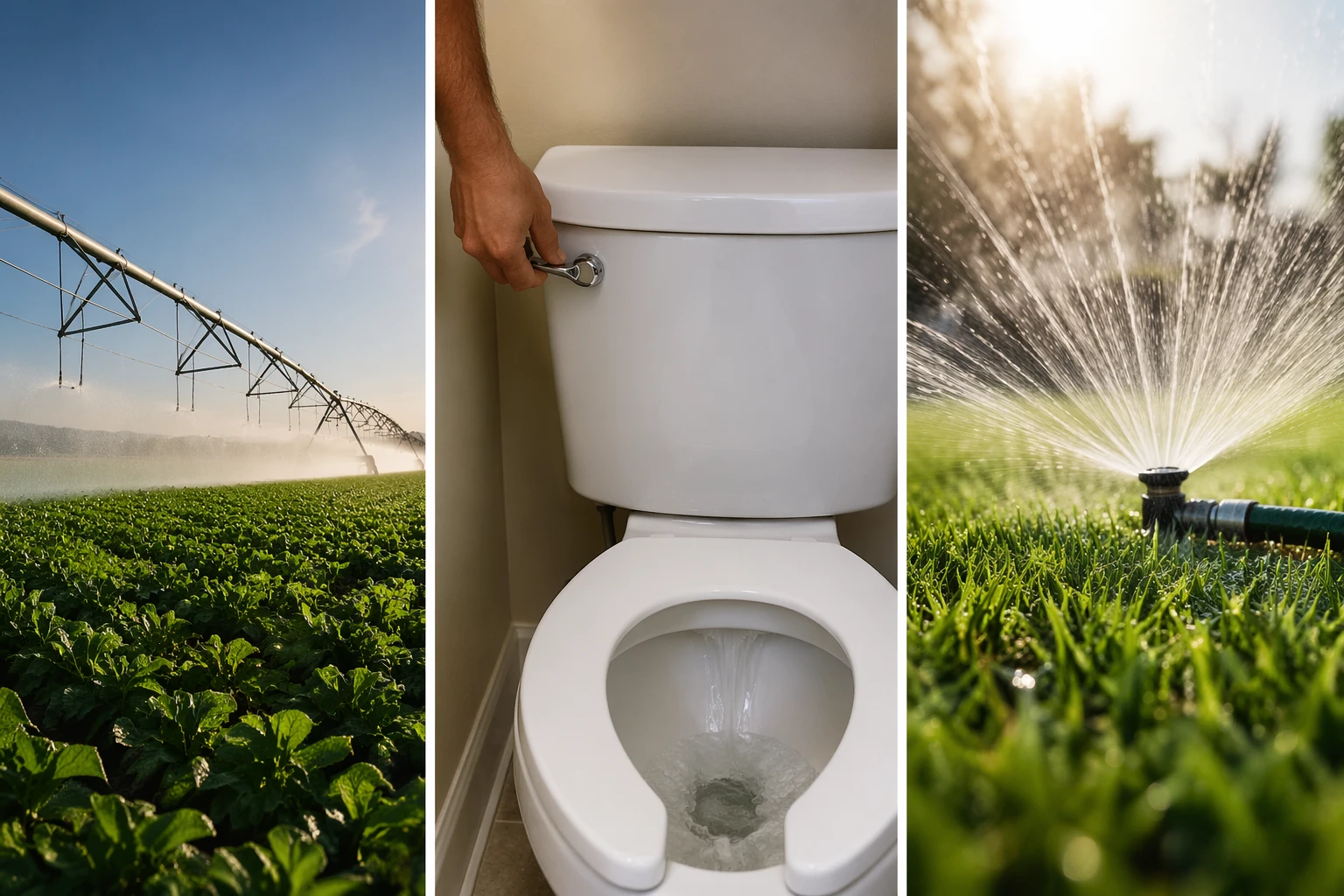
America’s biggest water users are farms, lawns and toilets, not AI
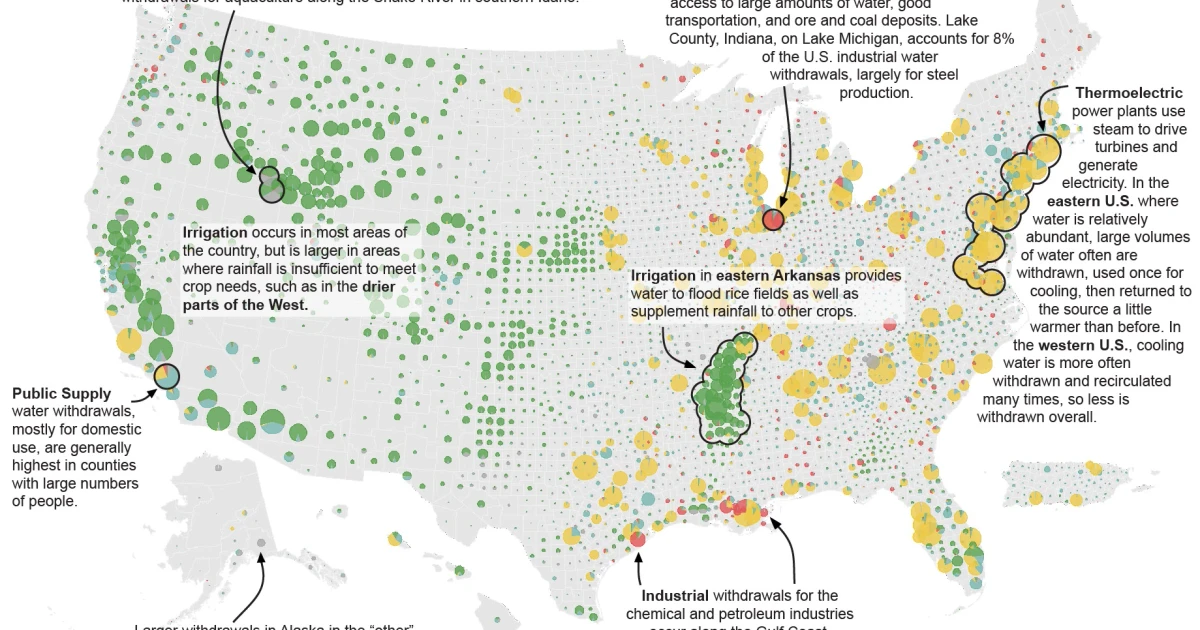
America’s water system is still shaped by the familiar demands of food, electricity and daily life. The U.S. Geological Survey put total water use in 2015 at about 322 billion gallons per day, the lowest level since before 1970, and the two biggest withdrawal categories were thermoelectric power and irrigation. Domestic use, which covers the water that runs through kitchens, lawns and toilets, totaled 26,560 million gallons per day, about 8 percent of total withdrawals.
The national baseline still belongs to farms, power and households
That scale matters because AI is often discussed as if it were about to redraw the entire water map on its own. In national terms, it does not. Agriculture, power generation and households remain the core of the country’s water demand, and the 2015 U.S. Geological Survey figures show why any serious comparison has to start there.
Thermoelectric power is especially important because it sits at the intersection of water and energy policy. Power plants need water for cooling, irrigation consumes huge volumes across the West and Midwest, and household demand may look small only until it is multiplied across millions of homes. The point is not that domestic use is trivial. It is that the biggest pieces of the national water ledger are still the old ones, not the newest computing equipment.
What the AI boom adds to the ledger
The most commonly repeated AI water figures mix two different things: direct water use at data centers and the indirect water footprint tied to the electricity those facilities consume. One older estimate put U.S. data-center water use at 449 million gallons per day and 163.7 billion gallons annually as of 2021. A separate federal estimate cited by the Environmental and Energy Study Institute put the indirect water consumption footprint of U.S. data centers from electricity use at roughly 211 billion gallons in 2023.
Those numbers are not interchangeable, and that distinction is the heart of the debate. The direct-use figure is much smaller than the national daily withdrawal total, while the indirect figure captures the water embedded in power generation. On a daily equivalent basis, 211 billion gallons a year works out to roughly 578 million gallons a day, still far below the country’s 322 billion gallons of daily withdrawals. The pressure is real, but it is not large enough to displace agriculture or household demand as the biggest national water users.
That is why some analysts argue the indirect footprint can matter more than the cooling water used on site. Ceres has warned that water consumed to generate electricity for massive computing loads can have a larger impact than the water used inside the data hall itself. In practical terms, that means the public debate cannot stop at a server farm’s cooling system. It has to include the power plants and grid upgrades that keep the servers running.
Why local communities feel the strain first
The national picture can look modest while the local picture turns tense. Data-center cooling water is often evaporated and does not return to the supply, which means the effect is felt immediately by local utilities rather than recycled downstream. The real policy question is not just how much water AI uses in aggregate, but where that water comes from, whether it is potable and whether communities see the numbers before permits are granted.
That is already driving pushback. More than a dozen Florida counties and cities are pausing approval of large AI data centers over water, electricity and environmental concerns. In Texas, regulators surveyed data centers about water use, and less than one-third of companies responded. Those two examples show the same problem from different angles: local governments are being asked to weigh major infrastructure decisions without clear, comparable reporting on water demand.
The risk rises in drought-prone or fast-growing places, where a new server farm can compete with housing growth, industrial users and existing municipal supply. Even when a single facility does not rival farms or entire city systems, it can still strain a utility that was built for a different load profile. That is why the issue shows up first at the county and utility level, not in national water statistics.
Corporate reporting shows both progress and pressure
The largest technology firms are starting to disclose more about their water use, and the numbers show both the scale of the footprint and the limited pace of relief. Google said its data centers and offices used 8.1 billion gallons of water in 2024 and replenished 4.5 billion gallons, raising its freshwater replenishment rate from 18 percent in 2023 to 64 percent in 2024. Microsoft has also reported rising water use as AI expands.
Those disclosures matter because they show that the footprint is not hypothetical. They also show the limit of corporate offsets. Replenishment can improve a company’s accounting, but it does not erase the local timing problem when a new facility needs cooling water now, in a basin that may already be under stress. A replenishment rate on paper does not automatically create more potable water in a drought year.
When AI water use becomes a public-policy issue
AI’s water footprint becomes a real policy problem when several conditions overlap. The first is location: drought-prone states, fast-growing suburbs and water-stressed basins create far more friction than areas with surplus supply. The second is source quality: if a data center draws drinking water instead of recycled water, the tradeoff is immediate. The third is transparency: local officials need disclosure on both direct cooling demand and indirect power-related water use before they approve a project.
The broader shift is toward treating data centers more like other essential utilities. That means planning water, energy and land use together, not separately. The U.S. is still a country where farms, lawns and toilets dominate water demand, but AI now sits in the same room as those older uses, especially when new server farms land in communities that are already counting every gallon.
Sources
- [1]cbsnews.com
- [2]usgs.gov
- [3]ceres.org
- [4]eesi.org
- [5]sustainability.google
- [6]houstonpublicmedia.org
- [7]usatoday.com
- [8]time.com