World
Amnesty International Criticizes Global Leaders Over Human Rights
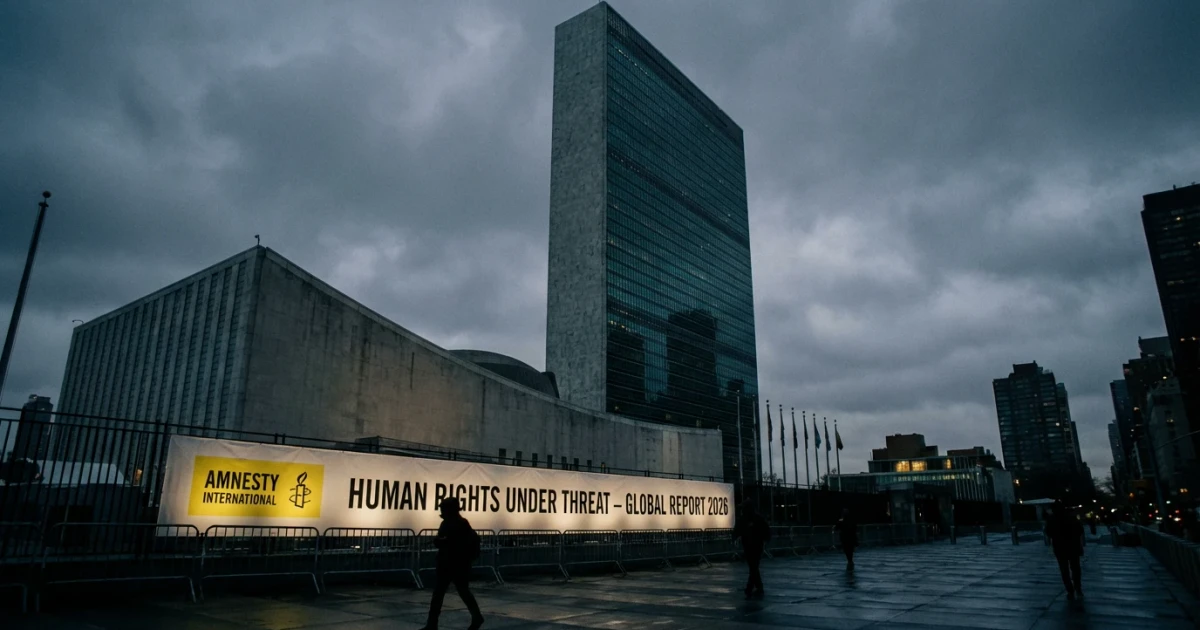
Amnesty International has issued a sharp rebuke of what it describes as a “predatory world order,” pointing to the actions and policies of global leaders such as Israel’s Prime Minister Benjamin Netanyahu, Russia’s President Vladimir Putin, former U.S. President Donald Trump, and the United States as a whole. The organization’s latest annual report, covered by both Democracy Now! and Al Jazeera, paints a grim picture of global human rights, citing increased repression, conflict, and erosion of international norms.
Amnesty International’s Alarm Over Global Leadership
The report, which assesses the state of human rights worldwide, singles out prominent leaders and countries for what Amnesty calls a coordinated assault on international law and basic freedoms. Both Democracy Now! and Al Jazeera highlight Amnesty’s accusation that a “predatory world order” is being perpetuated by the policies of Netanyahu, Putin, Trump, and the U.S., with Israel and the United States featured as central actors in this trend.
- Amnesty’s analysis points to mounting civilian casualties and humanitarian crises in conflict zones, with particular focus on the Israeli-Palestinian conflict, Russia’s domestic repression, and the global influence of past and present U.S. policy.
- The organization’s 2023/24 annual report offers detailed country-by-country assessments, including case studies from areas under the direct influence of these leaders and states.
Key Criticisms of Israel, Russia, and the United States
Amnesty International’s findings, as reported by Democracy Now!, emphasize Israel’s operations in the Occupied Palestinian Territories, highlighting allegations of disproportionate military force and restrictions on Palestinian rights. The report also critiques Russia’s intensified crackdown on civil liberties, referencing data from organizations such as Human Rights Watch, and notes the ongoing effects of U.S. policies—especially under the Trump administration—that have undermined international human rights mechanisms.
- Al Jazeera’s coverage underscores Amnesty’s claims that the U.S. and Israel have played leading roles in shaping a system where powerful states face little accountability for rights violations.
- Amnesty highlights a pattern of selective enforcement of international law, where some states use their influence at the United Nations and other bodies to shield allies or themselves from scrutiny.
Trends in Global Human Rights
Both news outlets report Amnesty’s concern that the international community is witnessing the normalization of abuses, with increased impunity for powerful states. The report points to several worrying trends:
- Rising civilian casualties in armed conflicts, with limited action from the international community to prevent or respond to violations.
- Suppression of dissent and civil society in countries like Russia, accompanied by new declines in political rights and civil liberties globally.
- Continuing economic and military support for governments accused of abuses, as tracked in resources like the SIPRI Yearbook and World Bank economic data.
International Response and Outlook
Amnesty’s report calls for renewed efforts by the international community to uphold human rights standards and hold violators accountable, regardless of their global influence. The organization urges governments, civil society, and international institutions to resist political pressure and ensure that justice is not selectively applied.
While the report has sparked debate, it reflects growing concern among rights advocates that the erosion of accountability mechanisms will deepen global instability. With major powers often at odds, and the rules-based order under strain, Amnesty’s warnings resonate with those who see the protection of human rights as essential for global peace and security.
More information on the findings and methodology can be found in the Amnesty International Report 2023/24, as well as the U.S. Department of State’s official country reports and ongoing United Nations monitoring efforts.