Business
Analysts Warn of $200 Oil if Middle East Conflict Persists
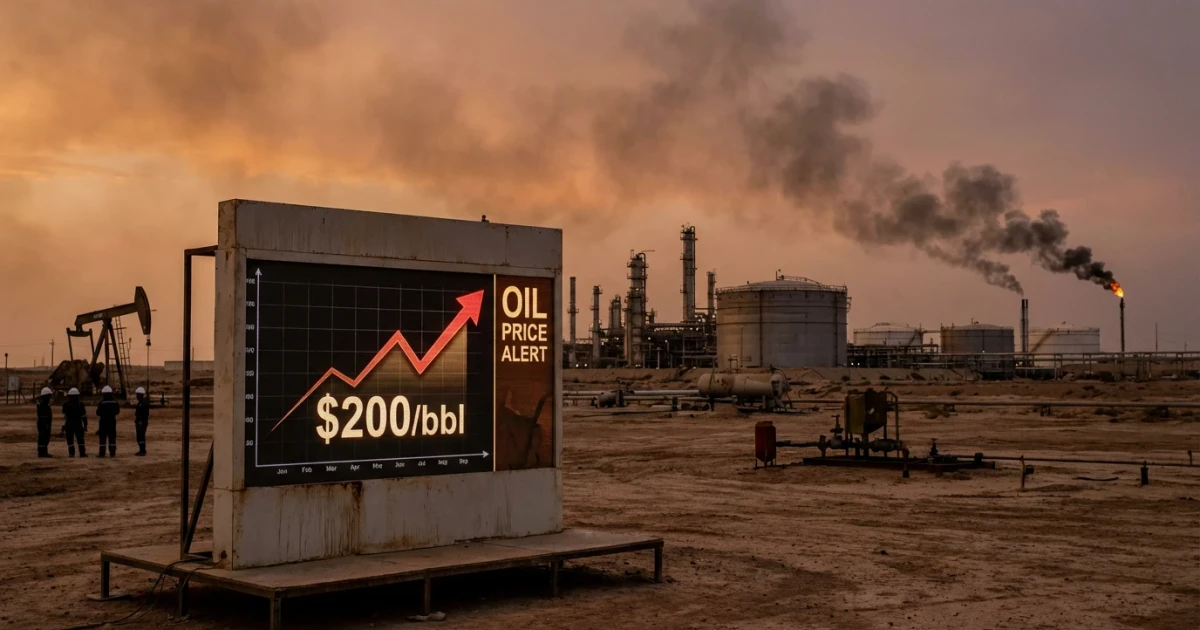
Global oil markets are facing mounting uncertainty as analysts warn that crude prices could soar to $200 per barrel if the ongoing conflict in the Middle East continues into the summer. The projection, highlighted in a recent analysis by Macquarie and reported by Bloomberg, underscores the potential economic fallout should the war not be resolved swiftly.
Market Reactions and Current Price Trends
Oil prices have remained elevated in recent weeks, reacting to persistent geopolitical tensions and concerns over supply disruptions. According to data compiled by the U.S. Energy Information Administration, Brent crude has traded at historically high levels, though slight declines have been observed amid reports of ongoing diplomatic efforts with Iran.
- Brent crude has seen sharp fluctuations, reflecting market sensitivity to headlines from the region.
- Negotiations involving Iran have at times eased prices, but overall volatility persists.
- Oil futures are in backwardation, a market structure where near-term prices are higher than those further out, signaling ongoing supply concerns.
Macquarie’s $200 Oil Scenario
The stark warning from Macquarie—reported by Bloomberg—centers on the potential for oil prices to reach $200 per barrel if the conflict stretches into June. Such a scenario would see prices nearly double from current elevated levels, amplifying downstream effects on inflation, fuel costs, and broader economic stability. This forecast is based on the assumption that prolonged disruptions would significantly constrain global supply, especially if key producers in the region are further impacted.
Supply Risks and Global Impact
Analysts point out that the Middle East remains a cornerstone of global oil production. Any protracted supply disruption could have far-reaching consequences for import-dependent economies and could destabilize already fragile supply chains.
- Ongoing war threatens critical infrastructure and transportation routes.
- Sanctions and countermeasures could further limit the flow of crude.
- Efforts to boost output from other regions may not fully offset lost supply.
These risks have led market participants to closely monitor diplomatic developments, particularly potential breakthroughs in talks with Iran, which could bring additional barrels to market and ease some price pressure.
Explaining Backwardation and Price Drivers
The oil market’s current state of backwardation reflects traders’ expectations of short-term scarcity. The U.S. Energy Information Administration explains that factors such as geopolitical risk, supply disruptions, and changes in demand all play a role in determining crude oil prices. With persistent uncertainty and no clear resolution in sight, the market is pricing in a significant risk premium.
Outlook: Volatility Ahead
While recent headlines about diplomatic engagement have provided some relief, the consensus among analysts is that oil prices will remain highly sensitive to developments in the Middle East. Should the conflict continue past June, as Macquarie warns, the world could see crude oil prices testing all-time highs, with substantial consequences for consumers and industries alike.
Policymakers and market participants are urged to follow official forecasts and scenario analyses, such as those published in the Short-Term Energy Outlook from the U.S. Energy Information Administration and the OPEC Monthly Oil Market Report, for ongoing updates as the situation evolves.
As the conflict’s trajectory remains uncertain, the world’s attention stays focused on both the diplomatic table and the trading floor, anticipating the next move in a high-stakes global market.