Health
Ancient brain circuit acts as built-in focus filter, Johns Hopkins finds
Johns Hopkins researchers have identified a tiny group of inhibitory brainstem neurons that appears to work as a built-in filter for attention, helping mice lock onto a target while ignoring distractions. The study, published in Nature Communications and selected as an editorial highlight, points to an ancient vertebrate circuit that may shape selective spatial attention far beyond the cortex long assumed to run the show.
In the experiment, mice performed a human-like touchscreen task that required them to choose a target location in front of them while ignoring distracting information off to the side. When the neurons were temporarily silenced, even faint distractors pulled the animals off task. When the same neurons were turned back on, the mice quickly regained their ability to filter out even strong competing stimuli.
Senior author Shreesh Mysore, a neuroscientist in Johns Hopkins University’s Department of Psychological and Brain Sciences in Baltimore, said the effect was stark. “A hallmark of ADHD is that even faint distractors draw attention away and that’s exactly what we see here when these neurons are silenced,” he said. Lead author Ninad Kothari, a postdoctoral fellow in the same department, framed the finding as part of a deeper evolutionary question about how animals without a highly developed prefrontal cortex can still pay attention.
The work matters because selective spatial attention is the mental machinery behind ignoring background chatter, finding a friend in a crowd, or tracking one visual target in a busy field. Johns Hopkins says the circuit sits in a brainstem region that is evolutionarily old and conserved across vertebrates, including birds, fish and humans. That does not mean the mouse result is a treatment in waiting, but it does give researchers a more precise biological target than the broad cortical models that have dominated attention research for years.
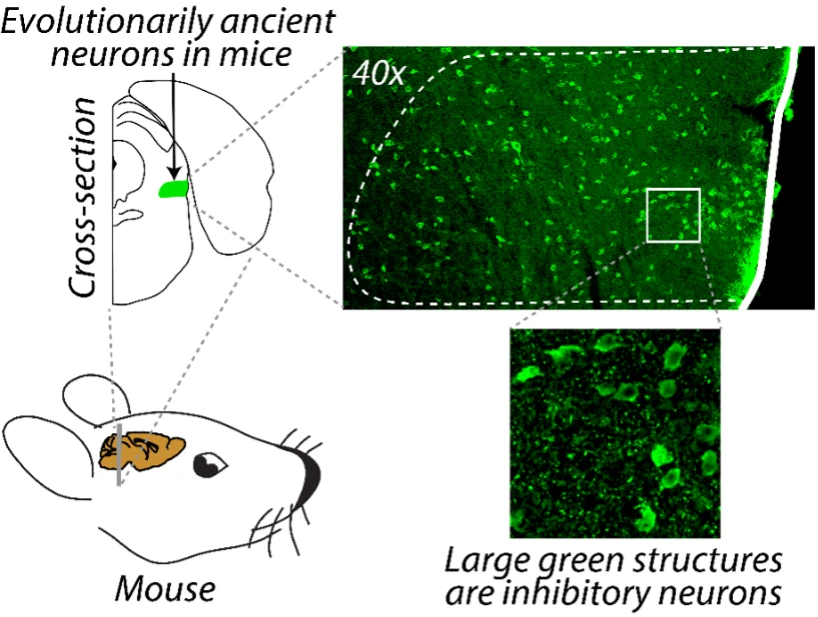
The university said the study was federally funded and built on earlier work from Mysore and other scientists in birds, frogs and turtles. A related 2022 bioRxiv preprint described ancient midbrain inhibitory neurons controlling selective spatial attention in freely behaving mice, showing this line of work has developed over several years. Johns Hopkins has linked the broader question directly to ADHD and autism, where filtering irrelevant information can be difficult, but the new finding remains basic neuroscience first: a map of how an old brain circuit helps decide what gets through and what gets ignored.
Sources
- [1]sciencedaily.com
- [2]hub.jhu.edu
- [3]eurekalert.org
- [4]nature.com
- [5]biorxiv.org