Science
Ancient Coral Fossils Reveal Shorter Days on Early Earth
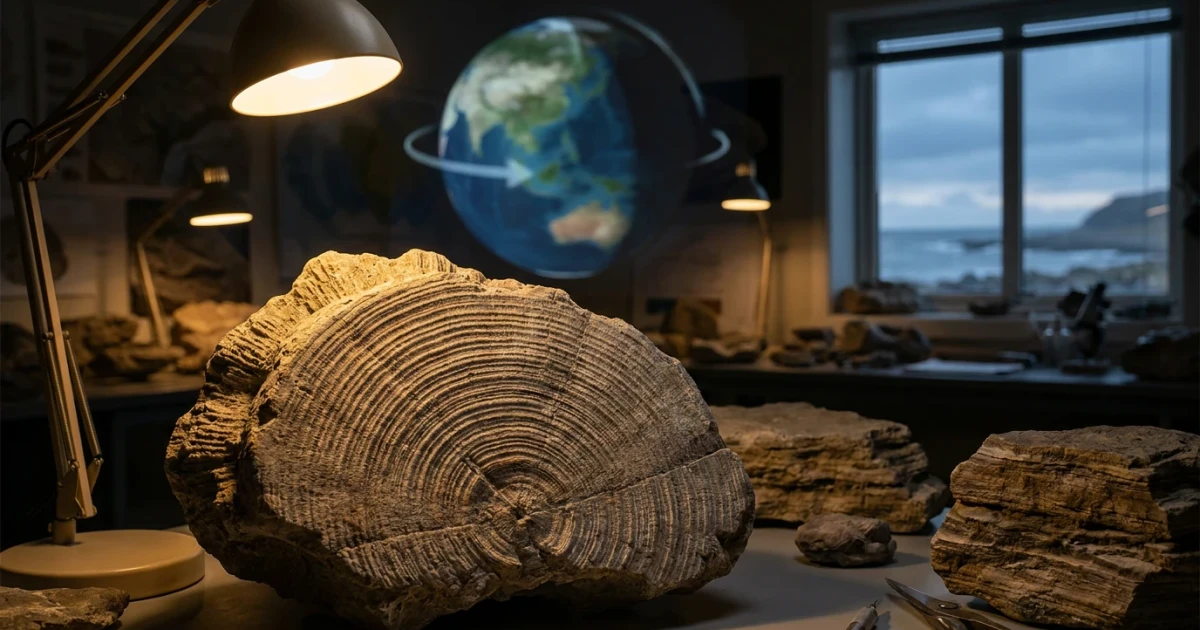
New discoveries from ancient coral fossils are shedding light on a fascinating aspect of Earth's deep history: the length of a day has not always been 24 hours. In fact, hundreds of millions of years ago, a day on Earth was significantly shorter, recent research shows.
Earth’s Rotation: Slowing for Billions of Years
According to analysis highlighted by Space Daily, the planet’s rotation has gradually been slowing down ever since its formation. Today, we define a day as 24 hours, but this has not always been the case. Tidal interactions between Earth and the Moon, along with other cosmic forces, have acted to slow our planet’s spin over billions of years.
Coral Fossils as Timekeepers
The evidence for Earth’s changing day length comes from an unexpected source: ancient coral fossils. Growth rings in these corals, much like the rings of a tree, record daily and annual cycles. By counting the number of daily layers in one year’s growth, scientists can determine how many days made up a year in the distant past.
- 380 million years ago, fossil corals indicate there were about 400 days in a year
- This means each day lasted roughly 22 hours, not 24
- These findings predate the existence of dinosaurs by hundreds of millions of years
Peer-reviewed research published in Nature and other scientific journals confirms these estimates, with data tables available for public review.
Tidal Forces and the Moon’s Role
The main reason for Earth’s slowing rotation is its interaction with the Moon. Tides raised in Earth’s oceans by the Moon’s gravity create friction against the planet’s rotation. Over millions of years, this friction has gradually decreased Earth’s rotational speed, lengthening the day. As the days have grown longer, the number of days per year has dropped because Earth’s orbit around the Sun has remained essentially unchanged.
How Scientists Know
Scientists reconstruct past day lengths by examining:
- Coral growth bands (each band marks a day)
- Sedimentary rock layers
- Other fossilized marine life
Classic studies have shown that corals from the Devonian period, over 380 million years ago, recorded between 385 to 410 daily bands per year.
Why Day Length Matters
Understanding how and why Earth’s day length has changed offers clues about the dynamics of our planet’s interior, its oceans, and even the evolution of life. Shorter days mean faster rotation, which affects climate, weather patterns, and the stability of the planet’s axis over time. As the day lengthens, these factors continue to shape Earth’s environment.
Looking Ahead
Earth’s rotation will keep slowing, but only by a tiny amount each century—about 1.7 milliseconds per century. While this change is almost imperceptible in a human lifetime, over hundreds of millions of years, it transforms the planet’s rhythms. For those interested, the original research and data tables provide deeper insights into how fossil corals act as natural clocks, preserving a record of Earth’s ever-changing day.
As scientists continue to study ancient clues hidden in rocks and corals, our understanding of planetary history—and the forces shaping Earth’s future—grows richer and more precise.