Science
Ancient Fossil Discovery Challenges Boundaries of Life: Scientists Uncover Possible New Form
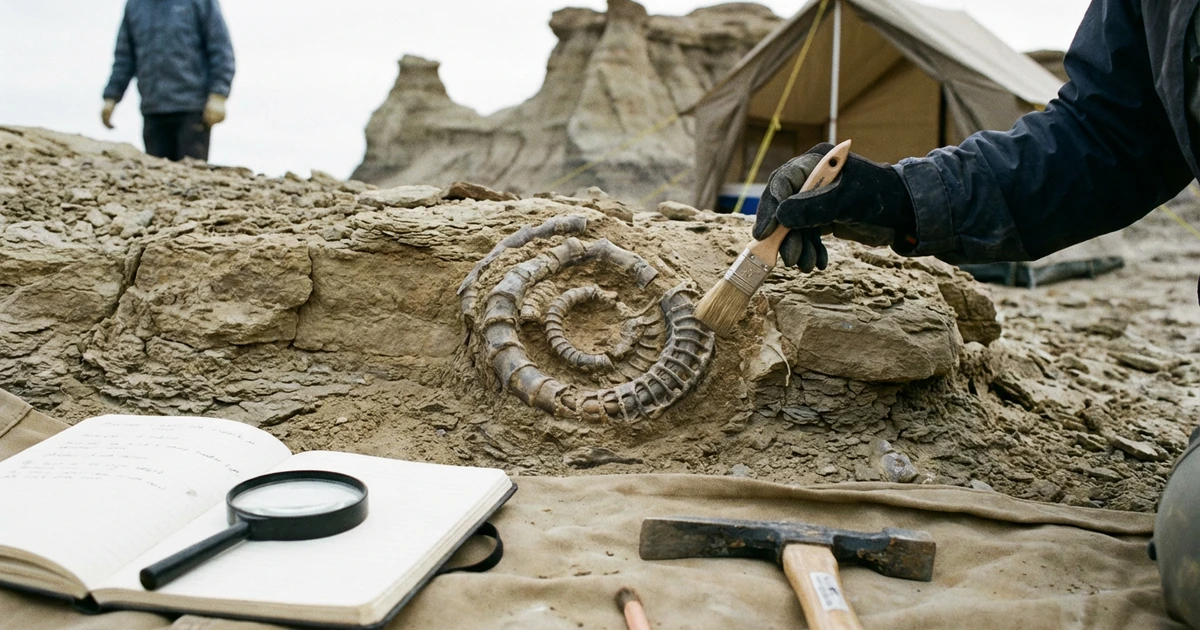
Scientists are abuzz after the discovery of ancient fossils from an extinct organism that may represent a form of life never before classified, calling into question the very boundaries between plants and fungi. The find, reported by researchers examining ancient geological formations, could reshape our understanding of early life on Earth.
The Discovery: Fossils Unlike Any Other
The fossils were uncovered in rock layers dating back hundreds of millions of years, a period when the first great forests began to take shape. The organism at the heart of this discovery bears a striking resemblance to both fungi and plants, yet defies easy categorization. Its structure displays features that are reminiscent of fungus—such as branching filaments—but also exhibits plant-like traits not typical of known fungal species.
Neither Plant Nor Fungus: A New Form of Life?
For decades, scientists have classified most early terrestrial life as belonging to the plant or fungus kingdoms. However, this newly studied organism challenges those assumptions. According to researchers, the organism’s fossilized remains exhibit a blend of characteristics found in both groups, but also possess unique traits that set them apart from any currently known life forms.
- The fossils come from a time before complex plants dominated Earth’s landscapes.
- The organism’s body plan does not fit within standard definitions of either kingdom.
- Distinctive features suggest a separate evolutionary lineage, possibly representing an entirely new branch of life’s tree.
Implications for Evolutionary Biology
If further research confirms that this organism is indeed a new form of life, the ramifications would be profound. It would mean that the evolution of terrestrial ecosystems involved more complexity—and more actors—than previously believed. This could reshape the way scientists think about the colonization of land and the evolution of early forests.
For context, the earliest known forests, which appeared in the Devonian period, were thought to be dominated by primitive plants. The discovery of a major organism that is neither plant nor fungus suggests that the story of Earth’s first forests is more intricate than once assumed.
A Window into Earth’s Distant Past
Fossils like these are invaluable for shedding light on the history of life. By examining the organism’s structure and comparing it to modern species, researchers hope to clarify its place in the evolutionary timeline. The find offers a rare glimpse into the ecosystems that existed before the rise of familiar plant and fungal forms.
What Comes Next?
Scientists are now conducting more detailed analyses of the fossils, including advanced imaging and chemical studies, to better understand their composition and evolutionary relationships. If the evidence continues to point toward a previously unknown form of life, the discovery could lead to a reevaluation of how the major kingdoms of life are defined.
The possibility that ancient forests were shaped by organisms outside our current understanding opens up new avenues of research—and new mysteries about the origins and diversity of life on Earth.
For readers interested in following scientific updates, the latest research on ancient life and evolutionary biology can be found through leading journals and news outlets specializing in paleontology and earth sciences.