Science
Ancient Rotifer Revived After 24,000 Years in Siberian Ice
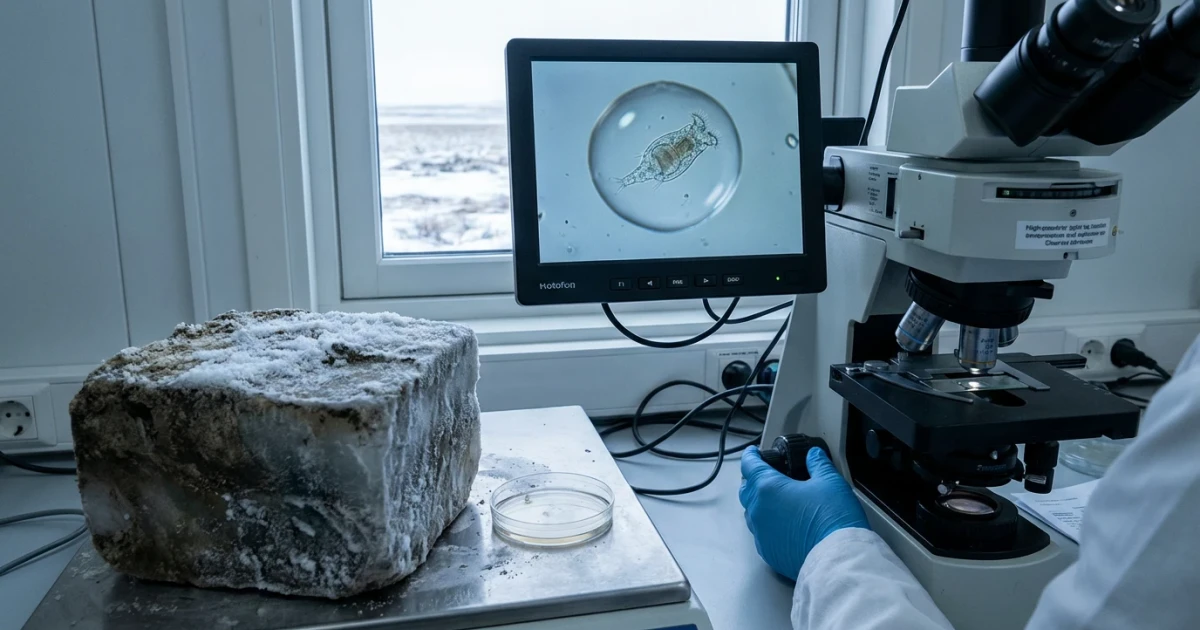
Scientists have successfully revived a microscopic animal that had been frozen in Siberian permafrost for approximately 24,000 years, sparking fresh interest in the resilience of life and the secrets locked in Arctic ice.
A Remarkable Discovery in the Arctic
The animal, a bdelloid rotifer, was recovered from deep within the Siberian permafrost. Bdelloid rotifers are tiny, multicellular organisms known for their ability to survive extreme conditions, including complete desiccation, freezing, and starvation. According to peer-reviewed research published in Nature Communications, this particular specimen had remained dormant for millennia before it was thawed and immediately began reproducing asexually.
How Scientists Revived the Rotifer
The research team extracted permafrost samples from the Alazeya River region in northeastern Siberia, an area rich in ancient ice. By carefully thawing the sample, the scientists observed the tiny rotifer return to life and start reproducing through parthenogenesis—a process in which females produce offspring without fertilization. The experiment demonstrated not only the rotifer's durability but also its ability to survive long periods in a state of suspended animation, known as anhydrobiosis.
- Age of rotifer: Estimated at 24,000 years based on permafrost data
- Location: Siberia, northeastern Russia
- Preservation: Frozen in permafrost during the Late Pleistocene
Implications for Science and Exploration
This discovery is significant for several reasons:
- It extends the known limits of animal dormancy and survival, surpassing previous records for multicellular animals.
- It provides evidence that permafrost can preserve complex life for tens of thousands of years.
- The ability of rotifers to recover and reproduce after such long-term freezing may inform bioengineering and cryopreservation techniques in the future.
The Bdelloidea class of rotifers is known for its resilience and adaptability, with modern relatives found in diverse environments worldwide. Scientists hope ongoing research into ancient permafrost may reveal more about the limits of survival and the potential for finding life in extreme environments, including on other planets.
What This Means for Permafrost Research
The revival of ancient rotifers underscores the importance of studying permafrost layers as natural archives of prehistoric ecosystems. These findings not only inform our understanding of Earth's past climates and environments but also raise questions about the stability of ancient organisms as climate change accelerates permafrost thawing.
Looking Ahead
As Arctic regions continue to warm, researchers anticipate more discoveries of ancient life forms preserved in the permafrost. Each new finding helps piece together the puzzle of life’s adaptability, offering clues that could one day inform space exploration and the search for life beyond Earth.