Science
Ancient Rotifer Revived from Siberian Permafrost Begins Reproduction
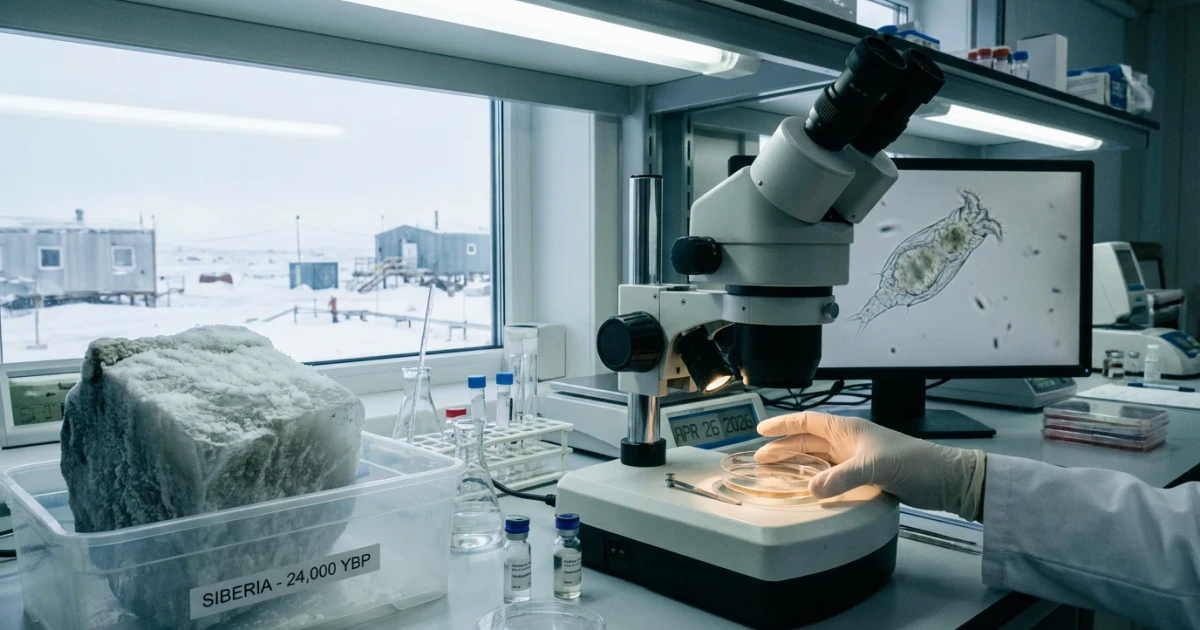
Researchers have successfully revived a tiny multicellular organism, specifically a bdelloid rotifer, that was frozen in Siberian permafrost for approximately 24,000 years. After thawing, the organism not only came back to life but also began reproducing asexually, shedding light on the remarkable survival mechanisms of microscopic life forms.
Discovery and Revival in Siberian Permafrost
The specimen was discovered in the remote Siberian permafrost, a region known for preserving ancient biological material due to its consistently low temperatures. Scientists extracted the bdelloid rotifer from a core sample taken dozens of feet below the surface, where it had remained frozen since the late Pleistocene era. According to a peer-reviewed study published in Nature Communications, detailed radiocarbon dating confirmed the organism's age to be around 24,000 years.
Unexpected Signs of Life and Reproduction
After the gradual thawing process, the rotifer not only resumed metabolic activity but also began reproducing through parthenogenesis—a form of asexual reproduction common among bdelloid rotifers. This finding was described as "shocking" by some media outlets, highlighting the exceptional resilience of these microscopic animals. As documented in the full research article, the revived rotifer produced healthy offspring, demonstrating sustained viability despite its millennia-long dormancy.
Biology and Survival Strategies of Bdelloid Rotifers
Bdelloid rotifers are microscopic, wheel-shaped animals renowned for their ability to survive extreme environmental stresses. These organisms can enter a state of cryptobiosis, dramatically reducing metabolic processes to survive freezing, desiccation, and radiation. Their unique biology has made them a subject of interest for evolutionary biologists and astrobiologists alike. For more on their taxonomy and characteristics, the bdelloid rotifers taxonomy database offers an in-depth classification and reference collection.
- Bdelloid rotifers can survive in a dehydrated state for years or even decades.
- They reproduce asexually, allowing a single individual to repopulate a lineage after revival.
- Previous records showed survival for up to a decade in frozen conditions, but this new finding extends that limit by orders of magnitude.
Permafrost as a Repository for Ancient Life
The Siberian permafrost is a key environment for preserving ancient life forms. According to the USGS Permafrost Database, permafrost covers vast areas of the Northern Hemisphere, with stable subzero conditions ideal for the long-term preservation of organic material. Previous studies have documented the revival of ancient plants, nematodes, and bacteria from permafrost, but the successful reproduction of a complex multicellular animal like a rotifer sets a new benchmark for long-term survival in extreme conditions.
Implications and Future Research
This breakthrough adds to a growing body of research suggesting that life can endure far longer in cryogenic stasis than previously thought. The mechanisms that allow bdelloid rotifers to repair cellular and DNA damage after millennia of freezing provide valuable insights for fields ranging from cryopreservation to astrobiology. Ongoing studies aim to isolate the genetic and biochemical adaptations responsible for their resilience, with potential applications in medical and space exploration technologies.
For readers interested in the broader context of life in permafrost, the Nature Permafrost Research Collection offers a comprehensive overview of studies on ancient ecosystems, environmental shifts, and preservation mechanisms.
Conclusion
The revival and reproduction of a 24,000-year-old bdelloid rotifer from Siberian permafrost demonstrates the extraordinary durability of microscopic life. As research continues, these findings may reshape our understanding of the limits of life on Earth—and potentially, beyond.