Science
Ancient Teeth Proteins Shed Light on Early Human Interbreeding
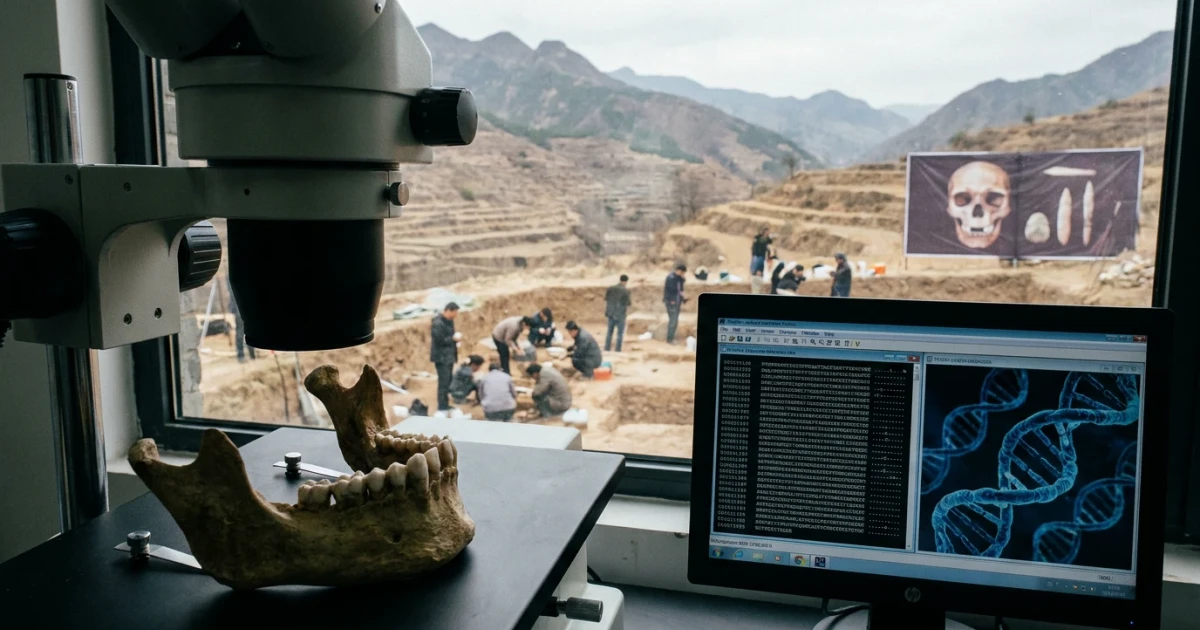
Recent scientific advances have uncovered remarkable details about Stone Age interactions between early human species, thanks to the study of ancient proteins preserved in fossilized teeth. Researchers analyzing enamel proteins from six Homo erectus specimens found across China have revealed evidence of interbreeding and genetic exchange, deepening our understanding of human evolution and the complex relationships among prehistoric populations.
Unlocking Ancient Secrets Through Enamel Proteins
While ancient DNA has long been a tool for tracing human ancestry, it often degrades in hot or humid environments. Scientists have turned to proteomics, the study of ancient proteins, as an alternative. Unlike DNA, proteins can survive for hundreds of thousands or even millions of years, offering valuable genetic information from fossilized remains.
In a recent study cited by CNN and published in Nature, researchers extracted enamel proteome data from six Homo erectus teeth unearthed at multiple Pleistocene sites across China. The team utilized advanced mass spectrometry techniques to sequence these proteins, revealing not only the species identity but also hints of genetic relationships and potential interspecies interactions.
Evidence of Stone Age Interbreeding
The protein analysis showed that Homo erectus in Asia represented an early divergent lineage, distinct from both modern humans and other archaic groups such as Neanderthals. However, the study's findings also suggest episodes of interbreeding between Homo erectus and other early human species. This aligns with broader genetic research, including studies on archaic hominin admixture in Africa, which have documented gene flow between multiple Stone Age populations.
- Enamel proteins were successfully extracted from six fossil teeth, spanning different sites in China.
- Proteomic data indicated evolutionary divergence and possible interbreeding events.
- Findings complement previous genetic research on early human species interactions.
As reported by CNN, these results highlight the complexity of prehistoric sex and genetic exchange, challenging simple narratives of human ancestry. The study demonstrates that interbreeding was not limited to Neanderthals and Denisovans, but may have involved even older lineages like Homo erectus.
Significance for Human Evolution
The ability to analyze ancient proteins from fossil teeth has opened new avenues for researchers to reconstruct evolutionary histories. According to the PRIDE Archive, the proteomic datasets from this study are publicly available, enabling further exploration and validation of these findings. The Paleobiology Database lists numerous Homo erectus fossil records from China, underscoring the region's importance in human evolutionary research.
These advances suggest that protein analysis can reach further back in time than DNA, helping scientists study fossil remains from periods where genetic material has deteriorated. The approach is particularly valuable in Asia, where Homo erectus fossils are abundant but ancient DNA is rarely recoverable.
Key Findings and Broader Implications
- Protein sequences revealed evolutionary divergence and admixture events.
- Interbreeding between early human species occurred earlier and more widely than previously understood.
- Proteomics provides a new window into the ancestry and migration patterns of archaic humans.
The study’s results are a reminder that human evolution was shaped by complex interactions, migrations, and admixture, not by isolated lineages. As CNN notes, "What proteins in prehistoric teeth reveal about Stone Age sex between early human species" is not just a story of science, but of the tangled roots of humanity.
Looking Forward
With proteomic technology advancing rapidly, researchers expect to uncover even more insights from ancient fossils. This method will likely shed light on regions and time periods previously inaccessible to genetic analysis. As more fossil teeth are studied, the history of human evolution—and the role of interbreeding in shaping it—will continue to evolve.
For those interested in the technical details, the original Nature study and proteomic data archive offer further exploration of the methodologies and findings that are changing our understanding of the Stone Age.