World
Antarctica's first dinosaur bone identified after 40 years in a drawer
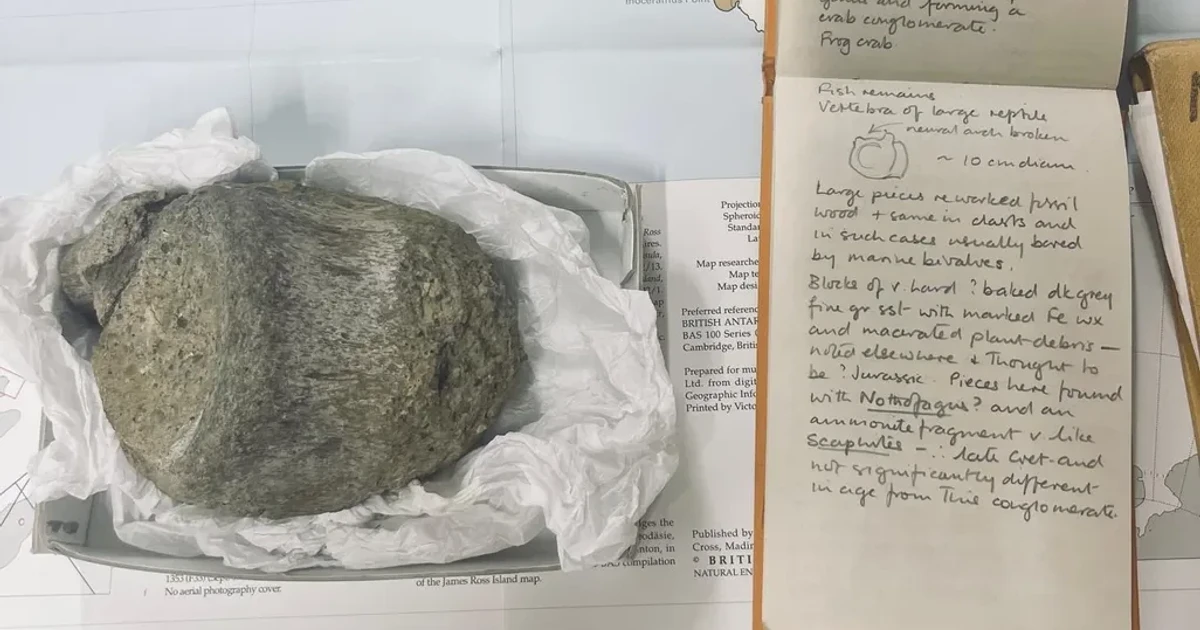
A titanosaur tail vertebra collected on James Ross Island in 1985 sat in the British Antarctic Survey geology collection in Cambridge for about 40 years before Mark Evans recognized it as Antarctica’s first dinosaur bone. The specimen, described in Acta Palaeontologica Polonica, is also only the second sauropod bone known from the continent.
The fossil was picked up during a British Antarctic Survey expedition on the Antarctic Peninsula and entered Mike Thomson’s field notebook on 9 December 1985 as a “vertebra of large reptile,” with a sketch and an estimate that it was about 10 centimeters wide. It was initially assumed to belong to a marine reptile, then left in storage until Evans, a collections manager and paleontologist, identified it and alerted Paul Barrett at the Natural History Museum.
Paul Barrett at the Natural History Museum judged the bone too incomplete to assign to species, but its shape and size point to a dinosaur about 6 to 7 metres long, and possibly a juvenile. Ice cover, harsh field conditions and the remoteness of the continent have made finds difficult to recover and harder still to compare with better-known fossil sites elsewhere.
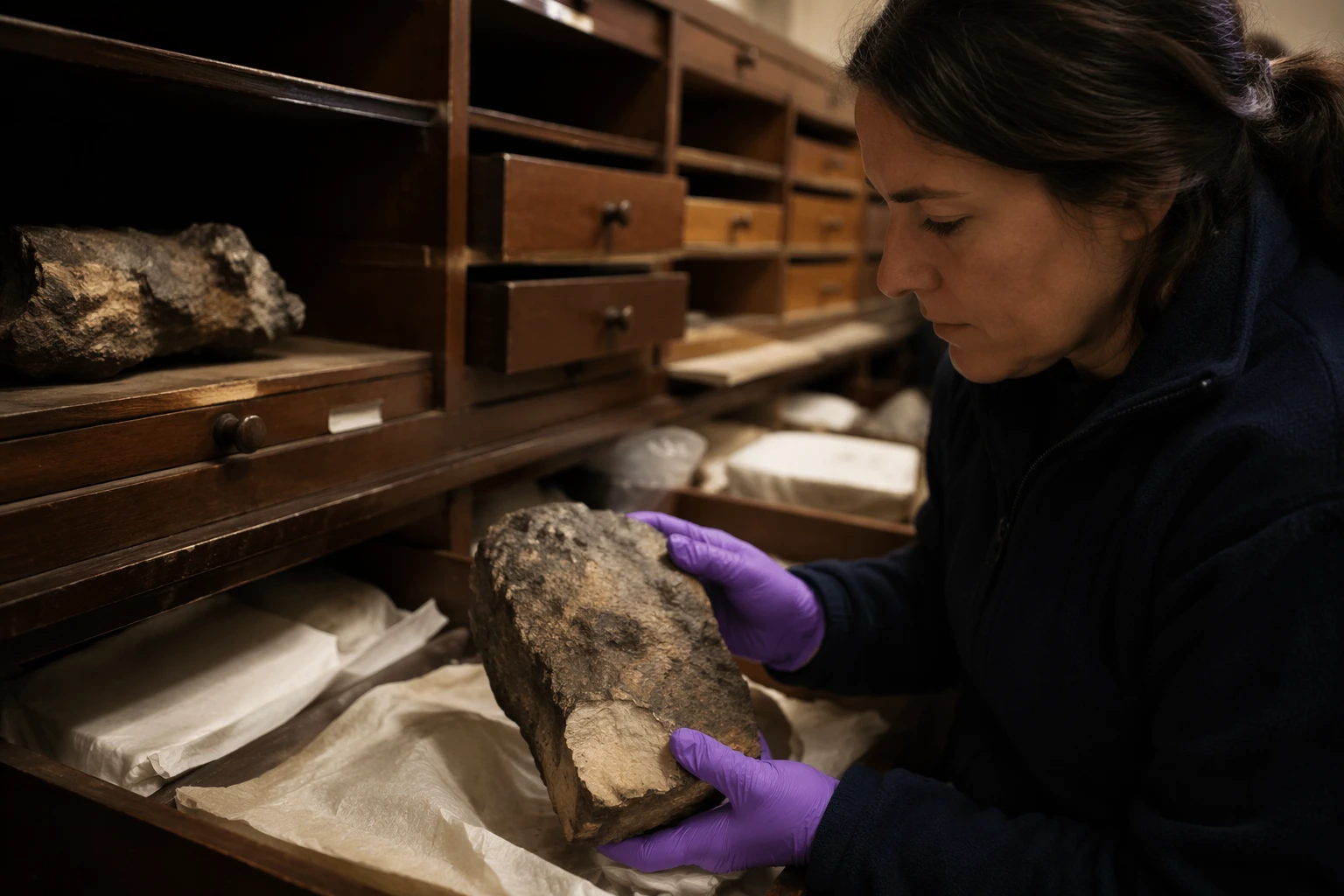
The vertebra dates to the Late Cretaceous, about 70 million to 80 million years ago, when Antarctica was still connected to the southern tip of South America. The continent had temperate forests of ferns, palms and conifers, and sauropods likely moved across southern Gondwana between South America, Antarctica, Australia and New Zealand. The bone itself cannot yet name the animal behind it.
Thomson died in 2020 before the fossil was identified.
Sources
- [1]news.google.com
- [2]nhm.ac.uk
- [3]abcnews.com
- [4]yahoo.com
- [5]abc.net.au
- [6]discovery.ucl.ac.uk