US News
Antares raises $470 million to build microreactors for Air Force bases
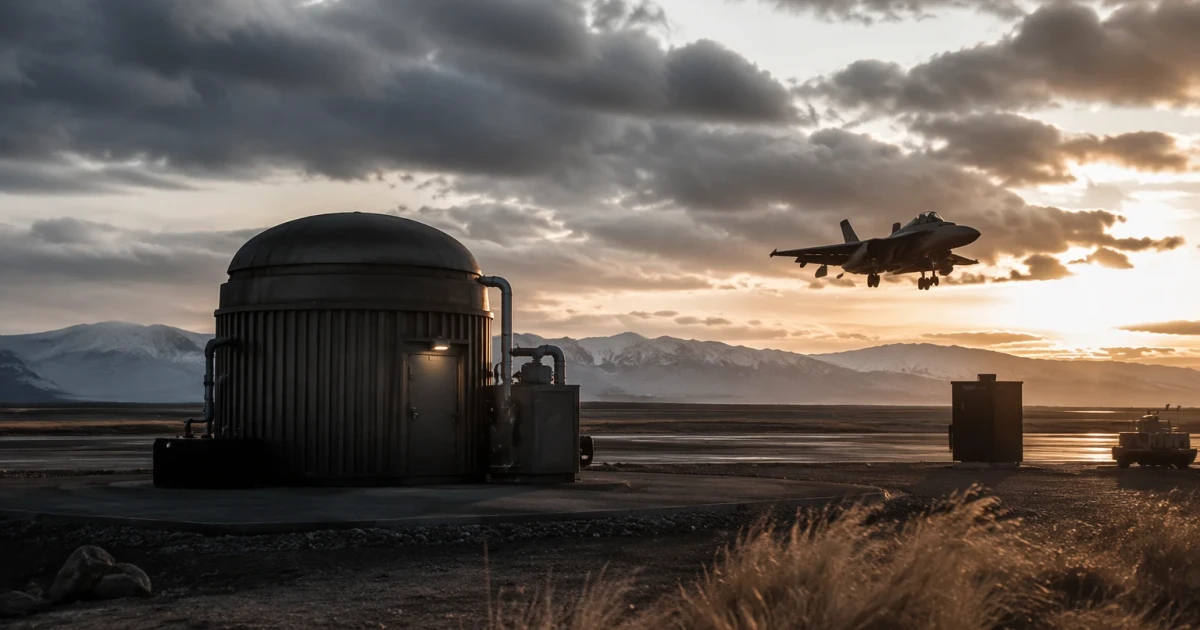
Antares said it raised $470 million to develop microreactors for U.S. Air Force bases, adding fresh capital to a push that the company says is aimed at defense-critical sites where diesel backup no longer solves the reliability problem. The company’s reactors are sized from 100 kW to 1 MW, and Antares says its systems are designed to run for more than six years.
The raise follows Antares’ $96 million Series B in December 2025, when the company said the financing would help it move fast enough to design, build and test nuclear reactors in a matter of years rather than decades. Antares has cast its R1 microreactor as factory-produced fission hardware for remote military sites and other hard-to-serve locations, including uses on Earth, in space and underwater.
The funding lands inside a broader Pentagon effort to put advanced nuclear power on military installations. On June 5, 2024, the Defense Innovation Unit and the U.S. Army announced plans to prototype advanced nuclear power for military bases, arguing that resilient, continuous power was critical for mission-critical operations in remote and austere environments. On April 10, 2025, the Defense Innovation Unit, the Department of the Army and the Department of the Air Force launched the Advanced Nuclear Power for Installations program.
That program has already pointed to specific bases. The Air Force later selected Joint Base San Antonio in Texas as a potential location for a nuclear microreactor under ANPI, and the Department of the Air Force had previously identified Eielson Air Force Base in Alaska as the site for its first microreactor pilot. The effort reflects a national-security calculation that on-base generation, rather than trucked fuel and temporary generators, offers a more durable way to keep critical operations running.
Antares has also tied its development roadmap to federal nuclear-oversight milestones. The company said the Department of Energy approved the Documented Safety Analysis for its Mark-0 demonstration reactor on April 6, 2026, and approved its Preliminary Documented Safety Analysis on January 26, 2026. Antares said it executed an agreement with the Energy Department to take a reactor critical by July 4, 2026, and that its Mark-0 reactor achieved criticality under the DOE Reactor Pilot Program on June 4, 2026.
The company said the Department of Energy allocated HALEU fuel to the project and that Antares is working with Idaho National Laboratory and the National Reactor Innovation Center’s FEEED program on design, fabrication, construction and testing. For the Pentagon, the wager is that tiny reactors can do what diesel-dependent backup systems cannot: provide long-duration power where base resilience has become a national-security requirement.
Sources
- [1]techcrunch.com
- [2]diu.mil
- [3]antaresindustries.com
- [4]eielson.af.mil
- [5]spacenews.com
- [6]powermag.com
- [7]ans.org