Technology
Anthropic and OpenAI clash with tech industry over Chinese AI models
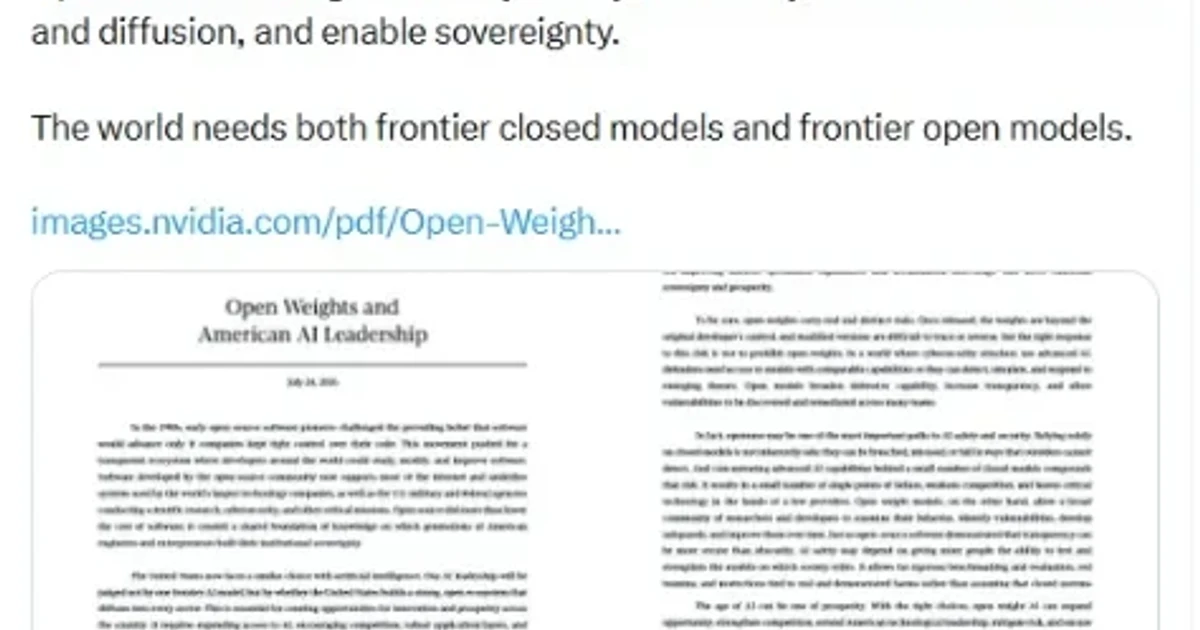
More than 20 companies, including Nvidia, Microsoft, Meta and Palantir, signed a letter on Friday urging policymakers to avoid "premature restrictions" on open-weight artificial intelligence models. The companies said those limits could "stifle competition or drive innovation overseas," setting up a direct split with Anthropic and OpenAI over how Washington should handle Chinese AI systems.
Tech industry split
The fight has centered on models that users can download, modify and run on their own infrastructure. Chinese labs have leaned hardest into that model, and American developers have increasingly experimented with systems from DeepSeek, Qwen and Moonshot AI as access to Anthropic's and OpenAI's frontier models has tightened and costs have risen.
Washington has also weighed restrictions on the use and procurement of advanced Chinese AI models, including Moonshot AI's Kimi K3, over national security and competitive concerns. A March paper from the U.S.-China Economic and Security Review Commission said China had gone "all in on an open-source approach to AI," with most Chinese labs publishing model source code and weights and charging far less than global competitors.
Chinese models in play
That cost gap has already reshaped business decisions. CNBC reported earlier this month that Chinese AI models were gaining ground with U.S. companies as OpenAI and Anthropic costs surged, while a July 9 report said U.S. restrictions on Anthropic's flagship model had fueled new interest in open-source alternatives from China.
For Anthropic and OpenAI, broader limits would reduce the spread of powerful systems that are easier to copy and repurpose. For Nvidia, Microsoft, Meta and the other signatories, the danger is that the United States would trade away a research culture built on shared weights and rapid iteration for a narrower, more controlled market.
A federal ban or procurement limit would not stop the models from existing; it would decide whether U.S. agencies and companies can keep buying, downloading and deploying them.
Sources
- [1]nytimes.com