World
Anthropic model restrictions spark debate over India’s AI ambitions

Anthropic’s decision to cut foreign nationals off from its newest frontier models jolted India’s AI community just weeks after the company opened a Bengaluru office and called India its second-largest market for Claude.ai. The restriction applied only to Fable 5 and Mythos 5, but it raised a larger question for Indian startups and enterprises: how much of the country’s AI future sits on systems it does not control.
The company said on June 12 that it would disable access to the two models for all users after a U.S. government directive tied to national-security concerns. Anthropic said other models would remain available, but the timing landed hard in India, where developers and companies had already begun using Claude in both consumer and business settings. The episode also underscored a basic vulnerability in the global AI market: access to advanced models can change quickly when geopolitics and export controls collide.

Anthropic had only recently deepened its India bet. It opened its Bengaluru office on February 16, 2026, named Irina Ghose as managing director for India ahead of the launch, and said the site would be its second office in Asia-Pacific after Tokyo. The company also highlighted partnerships across enterprise, education and agriculture, signaling that its India strategy extended well beyond a narrow developer audience. Within India, Anthropic said nearly half of Claude usage was for computer and mathematical tasks, including building applications, modernizing systems and shipping production software.
The scale of that dependence helps explain the alarm. In Anthropic’s Economic Index data from about 1 million conversations in November 2025, India accounted for 5.8% of total Claude.ai use, making it the second-largest market after the United States. Anthropic said India was already its second-largest market for Claude.ai overall, a notable position for a country still trying to build domestic AI capacity at scale.
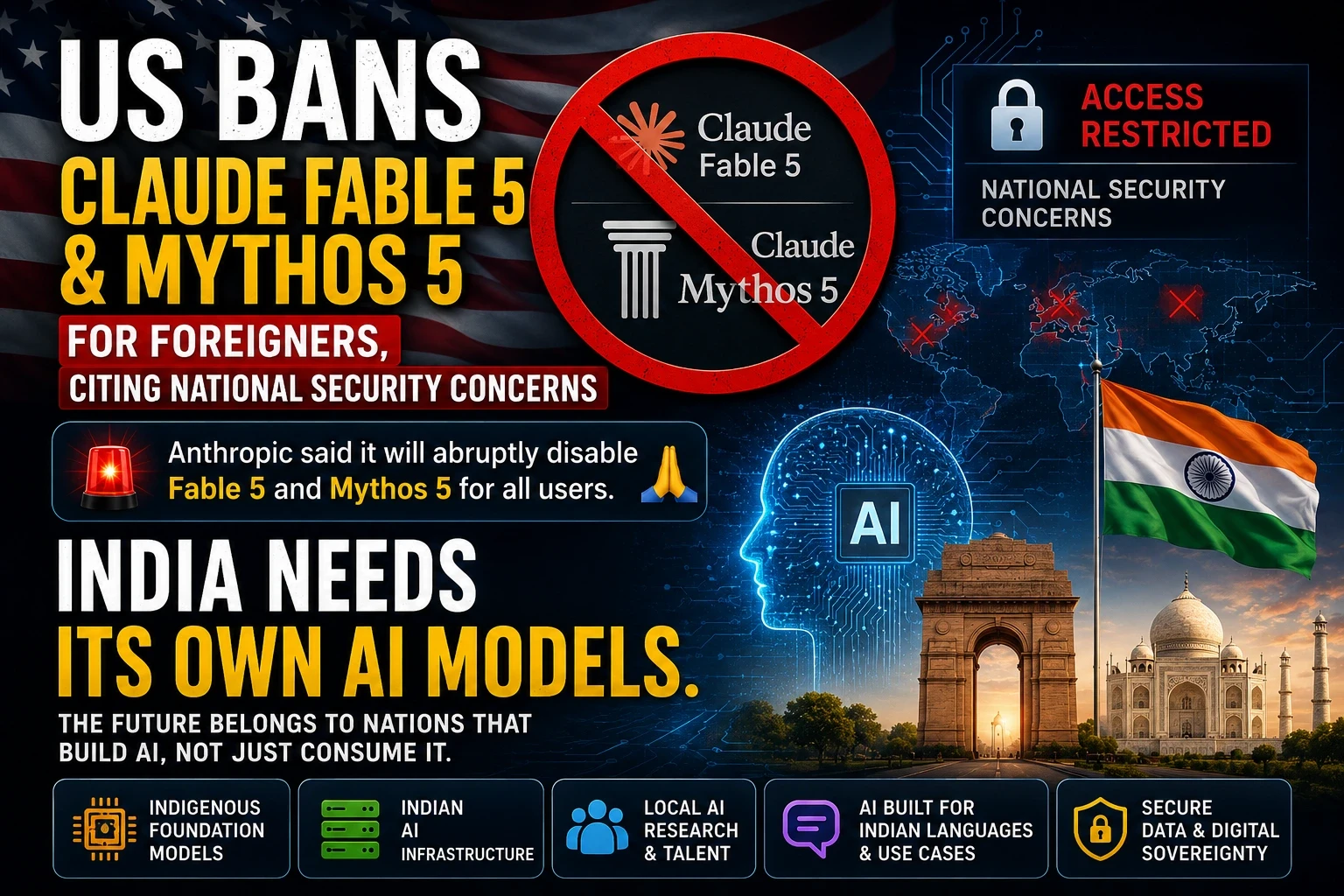
Indian tech leaders seized on the moment as a warning shot. Sridhar Vembu said the episode showed that “globalization is dead” and urged India to accelerate sovereign AI capability. Mohandas Pai also called for urgency around an India AI mission. Their reaction points to the policy dilemma now facing New Delhi: whether to keep leaning on foreign foundation models that can be throttled from abroad, or move faster on domestic models, compute and infrastructure that could give Indian firms more reliable leverage.
Sources
- [1]techcrunch.com
- [2]anthropic.com
- [3]financialexpress.com
- [4]reuters.com