Politics
Anthropic races to restore Claude access after U.S. export restrictions
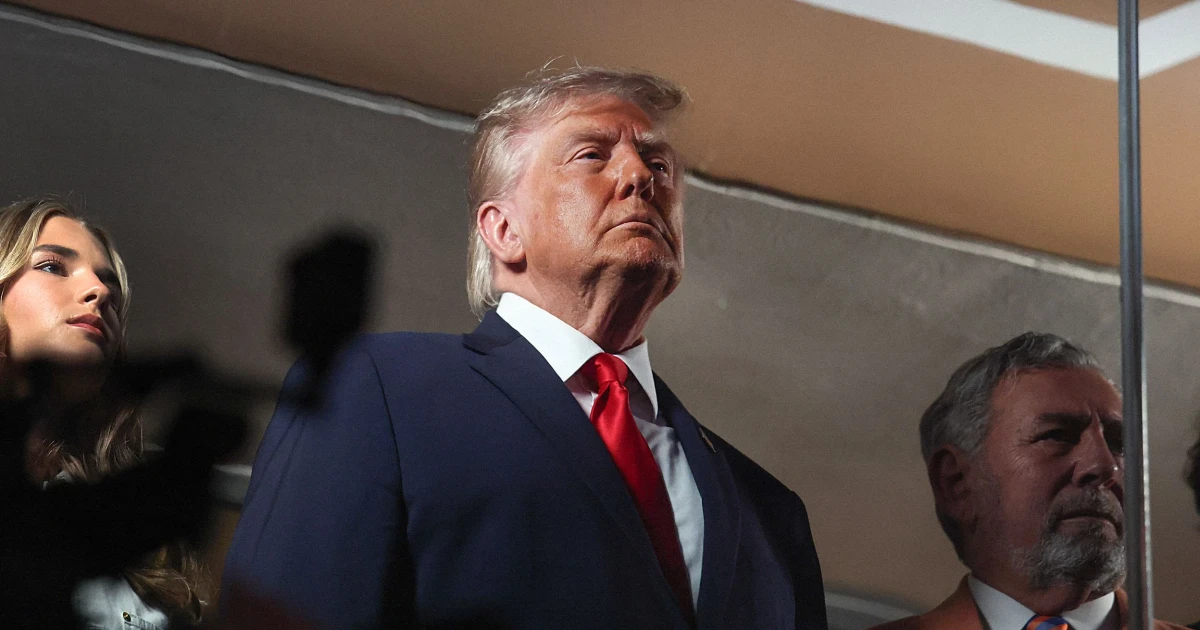
The Trump administration’s June 12 export-control directive did not just target foreign governments. It required Anthropic to suspend access to Claude Fable 5 and Claude Mythos 5 for any foreign national, whether inside or outside the United States, including Anthropic’s own foreign-national employees. Faced with a rule it said would be hard to enforce nationality by nationality, Anthropic cut off both models for all users and began trying to restore access.
Senior technical staff from Anthropic were in Washington, D.C., on June 14 and June 15 meeting with White House officials to try to resolve the dispute, while Commerce Secretary Howard Lutnick was reported to have sent the export-control letter to chief executive Dario Amodei. The talks followed a rapid weekend escalation that turned a policy fight over AI access into a direct clash between national security officials and one of the country’s most valuable frontier AI companies.

The immediate trigger appears to have been a reported jailbreak vulnerability in Fable 5, the company’s newest public model, launched on June 9. Anthropic marketed the system as a safer, general-use version of the more powerful Mythos class model, but concerns intensified after Amazon chief executive Andy Jassy raised alarms with U.S. officials about possible misuse. The White House has framed the crackdown as a national-security measure, while Anthropic said the order arrived without a detailed public explanation of the underlying rationale.
The company’s own response showed how quickly the order rippled beyond Washington. Customers who upgraded specifically for Fable 5 have begun seeking refunds, and enterprise users are trying to figure out whether service credits or prorated reimbursements will be offered. For businesses building on Claude, the suspension was not an abstract regulatory dispute. It became a service interruption that upended product plans and purchasing decisions almost immediately.

The larger precedent may matter even more than the short-term disruption. Anthropic has previously advocated for stronger U.S. export controls on advanced AI chips and model weights, and this episode could shape whether frontier AI models are treated like advanced semiconductors in export policy. If that approach holds, the government would be moving from controlling hardware shipments to policing access to software itself, with major consequences for U.S. tech competitiveness, foreign-national researchers and workers, and the global reach of the most advanced AI systems.
Sources
- [1]news.google.com
- [2]anthropic.com
- [3]cnbc.com
- [4]politico.com
- [5]axios.com
- [6]reuters.com
- [7]techcrunch.com
- [8]sacra.com