Health
Aortic dissection can strike suddenly, confuse doctors, and kill quickly

Aortic dissection can feel “like a knife to the back” and begin with pain that looks ordinary before ending in collapse. The tear starts in the wall of the aorta, the body’s main artery, and blood can surge into the split, cutting off flow to the brain, kidneys, intestines, or limbs, or causing the vessel to rupture.
What an aortic dissection is
The aorta carries blood from the heart to the rest of the body, so damage to its wall can become catastrophic fast. In an aortic dissection, the inner layer of the artery tears and blood tracks between layers of the wall instead of moving cleanly through the vessel. That false channel can squeeze off normal blood flow, and severe cases can become immediately fatal.
A dissection can trigger sudden loss of blood supply to the heart, brain, or abdominal organs, which is why chest pain with other alarming symptoms should never be watched at home.
Why it is so often missed
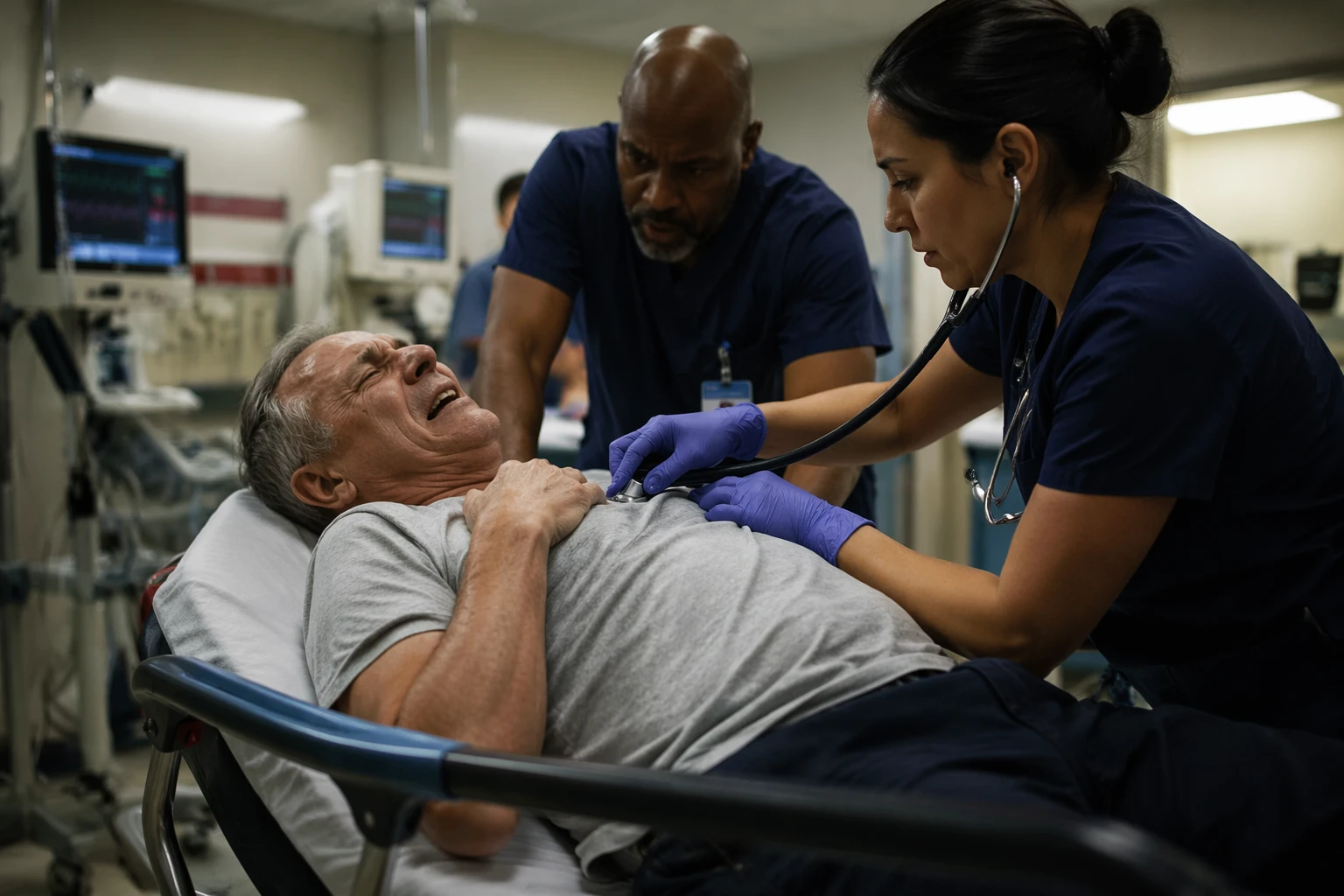
Aortic dissection is often mistaken for a heart attack or another heart problem because the symptoms overlap. That similarity can delay treatment, especially when the pain is chest-centered and a person is first seen in an emergency department where heart attack is the more common concern. The condition is most common in men in their 60s and 70s, but age alone does not make the diagnosis obvious.
The pain itself can mislead. The typical warning sign is sudden severe chest or upper back pain that can spread to the neck or back, and the pain may feel tearing or ripping. That pattern can be subtle at first, especially if the patient focuses on chest pressure rather than the location and quality of the pain.
Symptoms that demand emergency care
The hallmark symptoms are sudden, severe, and abnormal for the person experiencing them. Chest pain or upper back pain that radiates to the neck or back should be treated as an emergency, especially when the pain feels tearing or ripping rather than dull or exertional. Stomach pain can also be part of the presentation, which is one reason dissections are sometimes mistaken for gastrointestinal illness.
Call for emergency care immediately if any of these appear with chest, back, or abdominal pain:
• Shortness of breath • Loss of consciousness • Stroke-like symptoms, including trouble speaking, seeing, or moving • Sudden severe stomach pain • A feeling of tearing or ripping pain in the chest or upper back
Waiting to see whether the pain passes can cost the narrow window in which surgery or medication can prevent death.
How doctors classify it and why that matters
The long-running clinical split comes from the Stanford classification, described in 1970. It separates dissections into Type A and Type B, and that distinction still shapes treatment today. Type A involves the ascending aorta, the part closest to the heart, and is generally treated as a surgical emergency.
Type B dissections involve the descending aorta and are often managed with medication first, depending on where the tear is and whether complications are present. Not every aortic dissection goes straight to the operating room, but every suspected dissection demands urgent evaluation. The decision turns on anatomy, stability, and whether blood flow to organs is threatened.
What treatment looks like
Type A cases are generally repaired immediately because the risk of rupture, stroke, or organ failure is high. Surgery is aimed at replacing or reinforcing the damaged section of the aorta before the tear spreads further.
Type B cases may be treated medically at first, especially when the tear is confined and complications are absent. Blood pressure control is central to that approach because reducing force on the aortic wall lowers the chance that the tear expands. If complications develop, the balance shifts quickly toward intervention.
Who is at higher risk
Men in their 60s and 70s face the highest overall risk of aortic dissection, but risk is broader than age and sex alone. Death rates rose over the prior decade, especially among women and Black adults, even though older men still face the greatest overall risk of dying from the condition.
Family history matters, too. Newer American Heart Association and American College of Cardiology guidance recommends family screening, including genetic testing and imaging, for first-degree relatives of people diagnosed with aortic dissection or with aneurysms of the aortic root or ascending thoracic aorta.
What to discuss with your doctor now
If you have a family history of aortic dissection, aortic aneurysm of the root or ascending thoracic aorta, or unexplained sudden deaths, ask whether genetic testing or imaging makes sense for you and your first-degree relatives. If you already have high blood pressure, connective tissue disease, or a known aortic aneurysm, ask how often your aorta should be checked and what symptoms should trigger an immediate trip to the emergency department.