World
Archaeologists uncover wealthy Iron Age cemetery in Thailand
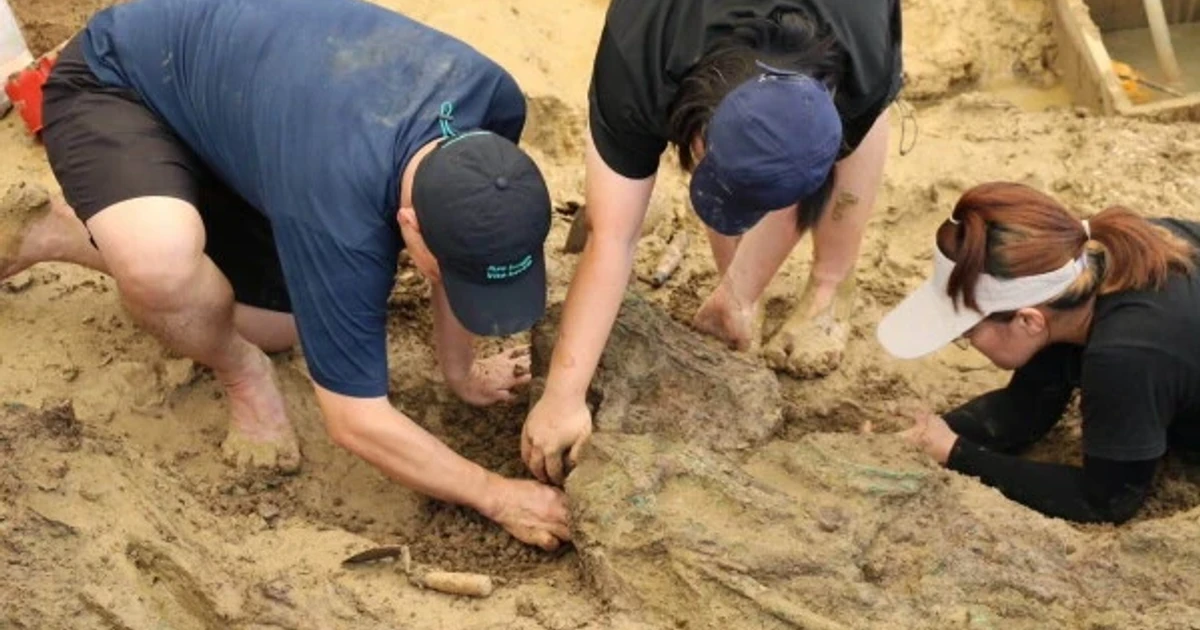
Archaeologists in western Thailand uncovered eight human skeletons, gold rings and six Dong Son-style bronze drums in a cemetery that appears to have belonged to the upper ranks of an Iron Age society. The grave layout, with every body placed head-to-northeast and bronze vessels set near the head, body and feet, suggests a carefully staged burial for people of wealth and status.
The dig is at the Don Yai Thong archaeological site in Ban Don Phlap, Ban Lat district, Phetchaburi province, about 130 kilometers southwest of Bangkok. Excavation began in February after residents and a metal detector turned up fragments that led to Phetchaburi’s first bronze drum in a rice field, then opened what proved to be a prehistoric cemetery rather than a single burial.
The site dates to Thailand’s late prehistoric Iron Age, roughly 1,500 to 2,500 years ago. Alongside the skeletons, archaeologists found bronze ornaments, glass and stone beads, pottery, gold jewelry and the six bronze drums. One gold bracelet was still encircling the arm of a skeleton, a detail that underscores how richly at least one burial was outfitted.
Two gold rings, each about 2,000 years old, were among the most striking discoveries. One ring was engraved with characters believed to be Bhrami script, and the Fine Arts Department said the inscription was initially read as pusarakhitasa. The interpretation links the name to Pushya, an auspicious Indian zodiac sign, and experts believe the ring owner may have been a merchant of the Vaishya caste.
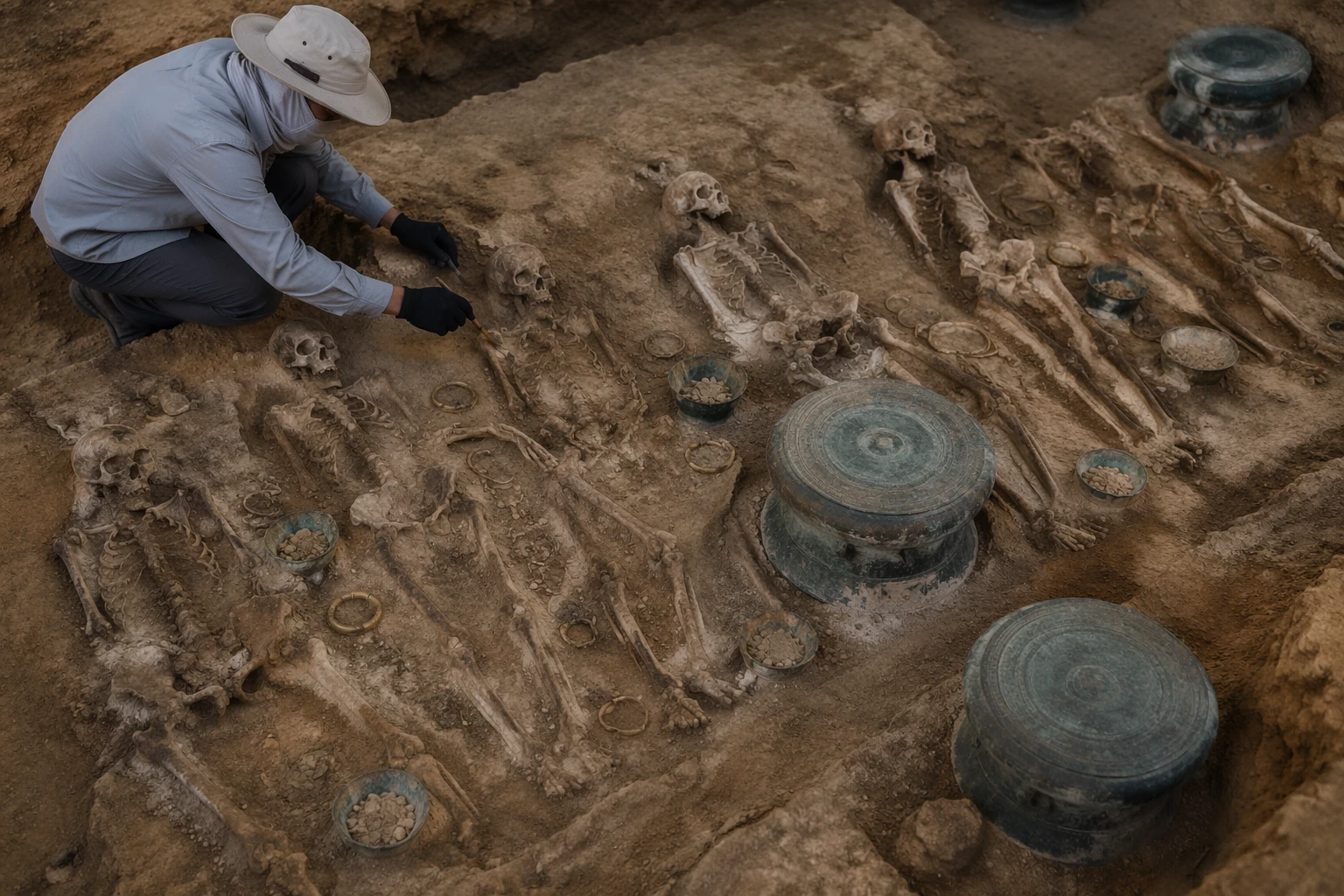
The finds point to a community tied into long-distance exchange routes rather than an isolated inland settlement. Officials said the burial context fits an affluent prehistoric population connected to trade networks stretching from present-day Vietnam to India, with the bronze drums appearing to have been used in funeral ceremonies rather than buried separately as objects of storage or display.
The pattern of the graves matters as much as the objects. Eight bodies, one of them still marked by gold on the arm, bronze vessels placed at specific points around the corpse and drums incorporated into the rites all suggest a society with clear divisions of rank, ritual practice and access to imported goods. Archaeologists expected to recover two bronze drums, but instead exposed a cemetery that captures how wealth, status and belief were arranged in death.
The excavation is expected to finish in about another month, and the Fine Arts Department said the finds are planned to be shown to the public.
Sources
- [1]cbsnews.com
- [2]abcnews.com
- [3]khaosodenglish.com
- [4]apnews.com