Sports
Argentina builds around Messi as England semi-final looms
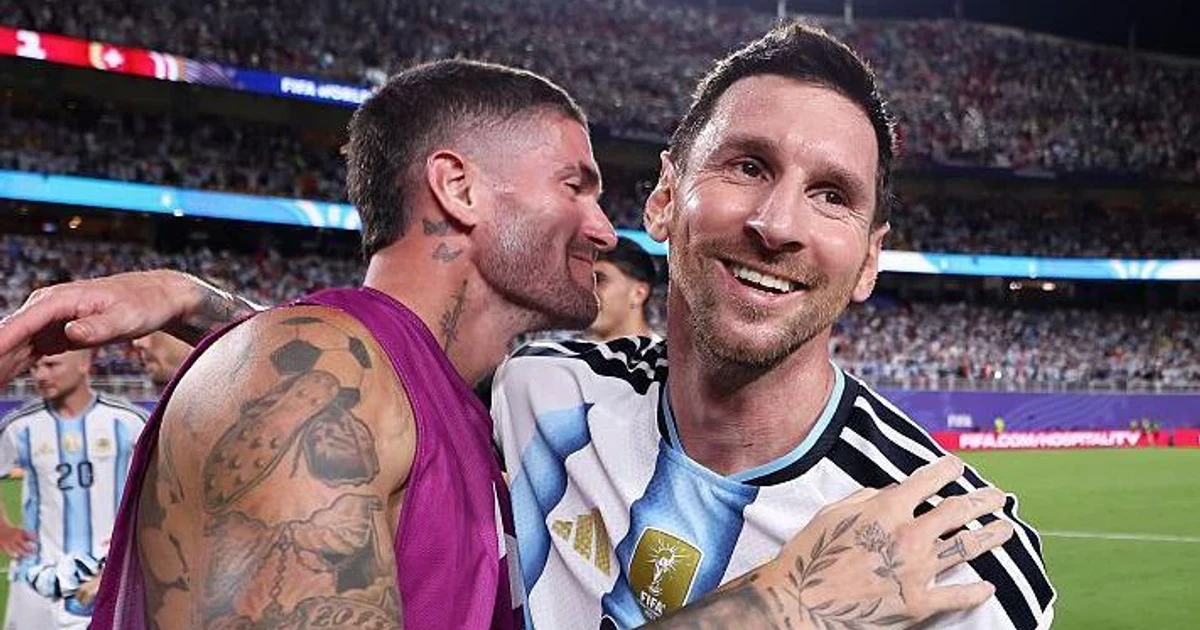
Argentina have not built their World Cup push around Lionel Messi as a solitary match-winner. They have built a structure that keeps him close to trusted teammates, gives him room to choose moments, and asks the rest of the squad to absorb the labor that once fell on his shoulders alone. That is the core of Guillem Balague’s reading of the side as they prepare to face England, and it explains why this team looks less like a one-man act than a functioning system.
A team built on mates, mate and freedom
Balague’s frame for Argentina rests on three ideas: mates, mate and freedom. The first is the circle around Messi, the close teammates who know his habits and patterns and can move with him rather than merely around him. The second is Messi himself, treated as the singular talent at the center of the structure. The third is the freedom Lionel Scaloni has given him, a tactical license that lets him drift, decide and conserve energy without being forced to do every phase of the work.
That balance matters because Argentina are not trying simply to reach another final. They are trying to give Messi the best possible chance of winning a second successive World Cup, and that changes the design of the side. England and Argentina are renewing a major World Cup rivalry after 24 years, and Messi has already described the semi-final as special. The stakes are personal, but the team around him has been designed to keep the personal from overwhelming the collective.
Scaloni’s reset after Russia 2018
The turning point came when Lionel Scaloni took over on August 2, 2018, after Jorge Sampaoli left in the aftermath of Russia 2018. Argentina needed more than a new coach. They needed a calmer environment, cleaner roles and a dressing room that could absorb pressure without splintering under it. Scaloni has delivered that by turning the squad into a more stable, family-like unit rather than a collection of individuals waiting for Messi to rescue them.
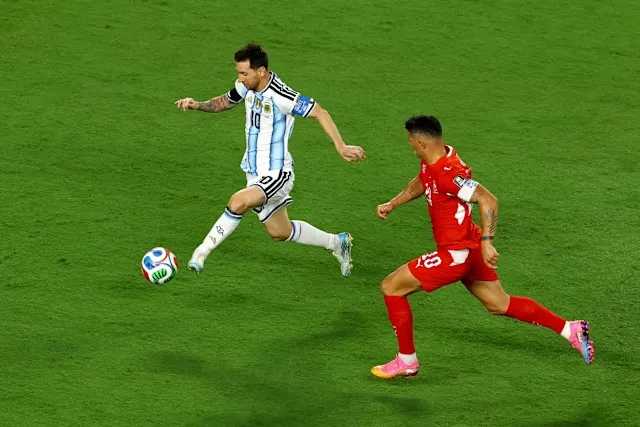
That continuity is visible in the current group. Seventeen members of the 2022 World Cup-winning squad have been included again, a sign that Argentina have not tried to reinvent themselves after success. They have preserved the relationships that mattered most, which is critical in a team that depends on timing, trust and instinct. Rodrigo De Paul sits at the heart of that environment, acting as one of the main connectors between Messi and the rest of the side, and helping create the conditions in which the captain can play with less friction and more control.
Scaloni’s approach has also been defined by restraint. Rather than demanding that Messi become the entire attack, he has built a team that can carry phases without him and then release him when the decisive window opens. That is the difference between dependence and design.
Messi’s freedom, and the numbers that show it
The statistical record of the Scaloni era shows how well this setup has worked. Messi has scored 15 times, and counting, in the two World Cups he has played under Scaloni. Before that, he scored just six goals across four World Cups. The change is not only about finishing, but about the kinds of situations Argentina now create for him and the space he is allowed to occupy when the match opens up.
His recent tournament milestones underline the scale of that evolution. Messi has posted a record-extending 32nd World Cup appearance, and he became the first player in tournament history to reach 10 World Cup assists. Those figures point to a player who is no longer asked to do everything by himself. He is being used as the decisive final layer of a system that has already done much of the heavy lifting.
That also helps explain why Messi is set to make a record sixth World Cup appearance. Longevity at this level usually exposes a team’s reliance on an aging icon. Argentina have tried to do the opposite. They have reduced the burden on him while sharpening the role that still only he can fill, which is why his late-career value has risen instead of fading.
Why the England match matters beyond one night
The semi-final against England is more than a route into the final. It is a test of whether Argentina’s model can hold under the most loaded circumstances, against a rival with its own historical weight. The renewal of the World Cup rivalry after 24 years gives the match another layer, but Argentina’s internal logic remains the same: trust the structure, keep Messi connected to the right people, and let the game come to him.
Messi’s own description of the run as “not normal” captures the mood around the team’s continued success. It is unusual not because Argentina have lucked into a good spell, but because they have sustained a high level through a mix of continuity, role clarity and emotional cohesion. That is what Scaloni has protected since taking over, and what De Paul and the rest of the trusted core have helped reinforce.
Scaloni has already shown he is willing to back Messi on the biggest decisions, too. Asked about his future, he said, “we will support whatever he decides.” That line reflects the broader culture around this side: the captain is central, but the team is no longer hostage to his every move. Argentina have built a national system around him that can handle the pressure of a semi-final, the burden of expectation and the demands of a long tournament.
That is why this team looks different from the Argentina sides that struggled to unlock Messi at major tournaments. It is not just that Scaloni found better players. He found a better arrangement, one that gives a superstar at the end of his career the tactical freedom and locker-room backing to remain the most important player on the pitch without being forced to be the only one.
Sources
- [1]bbc.co.uk
- [2]sports.yahoo.com
- [3]espn.com
- [4]espn.co.uk
- [5]fifa.com