US News
Army to add jamming ranges for drone training, Ukraine-style testing
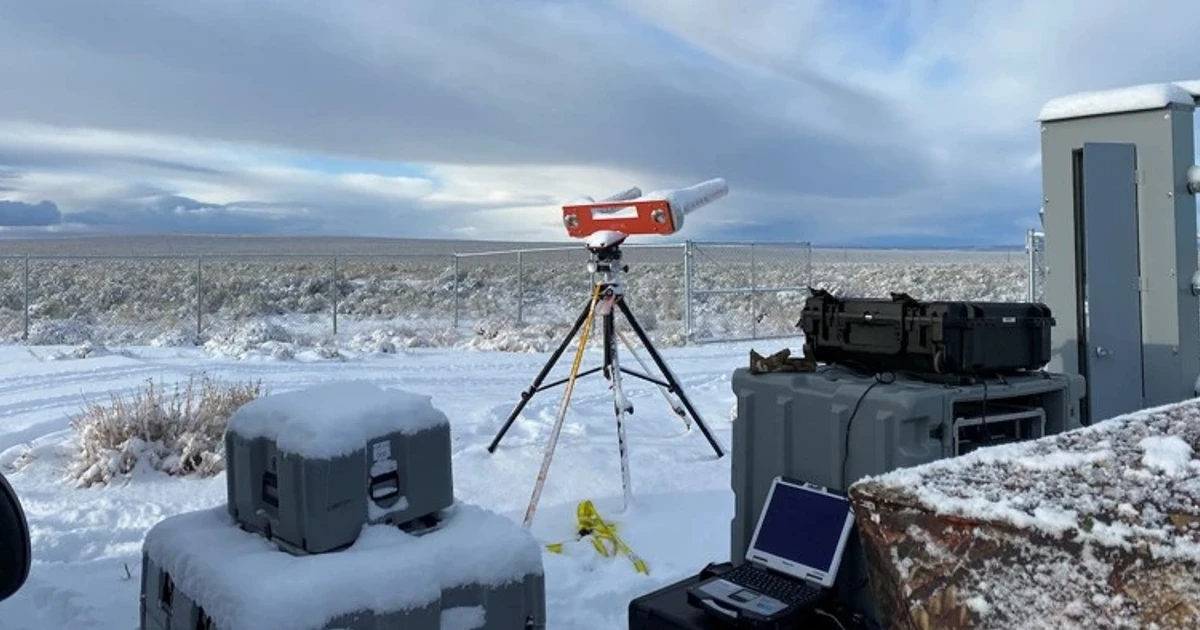
The Army is preparing to put electronic jamming into drone training, a move designed to push soldiers and industry partners into conditions that look more like Ukraine than a clean test range. Army Secretary Dan Driscoll said the service will set up at least two domestic ranges in the next four to six weeks and is also considering an overseas range outside the United States for more aggressive testing, including hypersonics.
The change reflects a basic problem for U.S. forces: many current counter-drone drills do not include the jamming and degraded communications that dominate modern battlefields. Driscoll said the Army wants training and testing grounds where “electronic warfare” and contested-environment conditions can be recreated so drone manufacturers, counter-drone tool-builders and soldiers can work together under stress. He declined to identify the locations of the ranges until planning advances further.
The Army’s push comes as its leaders describe Ukraine as the clearest laboratory for future war. In May, Driscoll told lawmakers that Ukraine has linked drones, sensors and weapons systems into a unified battlefield network that the U.S. military has not yet matched. Army and Pentagon documents in 2025 and 2026 have repeatedly pointed to Russia’s war against Ukraine as a source of lessons on munitions, command and control, sustainment, electronic warfare and small-drone threats.
At the same Army industry day, Dwayne Hayes of the Army’s Strategic Threats Office laid out the scale of the threat. He said Russia is producing about 3,000 to 5,000 one-way attack drones each month and roughly 600,000 smaller first-person-view drones. Ukraine, he said, is producing about 30,000 interceptor drones per month. Hayes argued that the United States is strong at building expensive “exquisite” munitions, but needs cheaper interceptors that can be spent freely in a war of attrition.
The Center for Army Lessons Learned says it exists to resolve readiness gaps and inform modernization, and its recent work has included a May 17, 2026, article on cost-effective counter-drone operations in Ukraine. That focus has grown alongside the scale of U.S. support for Kyiv, which the Defense Department said had topped $61.3 billion in security assistance by Nov. 20, 2024. The new ranges suggest the Army is trying to absorb those lessons before the next fight begins in a world where battlefield signals are already under attack.
Sources
- [1]cbsnews.com
- [2]army.mil
- [3]media.defense.gov
- [4]cpeisw.army.mil