Science
Artemis II Astronauts Complete Lunar Flyby, Paving Way for Future Moon Science
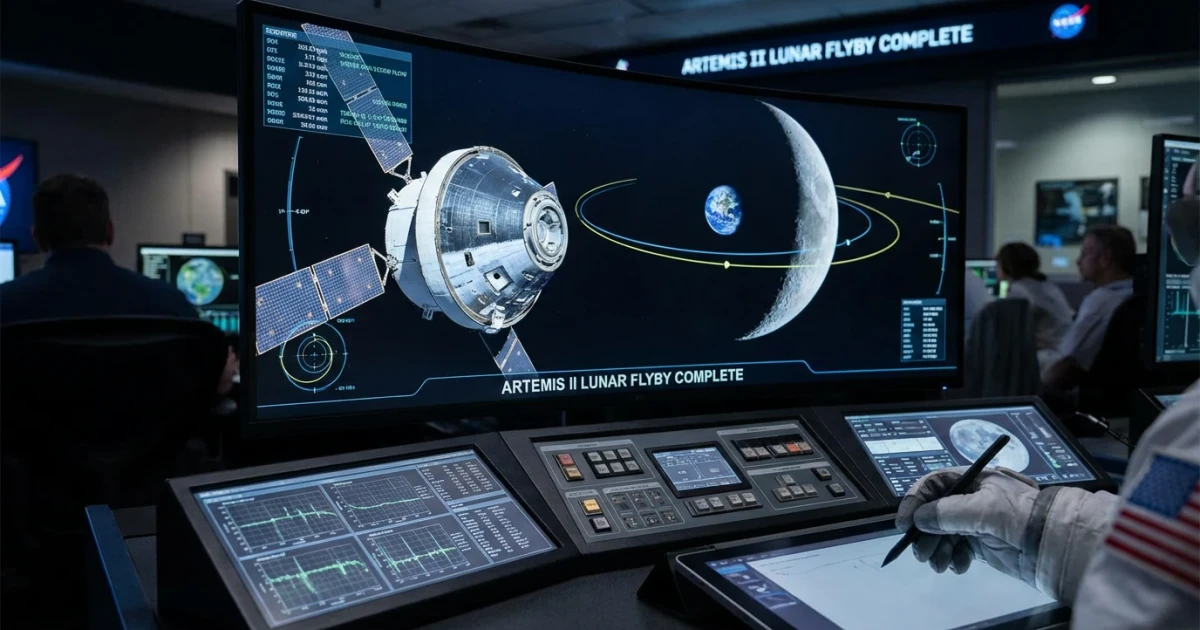
NASA's Artemis II mission has achieved another landmark in space exploration as its crewed spacecraft completed a successful flyby of the moon, energizing the scientific community and setting the stage for future lunar research. The mission, a crucial step in NASA's Artemis program, is the first time humans have journeyed beyond low Earth orbit since the Apollo era.
Artemis II: A Milestone in Crewed Lunar Exploration
The Artemis II mission serves as a critical test of NASA’s deep space systems, including the Orion spacecraft and Space Launch System rocket, with astronauts conducting a flyby that brought them within close proximity to the moon. According to NASA's mission data, Artemis II marks the first crewed mission in the Artemis program and serves as a precursor to planned lunar surface landings.
- Crew size: Four astronauts participated in the mission, representing a diverse team trained for both flight operations and lunar science.
- Mission duration: The flight lasted just over ten days, with several orbits around the Earth before executing the lunar flyby maneuver.
- Closest approach: The crew passed within thousands of kilometers of the lunar surface, testing critical navigation and communication systems.
Scientific Excitement Builds for Artemis Program
Lunar scientists are particularly enthusiastic about the implications of Artemis II’s successful flyby. While this mission did not land on the surface, it allowed for crucial observations and system checks that will enable more ambitious science in subsequent missions. The Lunar and Planetary Institute highlights that Artemis II data will inform future strategies for lunar geology studies, sample collection, and in-situ resource utilization.
According to a recent white paper, Artemis II paves the way for a new era of lunar research, including:
- Deploying advanced remote sensing instruments for surface and subsurface mapping
- Testing life support and habitat technologies in deep space conditions
- Refining protocols for astronaut-led sample return and field experiments
Mission Highlights and Crew Achievements
The Artemis II crew, whose biographies and training can be found on NASA’s official crew page, executed complex maneuvers and conducted in-flight demonstrations of navigation and communication systems. These systems are essential for supporting longer missions and eventual surface operations. While the mission did not include landing, it validated critical components for Artemis III, which aims to return humans to the lunar surface.
Key mission accomplishments included:
- Successful deep space navigation and communication tests
- Collection of environmental data during the lunar flyby
- Validation of Orion’s radiation shielding and life support
Looking Ahead: Artemis Science and Opportunities
The Artemis II mission has generated renewed momentum for NASA’s lunar ambitions. The science objectives for the Artemis program include studying the moon’s geology, searching for water ice, and preparing for sustainable human presence. Data gathered on Artemis II will help refine experiment design and operational protocols for future missions, including Artemis III’s planned landing near the lunar South Pole.
Researchers are already preparing for the expanded science opportunities enabled by follow-up missions, which will leverage the vast datasets collected by Artemis spacecraft and instruments. These efforts support not only lunar science but also broader goals for Mars and deep space exploration.
Conclusion: A Launchpad for the Future
NASA’s Artemis II lunar flyby marks a significant achievement in human spaceflight, providing invaluable experience and data for the scientific community. As anticipation builds for Artemis III and beyond, the Artemis program stands poised to transform our understanding of the moon and the solar system—offering new frontiers for discovery and exploration.